
Gym Shoulder Injuries: When Is Surgery Considered?

Shoulder Health · Sports Injury · Surgery Guide
The shoulder pain you've been calling "muscle soreness" after chest day might be something far more serious. Here's what's actually happening inside your joint - and when to stop ignoring it.
Dr. Naveen Sharma 21+ Years Experience 20,000+ Patients Treated Fellowship: Germany & South KoreaIn This Article
- The Gym is Booming - And So Are Shoulder Injuries
- Why the Shoulder Is So Easy to Damage
- The 5 Most Common Gym Shoulder Injuries in India
- Warning Signs Your Shoulder Is Saying "This Is Not Normal"
- Can Physiotherapy Fix It - Or Do You Need Surgery?
- What Happens If You Keep Training Through Shoulder Pain?
- Arthroscopic Shoulder Surgery - What It Actually Involves
- Getting the Right Assessment in Jaipur
- Frequently Asked Questions
A twenty-nine-year-old software engineer in Jaipur has been going to the gym for two years. He loves chest day. Bench press is his favourite lift. Lately, he feels a dull ache deep in his left shoulder when he presses heavy. Sometimes he hears a click when he raises his arm to put on a shirt. He assumes it is muscle soreness. He takes a protein shake, rests two days, and goes back. This story repeats across India every single day.
The fitness revolution has been extraordinary for public health in India. But it has also quietly created a wave of shoulder injuries that most patients do not take seriously until they cannot lift their arm above shoulder height. Shoulder injuries are now one of the top three orthopedic complaints among Indians under forty. The gym is not the problem. Ignoring what your shoulder is telling you - that is the problem.
Key insight: The shoulder is the most frequently injured joint in the gym - and also the most frequently ignored. By the time most patients seek medical advice, what started as a small tear has progressed significantly.
The shoulder is the most mobile joint in your body. That is also what makes it the most unstable. Unlike your hip, which sits in a deep, secure socket, your shoulder is like a golf ball resting on a golf tee. The ball can move in almost every direction - which is what lets you bowl, throw, and bench press. But that freedom comes at a cost.
Four structures take the primary load in gym-related shoulder injuries:
1Rotator Cuff
Four tendons that keep the ball centred in the socket
2The Labrum
Cartilage rim that deepens the shallow socket
3AC Joint
Where the collarbone meets the shoulder blade
4Biceps Tendon
Runs through the front of the shoulder joint
Think of it this way: The rotator cuff is like the cables holding a crane steady. Overload them repeatedly and they fray - silently, before they snap. By the time you feel real pain, the damage is usually already advanced.
01Rotator Cuff Tear
How it happens: Heavy overhead pressing, bench pressing with poor form, too many dips, or repeated chest-day overload.
What you feel: A deep ache on the outside of the shoulder, weakness when lifting your arm sideways, pain at night when you roll onto that side.
If ignored: A partial tear becomes a full tear - turning a simple arthroscopic fix into a major repair or an unrepairable condition.
02Shoulder Dislocation
How it happens: During contact sports like cricket or basketball, or from lifting with improper form when the arm is in a vulnerable overhead or outstretched position.
What you feel: The ball pops out of the socket. Extremely painful and frightening. Even after it is put back in, the shoulder is never the same.
If ignored: Recurrent dislocation becomes near-certain in young active patients. Every episode grinds away bone that cannot grow back. Visit this page to understand what happens structurally inside the joint.
03SLAP Tear (Superior Labrum Tear)
How it happens: Repeated overhead movements - pull-ups, lat pulldowns, overhead press, CrossFit. The top part of the labrum tears where the biceps tendon attaches.
What you feel: A deep catch or pop inside the shoulder, especially during throwing or lifting overhead. A sensation like something is clicking or catching.
If ignored: The instability worsens, and the biceps tendon can eventually rupture entirely.
04AC Joint Injury
How it happens: A direct fall on the point of the shoulder, or from years of heavy shrugs and upright rows compressing the joint abnormally. Very common in bodybuilders and powerlifters.
What you feel: Sharp pain on the very top of the shoulder, directly at the joint.
If ignored: The AC joint develops arthritis and bone spurs that grind against the rotator cuff from above, causing secondary tears.
05Shoulder Impingement Syndrome
How it happens: This is the desk worker plus gym patient. Nine hours hunched over a laptop collapses your shoulder space - then you add heavy bench press on top. The rotator cuff tendons get pinched between the bone and the ball with every rep.
What you feel: Pain when raising your arm forward or sideways, especially between 60 and 120 degrees of lift. A dull ache that gets worse the more you train.
If ignored: Chronic impingement is a direct pathway to a rotator cuff tear.
Muscle soreness is normal. These six signs are not:
1Pain that wakes you up at night
Muscle soreness does not disturb sleep. Deep-joint inflammation and structural tears do. This is one of the most reliable red flags.
2Your shoulder feels loose or like it could pop out
A healthy shoulder never feels like it wants to slide out. That sensation is ligament and labral damage. The joint is mechanically unstable.
3Weakness when lifting your arm above shoulder height
If you cannot complete an overhead press or reach a high shelf with normal strength, something is structurally torn - not just sore.
4A clunk or deep pop you feel inside during movement
Surface clicking without pain can be harmless. But a deep clunk or pop that you feel inside the joint, especially with pain, points to a tear.
5Pain that hasn't improved after 4-6 weeks of rest
Genuine muscle strains heal by week three. If you are still hurting at week six with zero improvement, rest is not the treatment your shoulder needs.
6A second or third dislocation episode
One dislocation is an accident. Two is a pattern. Three episodes mean bone loss is almost certainly happening with every event.
If you have even two of these signs, you need a clinical assessment - not another week of rest and YouTube stretches.
Can Physiotherapy Fix It - Or Do You Actually Need Surgery?
This is the question every gym patient asks. The honest answer is that it depends on exactly what is damaged - and physiotherapy and surgery each have a clear territory.
| Condition | Physio Works | Surgery Needed |
|---|---|---|
| Mild impingement syndrome | ? | - |
| Early rotator cuff strain (no tear) | ? | - |
| First-time dislocation (patient over 35, non-athlete) | ? | - |
| Full-thickness rotator cuff tear | - | ? |
| Recurrent dislocation (2+ episodes) | - | ? |
| SLAP tear in active patient under 40 | - | ? |
| Complete AC joint ligament rupture | - | ? |
When surgery is indicated, two main procedures address gym-related shoulder instability. Bankart repair is an arthroscopic procedure where small anchors are placed into the socket to sew the torn labrum back onto bone. This is the first-line surgery for patients with good bone quality experiencing their first or second dislocation. Latarjet surgery is for recurrent dislocation or significant bone loss - a piece of bone is transferred to rebuild the front of the socket, providing a more durable repair for high-demand athletes.
The key message: Delaying surgery when it is clearly indicated does not save the shoulder - it costs you more bone, more muscle, and a significantly harder recovery later. Every dislocation episode grinds away bone that cannot grow back.
The damage progression is predictable. Most patients do not believe it until they are living it.
Stage 1 - Minor Impingement
Dull ache after heavy sessions. You think it is DOMS. You train through it.
Stage 2 - Partial Thickness Tear
The tendon fibres begin fraying. Pain becomes consistent. Night discomfort starts. You reduce weight but keep going.
Stage 3 - Full Thickness Tear
The tendon tears completely off the bone. Significant weakness. Even daily activities become painful. Surgery is now mandatory.
Stage 4 - Irreversible Damage
The muscle retracts and wastes away. The tear is no longer repairable. Shoulder replacement becomes the only option for pain relief.
Many young Indians push through pain because they fear surgery or do not want to lose gym progress. A six-week surgical recovery now is nothing compared to a twelve-month recovery from a complete rupture - or permanent loss of shoulder function. You do not lose gains by fixing the problem early. You lose gains by training through an injury until it becomes unfixable.
Most patients imagine a large incision and weeks in hospital. That is not how modern shoulder arthroscopy works.
2-3 Small keyhole incisions Same day Most patients go home 2-3 weeks Return to desk work 3-6 months Return to gymA tiny camera is inserted into the shoulder joint. The surgeon works on a monitor with miniature instruments - repairing the torn labrum, suturing the rotator cuff, or transferring bone for a Latarjet procedure. No large cuts. No general hospital stay for most cases.
Return timelines vary by procedure: Bankart repairs typically allow light gym work by month three and full lifting by five to six months. Latarjet patients often need six to eight months before heavy overhead pressing. Rotator cuff repairs take four to six months depending on the size of the tear. These are not arbitrary waiting periods - they are the time the repaired tissue needs to properly heal to bone.
If you are in Rajasthan or considering travelling to Jaipur for a shoulder specialist, a proper assessment should always include three things: an MRI to evaluate the soft tissue damage, a dynamic physical examination where the surgeon moves your shoulder through specific positions to test stability, and a frank conversation about surgical versus non-surgical options based on your actual findings - not assumptions.
This is the exact approach at the Advanced Orthopedic and Sports Injury Hospital. Whether you need a rotator cuff repair, Bankart repair, Latarjet surgery, or in advanced cases shoulder replacement, the same principle applies: the treatment must match the patient - not the other way around. The same diagnostic rigour is applied to sports injuries from cricket and badminton, where shoulder trauma patterns differ significantly from gym injuries.
Your Surgeon
Dr. Naveen Sharma
MS Orthopaedics, KEM Hospital Mumbai · Fellowship in Knee & Shoulder Surgery, Germany & South Korea · 21+ Years · 20,000+ Patients
Bankart Repair Latarjet Surgery Rotator Cuff Repair Shoulder Arthroscopy Book AppointmentCan I go back to the gym after shoulder surgery in India?
Yes - that is the entire point of doing the surgery in an active patient. Return to light gym work typically happens between three and four months for Bankart repairs and around six months for Latarjet or rotator cuff repairs. Full heavy lifting, including bench press and overhead press, takes six to eight months. Patients who follow their rehab protocol exactly and do not rush the return-to-gym timeline get the best long-term results.
How do I know if I have a rotator cuff tear or just a strain?
A strain improves with rest and anti-inflammatory medication within two to three weeks. A tear does not. If you have taken two weeks off from all shoulder activity and the pain persists - especially at night - you need an MRI. Strains heal on their own. Tears do not. The only reliable way to know what you are dealing with is proper imaging and a clinical examination.
What is the difference between Bankart repair and Latarjet surgery?
Bankart repair fixes the torn labrum using small anchors inserted into the socket. It is arthroscopic, less invasive, and works well for first-time or early-recurrence dislocators with good bone quality. Latarjet surgery transfers a piece of bone from another part of the shoulder to physically rebuild the front of the socket. It is for patients with recurrent dislocation or significant bone loss. Latarjet is a bigger surgery but has a significantly lower recurrence rate in high-risk patients - especially young athletes in contact or overhead sports.
Is arthroscopic shoulder surgery safe in India?
Yes, when performed by a fellowship-trained arthroscopic surgeon in an appropriate facility. The technology and techniques used by experienced Indian surgeons are identical to those in Germany, South Korea, or the United States. The key variable is not the country - it is the surgeon's training volume and specific experience with the procedure you need. Always ask how many of your specific procedure the surgeon performs annually.
How long is the recovery after shoulder dislocation surgery?
Sling for four weeks. Desk work by week two to three. Driving by week four to five. Light gym work by month three. Return to contact sports or heavy overhead lifting takes five to eight months depending on whether you had Bankart repair or Latarjet. The quality of your final result is shaped more by your commitment to rehab than by the surgery itself. Patience in rehabilitation is not optional - it is the treatment.
What is the cost of shoulder surgery in India?
Costs vary depending on the procedure, hospital, city, and whether insurance is involved. Arthroscopic Bankart repair typically ranges between one and two lakh rupees. Latarjet surgery costs somewhat more due to the complexity of the bone transfer. Rotator cuff repairs fall in a similar range. The best approach is to have a proper consultation first, then ask for a full cost breakdown including surgeon fees, hospital stay, anaesthesia, implants, and physiotherapy, so there are no surprises.
Take the First Step
Your shoulder has been telling you something for weeks. It's time to listen.
Book a consultation with Dr. Naveen Sharma for a proper assessment, an MRI review if needed, and an honest answer about whether you need surgery or can recover with physiotherapy. You do not need a referral. Just the first step.
Book AppointmentHave more questions? Visit the FAQs page · Read more orthopedic articles
Plan the next shoulder step
Related shoulder information
Plan the next shoulder step
Source used for patient guidance
General context for gym shoulder injuries: when is surgery considered? was checked against AAOS shoulder instability guidance. Individual recommendations still require examination and appropriate imaging.
Author : Dr. Naveen SharmaDr. Naveen Sharma — Medical Director & Senior Joint Surgeon
Dr. Naveen Sharma (MS Ortho, MBBS) is recognized as one of India's foremost authorities on Direct Anterior Approach (DAA) Hip Replacement and Subvastus Muscle-Sparing Knee Arthroplasty.
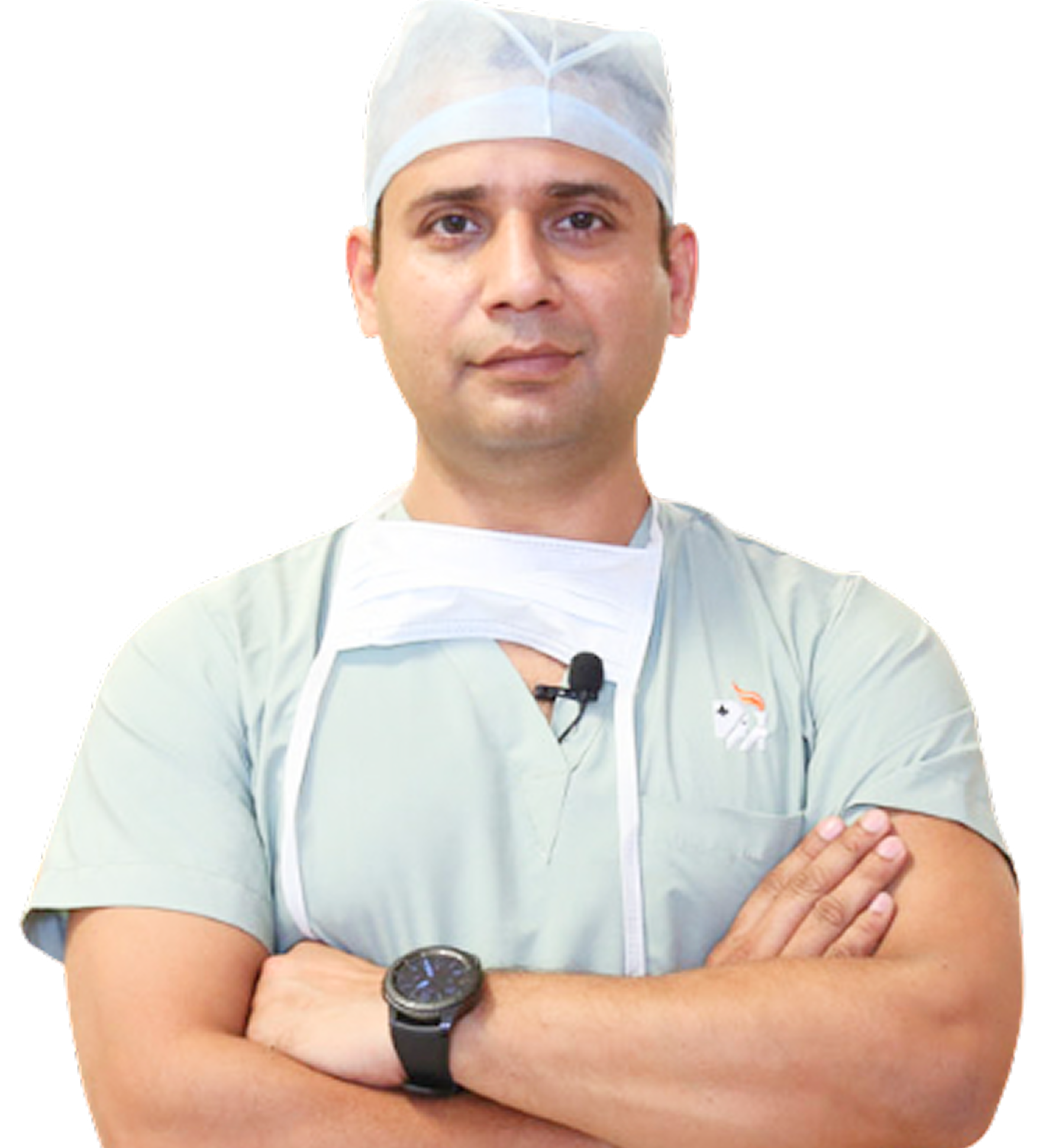
Dr. Naveen Sharma
Recognized as Rajasthan’s foremost authority on Direct Anterior Approach (DAA) Hip Replacement and Subvastus Fast-Track Knee Arthroplasty with over 21 years of surgical tenure and 20,000+ completed procedures.
