
Hip Replacement for Obese Patients Jaipur
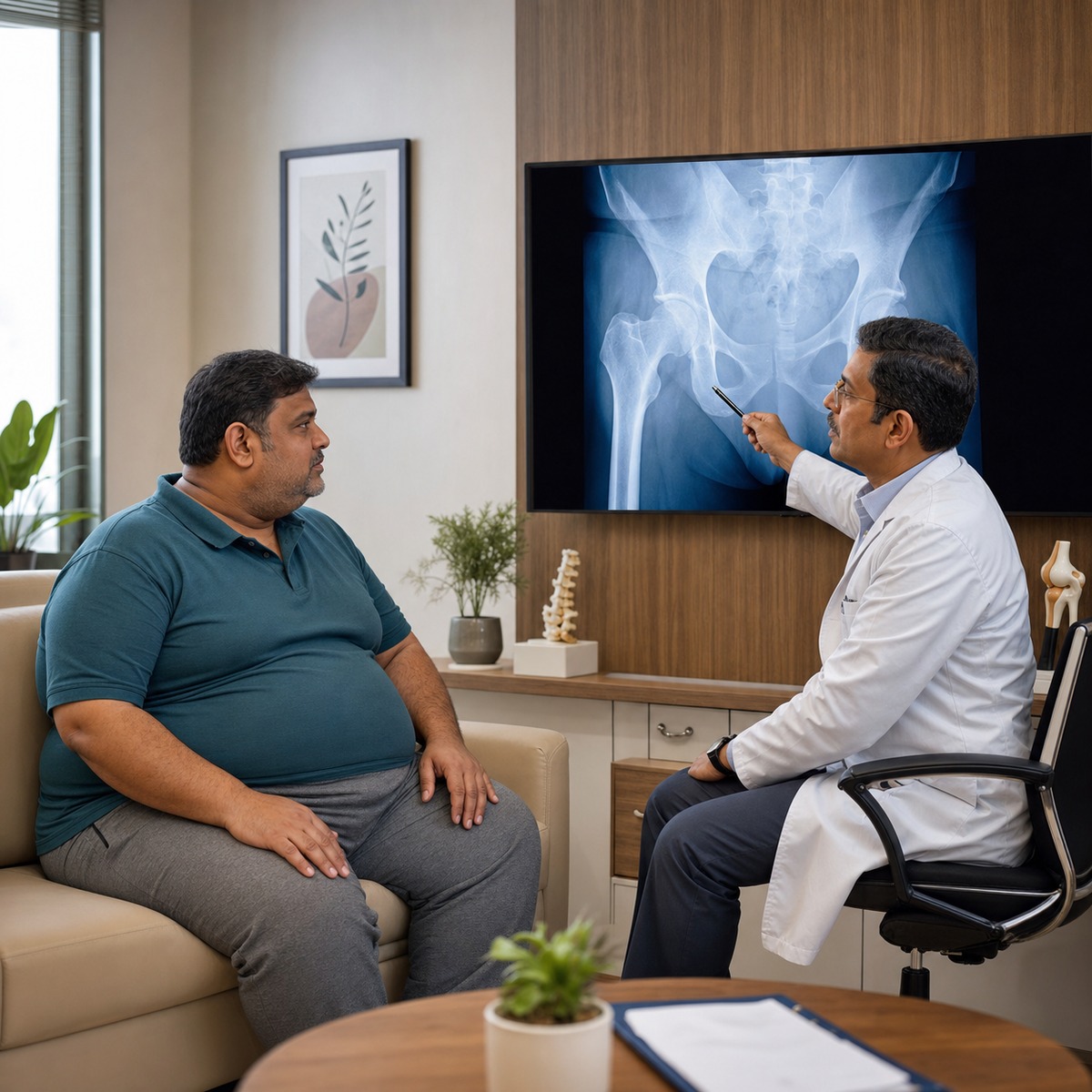
Quick answer: Hip replacement for obese patients Jaipur is possible for many people, but higher body weight can increase wound, infection, anaesthesia and recovery risks. BMI is only one part of assessment. Safe planning includes arthritis severity, diabetes control, heart and lung fitness, nutrition, sleep apnoea, mobility, home support and a personalised risk-reduction plan.
What matters for this hip decision
- Obesity does not automatically rule out total hip replacement.
- Risk generally rises gradually with BMI; there is no single number that guarantees safety or failure.
- Diabetes, sleep apnoea, nutrition, smoking, heart fitness and skin health may matter as much as weight alone.
- Crash dieting before surgery can reduce muscle and protein stores, so weight plans need medical supervision.
- Recovery planning should include a suitable walker, toilet height, bed height, stairs and family help.
Hip replacement for obese patients Jaipur is a sensitive decision, not a reason for blame. People usually seek help because hip arthritis, avascular necrosis or previous injury has made walking, sleep and daily work difficult. Weight may add risk, yet delaying care can also worsen pain, weakness and independence.
Hip replacement for obese patients Jaipur: is surgery possible?
Yes. Hip replacement for obese patients Jaipur can be appropriate when severe joint damage causes persistent pain and disability despite suitable non-surgical care. Obesity is one risk factor among many; the surgeon and anaesthesia team must assess the whole person rather than accept or reject surgery from weight alone.
Review total hip replacement surgery and the wider hip treatment pathway in Jaipur before comparing options.
A BMI number should start a risk conversation, not replace a full medical assessment.
How does BMI affect hip replacement risk?
BMI can help screen surgical risk, but it does not directly measure body fat, muscle, nutrition or fitness. Higher BMI is associated with more technical difficulty and greater risk of wound problems, infection, blood clots, readmission and slower mobility, although the exact risk differs widely between patients.
The World Health Organization defines adult obesity as a BMI of 30 or higher and reports that one in eight people worldwide lived with obesity in 2022. WHO also describes obesity as a chronic, relapsing disease shaped by biological and environmental factors, not simply willpower.
The American Academy of Orthopaedic Surgeons notes that serious complications are more likely above BMI 40 than below it. It also explains that joint forces during activity can exceed seven times body weight. Importantly, AAOS says risk rises across BMI values; there is no sudden unsafe line and no lower BMI that guarantees freedom from complications.
| Assessment area | What it tells the team | Why it matters |
|---|---|---|
| BMI and body build | A screening measure plus practical surgical access | Helps plan equipment, positioning and wound care |
| Blood sugar | Diabetes control and infection risk | Poor control can impair healing |
| Heart and lungs | Anaesthesia and clot-risk fitness | Guides medical clearance and monitoring |
| Nutrition and muscle | Protein stores, strength and recovery reserve | Weight alone can hide malnutrition or weakness |
| Sleep assessment | Possible obstructive sleep apnoea | Changes airway, oxygen and pain-medicine planning |
| Home mobility | Bed, toilet, stairs and family support | Determines safer discharge and rehabilitation |
Should I lose weight before hip replacement?
Weight reduction may improve general health and make surgery or rehabilitation easier, but there is no universal kilogram target. The safest plan protects protein intake and muscle while treating diabetes, blood pressure, sleep apnoea and other risks. Rapid unsupervised dieting before a major operation is not advised.
A 2026 systematic review and meta-analysis indexed in PubMed examined eight studies of patients with obesity who did or did not lose weight before total hip replacement. It found no statistically significant difference in the reported complication, infection, reoperation, revision or readmission outcomes. The evidence was limited and does not prove that weight management has no benefit.
Pre-operative optimisation means improving the whole recovery reserve, not chasing a scale number at the cost of muscle and nutrition.
What should be optimized before surgery?
Before surgery, the team should identify modifiable risks and agree on clear targets. Common priorities are blood sugar, blood pressure, heart and lung fitness, sleep apnoea treatment, smoking cessation, skin infection checks, dental or urinary infection review when indicated, nutrition, muscle strength and a safe discharge plan.
- Confirm the diagnosis. Make sure hip symptoms and X-rays match and that pain is not mainly from the spine or knee.
- Review medical conditions. Bring diabetes records, blood-pressure medicines, cardiac reports and details of breathing or sleep problems.
- Assess nutrition. A larger body size does not exclude low protein, vitamin or iron status. Correct deficiencies when identified.
- Build safe strength. Use low-impact exercises advised by a clinician so painful joints are not overloaded.
- Plan the home. Arrange a stable walker, raised toilet if advised, firm chair, suitable bed height, clear walking paths and help with meals or bathing.
- Discuss medicines. Blood thinners, diabetes drugs and weight-loss medicines may need procedure-specific instructions. Do not stop them without medical advice.
How is hip replacement planned for obese patients?
Planning combines implant templating, surgical exposure, patient positioning, suitable operating equipment and an anaesthesia strategy. The surgical approach and implant are chosen for the hip anatomy, bone quality and surgeon judgement; obesity alone does not prove that one approach or premium implant is necessary.
Patients comparing options can read about joint replacement planning. Terms such as minimally invasive or direct anterior approach should not replace a balanced discussion of exposure, safety, surgeon experience and the individual anatomy.
clinical decision: In my 21 years of practice in Jaipur, Clinicians commonly assess patients who were told only to lose weight but were not given a practical pathway. I first separate hip pain from spine or knee pain, then focus on controllable risks. A realistic plan is more useful than either dismissing risk or denying care from BMI alone.
What does recovery look like after surgery?
Recovery starts with breathing exercises, circulation measures, pain control and assisted walking when medically safe. Patients with obesity may need extra attention to the wound, oxygen levels, blood sugar, transfer technique and walker fit. Progress is based on stability and function, not a race against another patient.
In Indian homes, toilet height, low beds, floor-level storage and slippery bathroom surfaces deserve advance planning. Squatting or sitting cross-legged should not resume without surgeon clearance. Family help is valuable, but the patient should still practise safe transfers rather than being pulled up by the arms.
When should I see a hip replacement surgeon?
Seek an orthopedic opinion when hip pain limits walking, sleep, dressing, work or basic self-care despite appropriate treatment. Urgent assessment is needed after a fall with inability to bear weight, sudden severe pain or deformity. Existing fever, skin infection, chest symptoms or uncontrolled medical illness also needs prompt medical attention.
- Persistent groin or buttock pain with reduced hip movement
- Walking distance becoming steadily shorter
- Night pain or pain at rest
- Difficulty using stairs, socks, shoes or the toilet
- Failed medicines, physiotherapy or walking support
- Uncertainty about BMI, surgical timing or a previous denial of surgery
Frequently asked questions
Is there a BMI limit for hip replacement surgery?
There is no universal BMI number that makes hip replacement automatically safe or unsafe. Some hospitals use thresholds, often around BMI 35 to 40, because complication risk rises with weight. A surgeon should also assess diabetes, heart and lung health, nutrition, sleep apnoea, mobility, joint damage and the harm of delaying treatment.
Can hip replacement succeed if I have obesity?
Yes, many patients with obesity gain meaningful pain relief and mobility after total hip replacement. Their average risk of wound problems, infection and medical complications can be higher, so preparation matters. Success depends on diagnosis, implant positioning, medical optimisation, rehabilitation, home support and follow-up, not body weight alone.
How much weight should I lose before hip replacement?
There is no safe universal kilogram target. The goal should be agreed with your surgeon and physician using BMI, waist size, nutrition, muscle strength, diabetes control and surgery urgency. Avoid crash diets. A supervised plan that preserves protein and strength is safer than rapid loss that leaves you weak before rehabilitation.
Does obesity change the implant used for hip replacement?
Obesity alone does not automatically require a special or premium implant. Implant choice depends on age, bone quality, anatomy, activity goals, fixation needs and surgeon judgement. Higher mechanical load and technical exposure are considered during planning, but marketing claims should not replace evidence, correct positioning and an individual risk discussion.
Which risks should I discuss before surgery?
Discuss wound healing, infection, blood clots, anaesthesia, breathing problems, dislocation, fracture, nerve injury, readmission and revision. Ask how diabetes, sleep apnoea, smoking, nutrition, heart health and medicines change your personal risk. Also clarify expected hospital stay, walker use, physiotherapy, home help and emergency contact instructions.
How should I prepare my home for recovery?
Clear loose rugs and narrow paths, improve bathroom grip, and arrange a firm chair, suitable bed height and raised toilet if advised. Keep medicines, water and daily items within easy reach. Confirm who will help with meals, bathing, transport and follow-up, especially if stairs or a long road journey are unavoidable.
How to use this information: plan risk without stigma
Hip replacement for obese patients Jaipur should balance pain, disability and joint damage against modifiable medical and surgical risks. BMI belongs in the discussion, but it should not stand alone. The safest plan confirms the diagnosis, optimises health and nutrition, prepares the home and sets realistic rehabilitation goals.
You can also book a hip consultation in Jaipur with Dr. Naveen Sharma.
Medical disclaimer
This article is for educational purposes only and is not a substitute for professional medical advice, diagnosis, or treatment. Please consult a qualified orthopedic surgeon for guidance specific to your condition.
Author : Dr. Naveen SharmaDr. Naveen Sharma — Medical Director & Senior Joint Surgeon
Dr. Naveen Sharma (MS Ortho, MBBS) is recognized as one of India's foremost authorities on Direct Anterior Approach (DAA) Hip Replacement and Subvastus Muscle-Sparing Knee Arthroplasty.

Dr. Naveen Sharma
Recognized as Rajasthan’s foremost authority on Direct Anterior Approach (DAA) Hip Replacement and Subvastus Fast-Track Knee Arthroplasty with over 21 years of surgical tenure and 20,000+ completed procedures.
