
Knee Replacement Exercises Week by Week
Quick answer: Knee replacement exercises week by week usually start with ankle pumps, knee bending, thigh tightening and supported walking, then progress to stairs, balance and strength. The safest plan is personalised by your surgeon and physiotherapist because pain, swelling, wound healing and medical fitness differ.
What matters for this knee decision
- Exercise after knee replacement should be regular, gentle and supervised at first.
- The first 2 weeks focus on swelling control, knee bending, straightening and safe walking.
- Weeks 3 to 6 usually add stronger walking, stairs, balance and functional movement.
- Pain that keeps increasing is not normal exercise soreness and needs review.
- Indian home planning should include bathroom grip, chair height, stairs and monsoon slip safety.
Knee replacement exercises week by week are important because surgery alone does not restore walking confidence. The new joint needs careful movement, muscle activation and progressive practice so that pain relief turns into daily independence.
This 2026 guide explains how patients in Jaipur can think about exercise after total knee replacement, also called TKR. It does not replace your own discharge sheet. Your exact plan depends on the implant, wound healing, bone quality, medical fitness and surgeon instructions.
Knee replacement exercises week by week: what is the safe goal?
Knee replacement exercises week by week should improve movement, strength and walking without forcing the knee. The safe goal is steady progress: less swelling, better straightening, more controlled bending and more confident walking.
The American Academy of Orthopaedic Surgeons exercise guide explains that regular exercise and gradual return to daily activity are important after total knee replacement. Your surgeon and physiotherapist may advise daily exercise, walking practice and specific movements, but the dose must be adjusted to your pain and swelling.
In Jaipur practice, the best exercise plan is the one a patient can repeat safely every day. Overenthusiastic exercise on one day followed by 2 days of swelling is not progress. A simple written plan, a stable chair, family support and correct pain-medicine timing often matter as much as the exercise list.
Which exercises are done in the first 2 weeks after knee replacement?
The first 2 weeks after knee replacement usually include ankle pumps, thigh tightening, heel slides, knee straightening practice, assisted sitting and short supported walks. These exercises protect circulation, reduce stiffness and begin muscle control.
Early exercises should be slow and repeatable. Ankle pumps help blood flow. Quadriceps sets tighten the front thigh muscle. Heel slides slowly bend the knee. Short walks teach the operated leg to accept weight safely.
| Time after surgery | Main exercise focus | What to watch |
|---|---|---|
| Day 0 to 3 | Ankle pumps, breathing, supported standing, short walker steps | Dizziness, wound bleeding, severe calf pain |
| Week 1 | Heel slides, thigh tightening, knee straightening, short frequent walks | Swelling that increases after every session |
| Week 2 | More walking, chair transfers, gentle bending and extension practice | Fever, wound discharge, uncontrolled pain |
| Weeks 3 to 6 | Stairs, balance, longer walks, stationary cycling if cleared | Limping, forced bending, unsafe stairs |
| After 6 weeks | Strength, endurance, low-impact activity and return to routine | Persistent stiffness or new instability |
Patients planning knee replacement in Jaipur should discuss exercises before admission, not only after discharge. Related knee problems such as knee stiffness and arthritis may also affect the starting level.
What exercises help from week 3 to week 6?
From week 3 to week 6, exercises usually shift from only moving the knee to using the knee in daily tasks. Walking distance, stair confidence, balance, gentle cycling and controlled strengthening become more important.
The NHS recovery guide advises using walking aids at first and reducing support only when confidence improves. It also highlights getting up and walking regularly to reduce clot risk. These points fit Indian homes where long sitting, low furniture and crowded bathrooms can delay safe movement.
- Practise sit-to-stand from a firm chair without dropping suddenly.
- Use a handrail for stairs and learn the safe sequence before doing them alone.
- Continue knee bending and straightening instead of only walking.
- Keep walks short and repeated if swelling appears after long walks.
- Use stationary cycling only after your surgeon or physiotherapist clears it.
For diagnosis and broader care planning, patients can read about knee treatment in Jaipur and joint replacement surgery.
When can I start stairs, cycling and stronger exercises?
Stairs, cycling and stronger exercises should begin only when wound healing, balance, pain control and knee movement are adequate. Many patients practise stairs early with support, while cycling and resistance work need individual clearance.
Do not treat social media exercise videos as your prescription. A patient with diabetes, obesity, low bone strength, severe pre-surgery deformity or delayed wound healing may need slower progression. Another patient with good strength and support may progress faster.
Mayo Clinic notes that after recovery, many people can do low-impact activities such as walking, swimming, golfing or biking, while high-impact activities should be avoided or discussed with the care team. This is why knee replacement exercises week by week should move toward safe lifelong activity, not only early bending numbers.
What mistakes should patients avoid during knee replacement exercise?
Patients should avoid forced bending, skipping pain control, comparing recovery with others, walking with a limp and stopping exercises completely when mild soreness appears. The knee needs steady loading, not aggressive pushing.
- Do not let a helper force the knee to bend.
- Do not sit for hours without ankle movement or short walks.
- Do not practise stairs alone until balance is safe.
- Do not use floor sitting, squatting or Indian toilet use without clearance.
- Do not ignore wound discharge, fever or calf swelling.
Indian patients often ask about sitting cross-legged, using low pooja seating or returning to kitchen work. These decisions should be made after checking range of motion, muscle control and implant stability. A raised chair and bathroom support can prevent avoidable pain in the first few weeks.
When to See a Doctor
See your orthopedic surgeon early if recovery stops improving or warning signs appear. Exercise should make the knee gradually easier to use, not suddenly more painful, hot, swollen or unstable.
- Fever, chills, wound redness, discharge or increasing wound pain.
- New calf swelling, calf pain, chest pain or breathlessness.
- Sudden severe knee pain, locking, giving way or inability to bear weight.
- Persistent inability to straighten the knee despite regular supervised exercise.
- Repeated falls, dizziness or medicine side effects.
- Swelling that does not settle after rest, elevation and surgeon-approved care.
Doctor perspective from Jaipur practice
In my 21 years of practice in Jaipur, Clinicians commonly assess families focus on the hospital discharge date and underestimate the first 3 weeks at home. Patients usually do better when the walker path, chair height, bathroom grip, ice routine and exercise timing are planned before surgery.
Recovery after knee replacement is not a race to bend the knee once; it is a daily plan to walk straighter, swell less and trust the joint more.
FAQ
How many times a day should I exercise after knee replacement?
The number of exercise sessions after knee replacement depends on your surgeon and physiotherapist plan. Many patients do short sessions several times daily rather than one long painful session. Stop and ask for review if swelling, wound pain, calf pain or breathlessness increases after exercise.
Is pain normal during knee replacement exercises?
Mild stretching discomfort can be normal during knee replacement exercises, but sharp pain, increasing swelling or pain that lasts into the next day is a warning sign. Exercises should be adjusted, not forced. Your physiotherapist can reduce intensity while still protecting knee movement.
When can I climb stairs after knee replacement?
Many patients practise stairs during early recovery with a handrail and supervision, but independent stair use depends on balance, strength, pain control and home layout. The usual rule is to go up with the stronger leg and down with the operated leg until confidence improves.
Can I sit cross-legged after knee replacement exercises improve?
Sitting cross-legged after knee replacement is not an early exercise goal. It requires knee bending, hip comfort, soft-tissue flexibility and surgeon clearance. Many patients should avoid forcing floor sitting because aggressive bending can increase pain, swelling or implant stress during recovery.
What if my knee is not bending enough after surgery?
If the knee is not bending enough after surgery, do not force it at home. Report stiffness early so your surgeon can check pain control, swelling, wound status, exercise technique and whether supervised physiotherapy needs adjustment. Early guidance is safer than delayed aggressive stretching.
Who should guide knee replacement exercises week by week in Jaipur?
Knee replacement exercises week by week in Jaipur should be guided by your joint replacement surgeon and physiotherapist together. Dr. Naveen Sharma reviews the surgery details, movement goals, walking safety, medical risks and home needs before advising a recovery plan.
How to use this information: make exercise safe, regular and personal
Knee replacement exercises week by week work best when they are simple, regular and matched to your knee. The aim is not to copy another patient, but to improve walking, bending, straightening, balance and confidence without avoidable swelling.
You can also book an orthopedic consultation in Jaipur for personalised guidance.
Medical disclaimer
Author : Dr. Naveen SharmaDr. Naveen Sharma — Medical Director & Senior Joint Surgeon
Dr. Naveen Sharma (MS Ortho, MBBS) is recognized as one of India's foremost authorities on Direct Anterior Approach (DAA) Hip Replacement and Subvastus Muscle-Sparing Knee Arthroplasty.
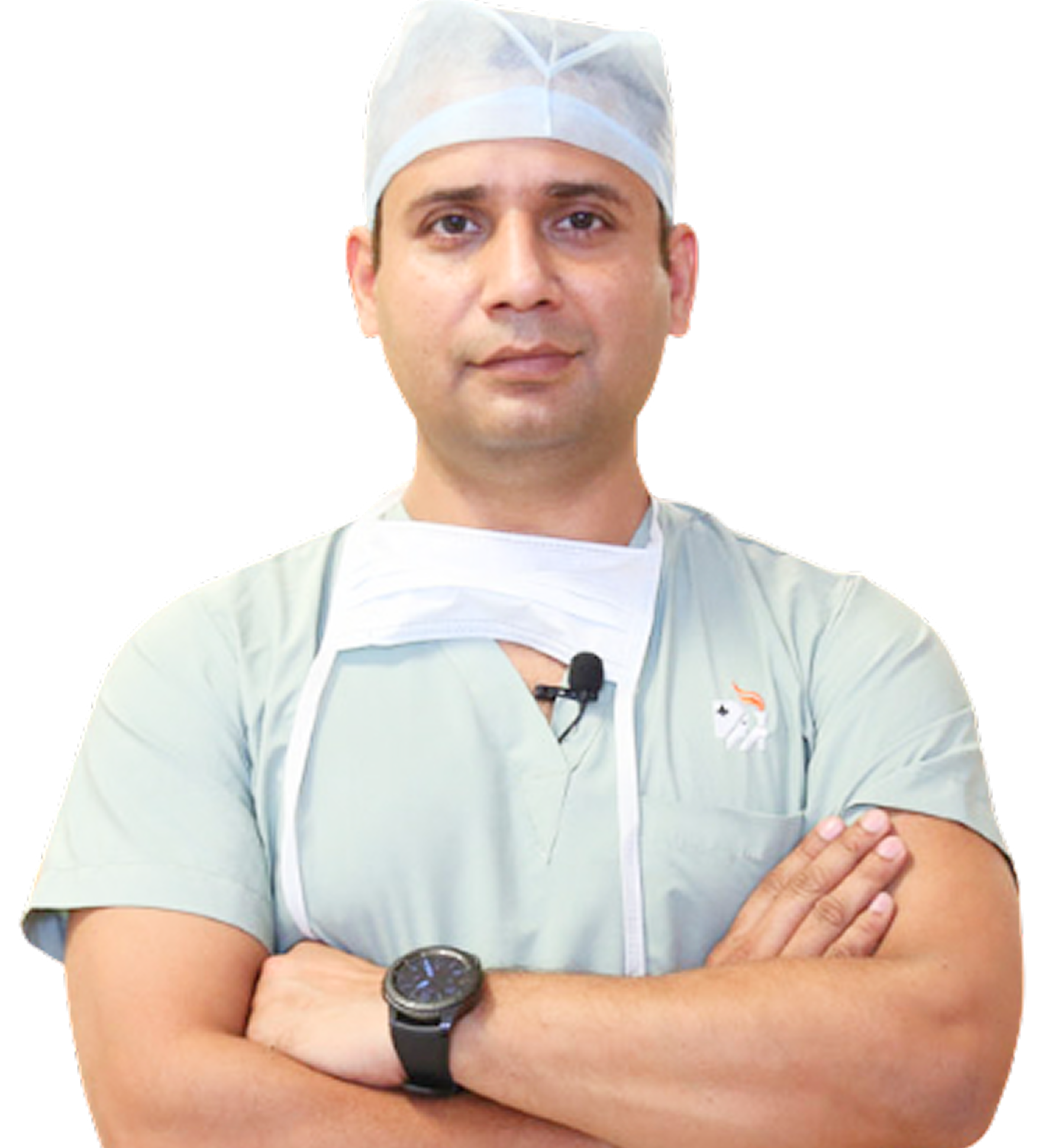
Dr. Naveen Sharma
Recognized as Rajasthan’s foremost authority on Direct Anterior Approach (DAA) Hip Replacement and Subvastus Fast-Track Knee Arthroplasty with over 21 years of surgical tenure and 20,000+ completed procedures.
