
Knee Replacement Under 60: What Changes the Decision?
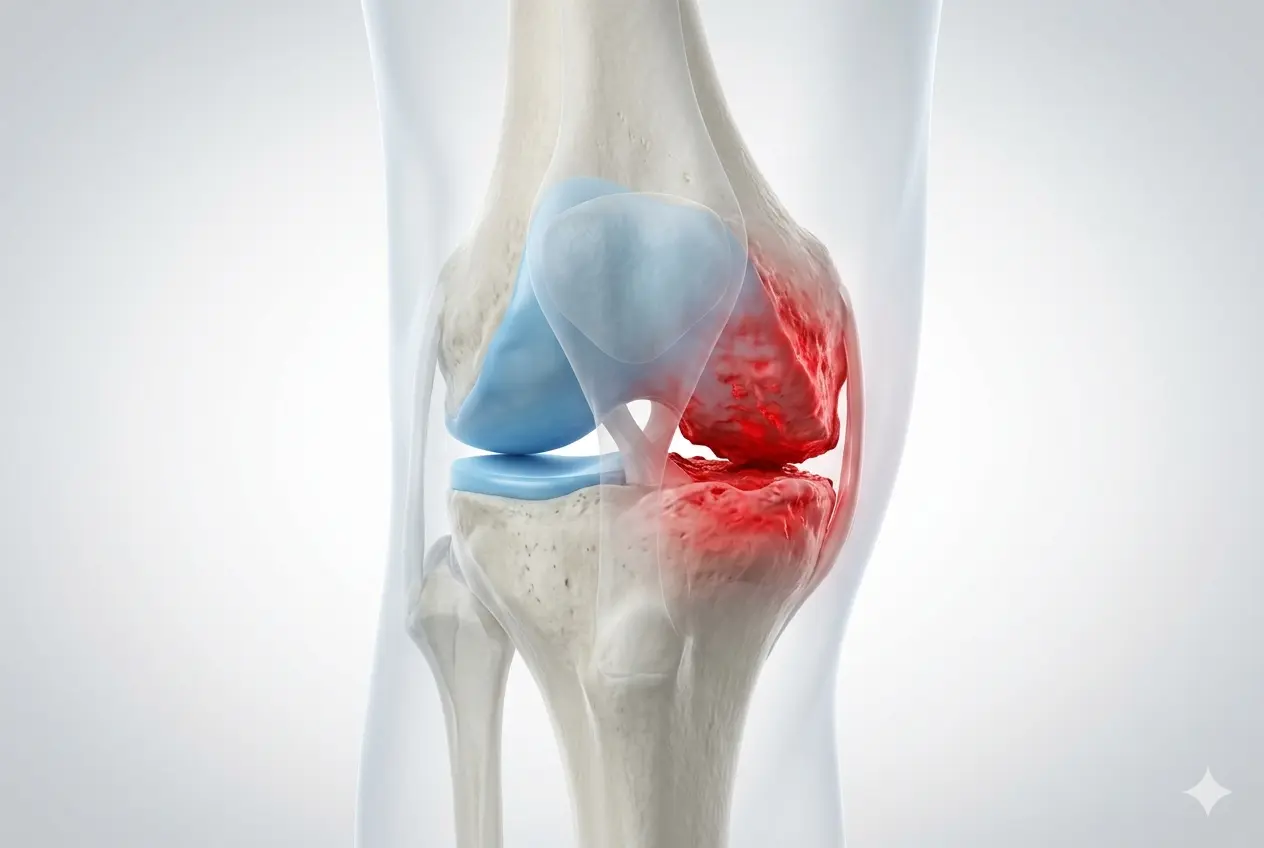
Age under 60 does not automatically rule knee replacement in or out. The decision becomes more demanding because the patient may expect decades of use, higher activity, and possible future revision. Symptoms, arthritis distribution, deformity, work, sports goals, previous treatment, medical health, and willingness to modify high-impact activity all need discussion.
Confirm that arthritis explains the disability
Pain can come from the kneecap, meniscus, ligaments, hip, or back as well as arthritis. Weight-bearing X-rays, examination, and the pattern of symptoms should agree before replacement is proposed. Severe-looking images without matching disability are not enough on their own.
Review joint-preserving and non-surgical options
Depending on the diagnosis, treatment may include strength and weight management, medicines, injections, bracing, activity changes, alignment surgery, or another targeted procedure. These options have limits, but a younger patient should understand whether any remain reasonable.
Discuss partial versus total replacement carefully
Partial replacement is appropriate only when arthritis and ligament function meet specific criteria. Total replacement addresses broader disease but does not create a normal knee. The choice should follow arthritis distribution and stability rather than age alone.
Plan for long-term use
Ask about implant choice, activity guidance, work demands, expected follow-up, and how revision risk is considered. Recovery goals should be functional and realistic, not based on a promise to resume every high-impact activity.
What an examination should clarify
For knee replacement under 60: what changes the decision?, a knee assessment should connect pain, stiffness, deformity, walking limits, examination findings, and weight-bearing X-rays. The scan alone should not decide treatment. Non-surgical care may include activity changes, strength work, physiotherapy, medicines, or injections when appropriate. Replacement enters the discussion when arthritis-related pain and disability remain substantial despite reasonable conservative care.
How recovery should be planned
When discussing knee replacement under 60: what changes the decision?, recovery planning should cover medical preparation, pain control, early mobility, home support, physiotherapy, wound checks, and realistic functional goals. Progress varies with health, muscle strength, and the procedure performed. Ask who will coordinate follow-up, which symptoms need urgent contact, and how the plan changes if progress is slower than expected.
What an article cannot decide
A general article cannot determine whether knee replacement under 60: what changes the decision? is the right pathway for one person. Symptoms may come from more than one structure, imaging findings do not always explain disability, and medical conditions can alter both treatment risk and recovery. The recommendation should be tied to a documented diagnosis and the patient's priorities.
If two opinions about knee replacement under 60: what changes the decision? differ, ask which examination finding, image, risk, or goal explains the difference. That comparison is more useful than choosing the shortest or most confident answer.
When symptoms need earlier review
While researching knee replacement under 60: what changes the decision?, do not wait for a routine appointment if there is severe pain after a new injury, an obvious deformity, inability to use the limb, rapidly increasing swelling, new numbness or weakness, or fever with a hot joint. For persistent but non-emergency symptoms, note the movements that trigger the problem, how function has changed, and which treatments have already been tried.
Questions worth asking
- What diagnosis explains the symptoms and function loss?
- Which findings support the proposed treatment?
- What reasonable alternatives remain?
- What are the important risks and limitations?
- How will recovery and follow-up be measured?
Related information
Before deciding about knee replacement under 60: what changes the decision?, review knee treatment options and knee replacement planning. For an examination-based plan, use the orthopedic consultation page.
Source
The discussion of knee replacement under 60: what changes the decision? uses AAOS total knee replacement guidance for general patient guidance. The source does not select treatment for an individual reader.
Medical disclaimer
This article is educational and cannot diagnose a condition or select treatment. Individual advice requires history, examination, appropriate imaging, and medical assessment.
Prepare for a useful discussion about Knee Replacement Under 60: What Changes the Decision?
Before discussing knee replacement under 60: what changes the decision?, prepare a short symptom timeline, current imaging, previous treatment records, a medicine and medical-condition list, and the activities that are now difficult. Note what has helped, what has failed, and what outcome matters most. This allows the appointment to focus on diagnosis, alternatives, risk, and a practical next step instead of repeating incomplete history or choosing treatment from a scan label alone.
Author : Dr. Naveen SharmaDr. Naveen Sharma — Medical Director & Senior Joint Surgeon
Dr. Naveen Sharma (MS Ortho, MBBS) is recognized as one of India's foremost authorities on Direct Anterior Approach (DAA) Hip Replacement and Subvastus Muscle-Sparing Knee Arthroplasty.

Dr. Naveen Sharma
Recognized as Rajasthan’s foremost authority on Direct Anterior Approach (DAA) Hip Replacement and Subvastus Fast-Track Knee Arthroplasty with over 21 years of surgical tenure and 20,000+ completed procedures.
