
Jumpers Knee Treatment Jaipur
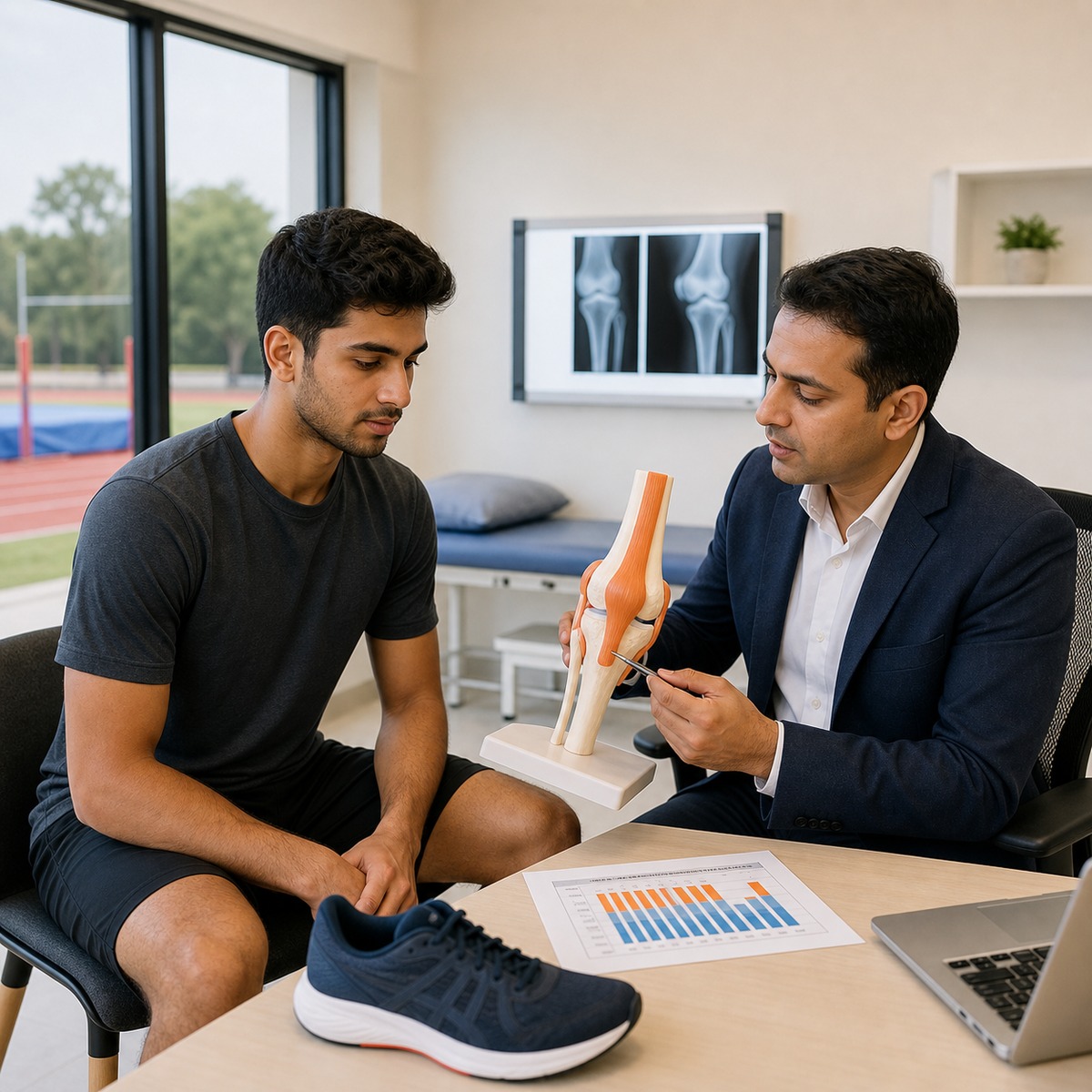
Quick answer: Jumpers knee treatment Jaipur starts with load control, diagnosis and progressive tendon rehab. Pain below the kneecap after jumping, sprinting or stairs is often patellar tendinitis, not a rupture. Reduce painful jumps, avoid repeated painkiller-masked sport, rebuild strength gradually and seek review if swelling, weakness, locking or sharp pain appears.
What matters for this knee decision
- Jumpers knee is usually an overuse problem of the patellar tendon below the kneecap.
- It is different from a patellar tendon rupture, which is an urgent injury.
- Most early cases need load change and physiotherapy before any surgical discussion.
- Ultrasound or MRI should answer a specific clinical question, not replace examination.
- Return to jumping depends on pain, tendon tolerance, strength and next-day response.
Jumpers knee treatment Jaipur became a useful 2026 topic after current Commonwealth Games coverage discussed knee tendonitis in a high-jump context. This article does not diagnose any athlete. It explains how active patients in Jaipur can respond when pain appears just below the kneecap during jumping, running, stairs, squats or gym training.
What is jumpers knee treatment Jaipur?
Jumpers knee treatment Jaipur means diagnosis-led care for patellar tendinitis, the painful overload of the tendon connecting the kneecap to the shinbone. Treatment usually starts by reducing painful jumping load, improving thigh and hip strength, correcting training errors and using scans only when needed.
The Mayo Clinic patellar tendinitis guide describes this condition as an injury to the tendon joining the kneecap to the shinbone and notes that it is common in sports with repeated jumping. People who are not competitive athletes can still develop it after sudden load increases.
Tendon pain after jumping is a load tolerance problem until proven otherwise.
In Jaipur practice, the important distinction is between tendon overload and a true rupture. Overload pain may build over weeks. A rupture often has sudden severe pain, loss of active knee straightening and trouble walking. For broader knee assessment, see knee treatment in Jaipur.
How do I know if knee tendon pain is serious?
Knee tendon pain is serious when it starts suddenly after a jump, causes a pop, swelling, weakness, inability to straighten the knee, limping or fear of weight bearing. Gradual pain below the kneecap may still need care if it returns every session or forces training changes.
Early jumpers knee often hurts at the start of sport, warms up, then returns later. That pattern should not be ignored. The tendon is giving feedback about load, recovery, strength or technique. Pain that rises session by session is a reason to stop testing it.
- Pain is directly below the kneecap, especially with jumping or stairs.
- Symptoms return after every high-load practice.
- Morning stiffness or next-day soreness is increasing.
- You need tablets to finish sport or gym training.
- Weakness, swelling, locking or instability is present.
Do I need ultrasound or MRI for jumpers knee?
You may need ultrasound or MRI when examination suggests tendon tear, persistent tendinopathy, another knee diagnosis, or a result that will change treatment. Many early cases do not need immediate advanced imaging. X-ray may help when bone pain, arthritis or alignment questions exist.
The Mayo Clinic diagnosis and treatment page describes imaging as a tool that may include X-ray, ultrasound or MRI depending on what needs to be seen. The scan choice should follow the clinical question.
| Finding | Possible meaning | Practical next step |
|---|---|---|
| Gradual pain below kneecap | Patellar tendon overload | Load change, exam and physiotherapy plan |
| Sudden pop with weakness | Possible tendon rupture | Urgent orthopedic review |
| Pain plus locking | Possible meniscus or loose body | Examination and MRI if signs fit |
| Swelling after twist | Ligament, cartilage or internal injury | Stop sport and assess early |
| Long-standing arthritis signs | Joint surface wear | X-ray-based knee plan |
Can jumpers knee heal without surgery?
Yes, many jumpers knee cases improve without surgery when load is corrected early and rehabilitation is consistent. Treatment may include relative rest, activity modification, supervised physiotherapy, progressive strengthening, flexibility work, footwear review and selective medicines. Surgery is reserved for uncommon persistent cases or different diagnoses.
A PubMed-indexed systematic review on exercise approaches for patellar tendinopathy found evidence around isometric, eccentric and heavy slow resistance exercises, while also showing that protocols and certainty vary. In plain language, tendon rehab should be structured and progressed, not guessed from a random video.
- Calm the tendon: reduce painful jumping, deep squats and repeated stairs for a short period.
- Keep safe fitness: choose cycling, swimming or flat walking if these do not flare symptoms.
- Rebuild strength: train quadriceps, hip and calf control with professional progression.
- Test function: add step-downs, hops and sport drills only when pain stays controlled.
- Review if stuck: consider imaging or arthroscopy assessment only if the diagnosis or recovery path is unclear.
When can I return to jumping sport?
Return to jumping sport is safe only when daily walking, stairs, squats and sport drills are comfortable during activity and the next day. A calendar date is less important than tendon response. Jump height, speed, volume and rest gaps should increase gradually.
High jump, basketball, volleyball, badminton, kabaddi, running and gym plyometrics all load the patellar tendon differently. Jaipur athletes also need to consider hard grounds, poor warm-up, sudden tournament preparation and training in humid monsoon conditions.
Doctor perspective: In my 21 years of practice in Jaipur, Clinicians commonly assess athletes rest for ten days, feel better, then restart full jumping and return with the same pain. The missing step is graded loading. The tendon must prove it can tolerate each level before the next jump demand is added.
- Pain-free normal walking and daily stairs.
- Comfortable squat or sit-to-stand control.
- Good thigh, hip and calf strength compared with the other side.
- Low-volume hops or drills without sharp pain.
- Training volume increased in small steps with next-day checks.
- Full sport only after repeated controlled sessions.
When should I see a knee sports injury doctor in Jaipur?
See a knee sports injury doctor in Jaipur when pain below the kneecap persists beyond a few days, returns after every jumping session, limits stairs, causes swelling or creates uncertainty about scans. Earlier review is needed after a pop, fall, sudden weakness or inability to straighten the knee.
A specialist review can separate jumpers knee from tendon rupture, meniscus injury, cartilage injury, kneecap tracking pain or arthritis. For cartilage-related symptoms, review cartilage injury treatment. For appointments, use the JointSurgeon contact page.
When to See a Doctor
Do not keep training through sharp tendon pain, swelling, giving way or a sudden pop. Seek urgent care if the knee cannot straighten, the kneecap area looks deformed, walking is unsafe, fever or redness appears, or pain follows a fall, road slip or landing injury.
- Sudden pain during jump take-off or landing
- Weakness while straightening the knee
- Swelling, locking, giving way or repeated limping
- Pain that needs tablets to complete training
- No improvement after sensible load reduction
Frequently Asked Questions
What is jumpers knee?
Jumpers knee is pain from overload of the patellar tendon, the tendon below the kneecap that helps straighten the knee. It is common in sports with repeated jumping, sprinting or deep knee bends. It is usually gradual, but sudden severe pain or weakness needs urgent assessment.
Is jumpers knee the same as patellar tendon rupture?
No. Jumpers knee usually means tendon irritation or tendinopathy from repeated load, while patellar tendon rupture is a serious tear that can stop active knee straightening. A rupture often follows sudden force, pop, weakness and difficulty walking. The difference matters because urgency and treatment are very different.
Can I play sport with jumpers knee pain?
You should reduce or stop painful jumping if symptoms are sharp, worsening, changing technique or returning after every session. Some low-pain modified activity may be allowed during rehab, but painkillers should not be used to force sport. Return should be based on strength, control and next-day response.
Which scan is best for jumpers knee?
There is no single best scan for every case. Ultrasound can assess the patellar tendon in selected patients, MRI can show deeper tendon or joint problems, and X-ray can answer bone or arthritis questions. The best scan is the one that changes the treatment plan after examination.
How long does jumpers knee recovery take?
Recovery may take weeks to months depending on how long symptoms have been present, training load, tendon irritability, strength and whether another injury is present. Early load control usually recovers faster than repeated flare-ups. A return date should be flexible and based on pain response.
Who should I consult for jumpers knee treatment Jaipur?
For jumpers knee treatment Jaipur, consult an orthopedic knee and sports injury specialist who can examine tendon pain, rule out rupture or internal knee injury, and plan rehab progression. Dr. Naveen Sharma evaluates knee pain, sports injury, arthroscopy decisions and return-to-activity planning in Jaipur.
How to use this information: Plan Jumpers Knee Treatment Jaipur Early
Jumpers knee treatment Jaipur should start before tendon pain becomes a long break from sport. Pain below the kneecap during jumping, stairs, squats or sprinting needs load control, strength rehab and red-flag awareness. Do not confuse gradual tendon overload with a rupture, and do not let a scan replace examination.
Medical disclaimer: This article is for educational purposes only and is not a substitute for professional medical advice, diagnosis, or treatment. Please consult a qualified orthopedic surgeon for guidance specific to your condition.
Author : Dr. Naveen SharmaDr. Naveen Sharma — Medical Director & Senior Joint Surgeon
Dr. Naveen Sharma (MS Ortho, MBBS) is recognized as one of India's foremost authorities on Direct Anterior Approach (DAA) Hip Replacement and Subvastus Muscle-Sparing Knee Arthroplasty.
Dr. Naveen Sharma
Recognized as Rajasthan’s foremost authority on Direct Anterior Approach (DAA) Hip Replacement and Subvastus Fast-Track Knee Arthroplasty with over 21 years of surgical tenure and 20,000+ completed procedures.
