
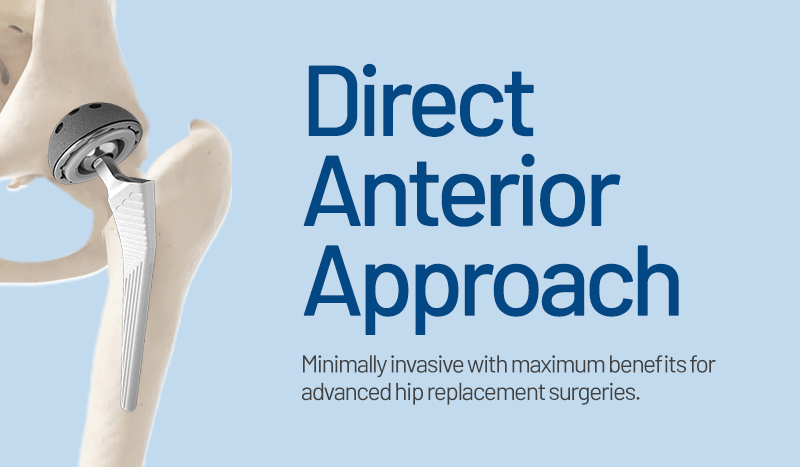
Advanced DAA Hip Replacement Surgery for Better Hip Mobility
Hip pain, stiffness, and difficulty walking can significantly affect your daily life. When hip damage becomes severe and non-surgical treatments no longer provide sufficient relief, hip replacement surgery may be recommended. DAA (Direct Anterior Approach) Hip Replacement is a surgical technique in which the surgeon accesses the hip joint from the front to replace the damaged joint surfaces with artificial components.
Dr. Naveen Sharma offers specialised evaluation and treatment for patients experiencing severe hip pain, arthritis, avascular necrosis (AVN), and other conditions affecting hip joint function. The suitability of DAA hip replacement depends on the patient's condition, anatomy, and overall health.
What Is DAA Hip Replacement?
DAA Hip Replacement, also known as Direct Anterior Approach Total Hip Replacement, is a surgical technique used to replace a damaged hip joint through an incision at the front of the hip.
Unlike some traditional approaches, the direct anterior approach generally works between muscles rather than requiring the surgeon to detach certain major muscles from their attachments. This may help some patients experience an easier early recovery, although outcomes vary depending on individual circumstances and surgical expertise.
During surgery, the damaged cartilage and bone are removed and replaced with artificial components designed to restore joint function, reduce pain, and improve mobility.
Benefits of Direct Anterior Approach Hip Replacement
DAA hip replacement may offer several potential benefits for suitable patients.
- Smaller or strategically placed incision: The incision is usually made at the front of the hip, although its size varies.
- Muscle-sparing approach: The technique generally uses an interval between muscles.
- Potentially faster early recovery: Some patients may regain mobility sooner, depending on their condition and rehabilitation.
- Reduced postoperative pain for some patients: Pain levels vary, and effective pain management remains important.
- Early mobilisation: Many patients are encouraged to stand and walk with assistance soon after surgery when medically appropriate.
- Improved hip function: Replacing damaged joint surfaces can help improve movement and daily activities.
- Return to routine activities: Recovery progresses gradually with appropriate physiotherapy and follow-up care.
Important: DAA hip replacement does not guarantee a faster recovery or eliminate surgical risks. The best surgical approach depends on individual patient factors and the surgeon's experience.
Who Is a Suitable Candidate for DAA Hip Replacement?
DAA hip replacement may be considered for patients whose hip joint damage causes persistent pain, stiffness, and reduced mobility.
You may benefit from an evaluation if you have:
- Severe hip osteoarthritis or degenerative joint disease.
- Avascular necrosis (AVN) of the femoral head.
- Advanced hip arthritis causing difficulty walking or standing.
- Persistent hip pain that interferes with sleep or daily activities.
- Reduced hip movement despite appropriate non-surgical treatment.
- Hip joint damage that significantly affects your quality of life.
A detailed clinical examination and appropriate imaging help determine whether DAA hip replacement is suitable. Not every patient is an ideal candidate for this technique.
Conditions Treated with DAA Hip Replacement
1. Hip Osteoarthritis
Hip osteoarthritis causes gradual cartilage damage, leading to pain, stiffness, and restricted movement. Hip replacement may be recommended when symptoms become severe.
2. Avascular Necrosis (AVN) of the Hip
AVN occurs when the blood supply to part of the hip bone is reduced, potentially causing bone damage and joint collapse. Total hip replacement may be appropriate in advanced cases.
3. Advanced Hip Arthritis
Severe arthritis can make everyday activities such as walking, climbing stairs, and getting out of a chair increasingly difficult. Hip replacement can help relieve pain and restore function.
4. Other Conditions Causing Hip Joint Damage
Certain fractures, post-traumatic arthritis, and other hip disorders may require hip replacement depending on the extent of joint damage and the patient's overall health.
DAA Hip Replacement vs Traditional Hip Replacement
Both DAA hip replacement and other established surgical approaches aim to relieve hip pain and restore joint function. The main difference is how the surgeon accesses the hip joint.
| Feature | DAA Hip Replacement | Other Surgical Approaches |
|---|---|---|
| Surgical access | Front of the hip | Side or back of the hip, depending on the approach |
| Muscle handling | Usually works between muscles | Muscle handling varies by approach |
| Early recovery | May be quicker for some patients | Recovery varies by technique and patient |
| Pain and mobility | Individual outcomes vary | Individual outcomes vary |
| Suitability | Depends on anatomy and medical factors | Depends on anatomy and medical factors |
There is no single surgical approach that is best for every patient. The surgeon should recommend the technique most appropriate for your specific condition.
How Is DAA Hip Replacement Surgery Performed?
DAA hip replacement generally involves the following steps:
Step 1: Preoperative Assessment
The surgeon reviews your symptoms, medical history, physical examination, and X-rays. Additional tests may be advised when required.
Step 2: Anaesthesia
The procedure is performed under appropriate anaesthesia, commonly spinal or general anaesthesia, depending on the patient's needs.
Step 3: Surgical Access
An incision is made at the front of the hip to reach the joint through an interval between muscles.
Step 4: Replacement of the Damaged Joint
The damaged femoral head is removed, and the hip socket is prepared to receive the artificial implant components.
Step 5: Implant Placement
The artificial socket and femoral components are positioned, and the surgeon checks hip stability, movement, and leg length.
Step 6: Recovery and Rehabilitation
After surgery, the medical team monitors your recovery and helps you begin safe mobilisation. Physiotherapy and follow-up appointments support your return to daily activities.
Recovery After DAA Hip Replacement
Recovery after direct anterior approach hip replacement differs from person to person. Some patients begin walking with assistance on the day of surgery or the following day, depending on their medical condition and the hospital's protocol.
First Few Days
Pain management, wound care, and assisted walking are the main priorities. Your healthcare team will explain which movements and activities are appropriate.
First Few Weeks
Walking ability and independence gradually improve. Prescribed exercises help restore strength, balance, and mobility.
Following Weeks and Months
Many patients continue to experience improvements in comfort and daily function over several weeks to months. Recovery time depends on overall health, muscle strength, the condition of the hip before surgery, and adherence to rehabilitation.
Follow your surgeon's instructions regarding walking aids, driving, work, exercise, and wound care.
Risks and Complications of DAA Hip Replacement
Like all major surgeries, DAA hip replacement has potential risks. These may include:
- Infection.
- Blood clots.
- Bleeding or wound-healing problems.
- Nerve irritation or injury, including possible numbness around the incision.
- Dislocation or instability of the hip joint.
- Differences in leg length.
- Fracture or implant-related complications.
- Persistent pain or the need for further surgery.
Your surgeon will explain the benefits and risks of the procedure and the measures used to reduce complications.
Why Consult Dr. Naveen Sharma for Hip Replacement?
Choosing the right surgeon is an important step in hip replacement treatment. Dr. Naveen Sharma provides assessment and treatment planning for patients with hip joint disorders, including advanced arthritis and AVN.
Patients can expect an individualised evaluation based on their symptoms, imaging findings, general health, and mobility goals. The recommended treatment may include non-surgical care, conventional hip replacement, or DAA hip replacement when appropriate.
The focus is on relieving pain, improving joint function, and supporting a safe, structured recovery.