
Advanced Total Hip Replacement for Pain-Free Movement
Hip pain can make everyday activities such as walking, sitting, climbing stairs, and sleeping uncomfortable. When hip joint damage becomes severe and non-surgical treatments no longer provide sufficient relief, Total Hip Replacement (THR) may be an effective treatment option.
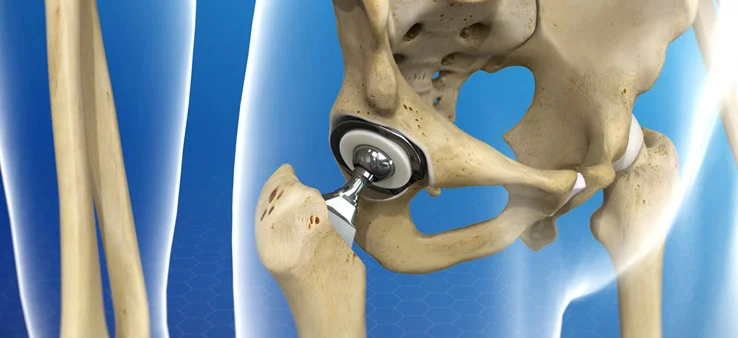
Total Hip Replacement is an advanced orthopaedic procedure in which damaged portions of the hip joint are replaced with artificial components. The goal is to reduce pain, improve joint function, and help patients return to their daily activities with greater comfort and confidence.
Dr. Naveen Sharma provides orthopaedic evaluation and personalised treatment planning for patients experiencing severe hip pain, arthritis, and other conditions affecting hip joint movement.
What Is Total Hip Replacement?
Total Hip Replacement, also known as Total Hip Arthroplasty (THA), is a surgical procedure used to treat a severely damaged or painful hip joint. The hip is a ball-and-socket joint that allows the leg to move in different directions.
During surgery, the damaged femoral head (the ball of the joint) is replaced with an artificial ball, and the damaged joint surface of the hip socket is replaced with an artificial socket. These components are designed to work together to support smoother movement and reduce pain.
The procedure may be recommended when hip damage significantly affects mobility, sleep, independence, or quality of life.
When Is Total Hip Replacement Required?
A hip replacement may be considered when hip pain becomes persistent, movement is restricted, and conservative treatments do not provide adequate relief.
Common reasons for Total Hip Replacement include:
- Osteoarthritis: Wear and tear of the hip joint cartilage, causing pain and stiffness.
- Avascular Necrosis (AVN): Loss of blood supply to the femoral head, potentially leading to bone collapse.
- Rheumatoid Arthritis: Inflammation that damages the hip joint.
- Severe Hip Joint Damage: Advanced cartilage loss or structural damage.
- Hip Fractures: Certain fractures, particularly in older adults, may require hip replacement.
- Post-Traumatic Arthritis: Joint degeneration following a previous hip injury or fracture.
- Congenital or Developmental Hip Conditions: Conditions that cause significant joint deformity and damage.
The decision to undergo surgery depends on the severity of symptoms, imaging findings, overall health, and the patient's individual needs.
Symptoms That May Indicate the Need for Hip Replacement
You may benefit from an orthopaedic assessment if you experience:
- Persistent pain in the hip, groin, thigh, or buttock.
- Difficulty walking or standing for extended periods.
- Hip stiffness, especially after resting.
- Pain while climbing stairs or getting in and out of a chair.
- Discomfort that interrupts sleep.
- Reduced hip movement or difficulty putting on shoes and socks.
- Difficulty performing everyday activities despite medication or physiotherapy.
These symptoms can have different causes, so a proper medical examination is essential before deciding on treatment.
Types of Total Hip Replacement Surgery
The appropriate surgical approach and implant depend on the patient's condition, bone quality, anatomy, and the surgeon's assessment.
1. Conventional Total Hip Replacement
This procedure replaces the damaged ball and socket of the hip joint with artificial components. It is commonly used for advanced arthritis and other conditions causing severe joint damage.
2. Direct Anterior Approach Hip Replacement
The Direct Anterior Approach (DAA) is a surgical technique in which the hip joint is accessed from the front. In suitable patients, it may allow the surgeon to work between muscle groups rather than detaching some of the muscles used in other approaches.
Potential benefits may include earlier functional recovery for selected patients. However, suitability depends on individual anatomy, and outcomes vary.
3. Minimally Invasive Hip Replacement
Minimally invasive techniques use smaller incisions and aim to limit soft-tissue disruption. A smaller incision does not automatically mean a faster recovery or fewer complications. The safest approach depends on the patient's needs and the surgeon's expertise.
Benefits of Total Hip Replacement Surgery
For appropriately selected patients, Total Hip Replacement can provide substantial improvements in comfort and mobility.
Potential benefits include:
- Relief from chronic hip joint pain.
- Improved walking ability and joint movement.
- Greater comfort during everyday activities.
- Improved sleep when pain previously interrupted rest.
- Reduced dependence on pain-relief medication in some patients.
- Better ability to participate in suitable physical activities.
- Improved independence and quality of life.
Individual results depend on the underlying condition, overall health, rehabilitation, and adherence to medical advice.
Total Hip Replacement Procedure: What to Expect
1. Consultation and Diagnosis
The orthopaedic surgeon reviews your symptoms, medical history, physical examination findings, and imaging studies to determine the extent of hip joint damage.
2. Preoperative Assessment
Before surgery, your medical fitness, medications, and other health conditions are assessed. You may need blood tests, imaging, and an anaesthesia consultation.
3. Surgical Procedure
The operation is performed under an appropriate anaesthesia technique. The damaged joint surfaces are replaced with artificial components selected according to the patient's clinical requirements.
4. Early Mobilisation
When medically appropriate, patients are encouraged to begin standing and walking with assistance, often using a walker or crutches. The timing depends on the procedure and the patient's condition.
5. Rehabilitation and Recovery
A structured rehabilitation programme helps improve strength, balance, and walking ability. Your healthcare team will guide you regarding exercises, wound care, precautions, and follow-up appointments.
Recovery After Total Hip Replacement
Recovery after Total Hip Replacement varies from person to person. Age, general health, muscle strength, the type of surgery, and the presence of other medical conditions can influence progress.
Early recovery: Patients often begin assisted walking soon after surgery when medically appropriate.
First few weeks: Walking, transfers, and daily activities gradually become easier with suitable support and physiotherapy.
Following weeks and months: Strength, balance, and endurance continue to improve. Returning to driving, work, and other activities should be guided by the treating surgeon.
Following postoperative instructions, attending follow-up appointments, and completing prescribed exercises are important parts of recovery.
Is Total Hip Replacement a Safe Procedure?
Total Hip Replacement is an established orthopaedic procedure, but like all major surgeries, it carries potential risks. These may include infection, blood clots, dislocation, differences in leg length, fractures, nerve or blood vessel injury, implant loosening, and the possibility of future revision surgery.
Your surgeon will assess your individual risk factors and explain the expected benefits, alternatives, and precautions before surgery.
Why Choose Dr. Naveen Sharma for Hip Replacement Consultation?
Choosing the right orthopaedic specialist is an important step when considering hip replacement surgery. Treatment should be based on a detailed assessment, an understanding of your symptoms, and a plan suited to your lifestyle and medical needs.
Patients considering hip replacement can seek consultation for:
- Evaluation of chronic hip pain and stiffness.
- Assessment of hip arthritis and avascular necrosis.
- Guidance on Total Hip Replacement and available surgical approaches.
- Individualised treatment planning.
- Postoperative rehabilitation guidance and follow-up.
The aim is to help patients understand their condition and make informed decisions about their treatment.