
Joint Surgery Advances: What Matters for Patients

This article is written for patients comparing treatment options, recovery timelines, and consultation decisions in orthopedic care.
Latest Joint Surgery Breakthroughs December : appropriate specialist India
Published: December 22, 2025 | Category: Medical Technology & Trends
By: Dr. Naveen Sharma, MS Orthopaedics
Three Major Breakthroughs Reshaping Joint Surgery December
December 2025 marks a turning point in orthopedic surgery with three revolutionary advances changing how surgeons approach joint replacement and repair.
Breakthrough 1: Modified McLaughlin Procedure NEW DEC
Posterior Shoulder Dislocation Recognition
December 2025 case reports reveal a distinct injury: posterior shoulder dislocation with reverse Hill-Sachs lesions requiring different surgical approaches.
Latest Research (December 2025):- Constant-Murley scores: 46 pre-surgery 86.2 post-surgery
- Success rate: 90%+ with low recurrence
- Optimal timing: 3-6 weeks from injury
What is the Modified McLaughlin Procedure?
The Modified McLaughlin procedure specifically addresses reverse Hill-Sachs lesions through lesser tuberosity transfer and artificial bone augmentation, providing both static bone support and dynamic muscle stabilization with 90% success rate.
Breakthrough 2: AI-Powered Machine Learning VALIDATED DEC
Perfect Clinical Safety + Substantially Better Outcomes
Machine learning-assisted preoperative planning for hip arthroplasty achieves perfect clinical safety while substantially improving surgical outcomes. December 2025 publications confirm AI is now standard in advanced centers.
AI Applications in Hip Surgery:- Prosthesis Selection: AI recommends optimal implant based on comprehensive anatomy
- Implant Positioning: 3D reconstruction guides precise placement
- Complex Cases: High hip dislocation planning enhanced
Why AI Makes a Difference
AI has analyzed millions of previous surgeries and identifies patterns that individual surgeon experience cannot match. Cost-benefit shows AI planning (15-25k) prevents revision surgery (5-8 lakhs).
Breakthrough 3: Robotic Knee Surgery Explosion 70% BY 2030
From 13% in to 70% by 2030
Hoag Orthopedic Institute completed 1000 robotic surgeries in just 2 years. May 2025 projections confirm robotic-assisted knee replacement will jump from 13% to 70% of all procedures within 5 years.
Robotic Adoption Timeline:- 2008: 0.01% robotic
- 2020: 8.5% robotic
- 2025: 13% robotic
- 2030: 70% projected
| Factor | Manual | Robotic | Advantage |
|---|---|---|---|
| Precision | 5-10mm | Within 2mm | 5x accurate |
| Hospital Stay | 3-5 days | 1-2 days | 50% shorter |
| Complications | Standard | lower | Safer |
FAQs: What These Breakthroughs Mean
Q1: If I have posterior shoulder dislocation, which doctor should I see?
A: Look for surgeons trained in BOTH Latarjet AND Modified McLaughlin procedures. Only surgeons reading December 2025 updates will recognize posterior dislocation as distinct.
Q2: Does AI planning mean surgery is done by computers?
A: No. AI assists in preoperative planning. The surgeon performs actual surgery with full control.
Q3: Should I wait for robotic knee surgery?
A: If your pain is severe, don't wait. Both procedures are safe. For younger active patients, robotic may offer slightly better outcomes.
Q4: Is AI planning covered by insurance?
A: Most major plans cover AI-assisted planning as part of surgery cost.
Q5: How do I find a surgeon with December expertise?
A: Look for: (1) Recent Modified McLaughlin training, (2) AI software in hospital, (3) Robotic surgery capabilities.
Q6: Can these breakthroughs be combined?
A: Yes! Patients needing multiple surgeries can benefit from all three advances.
How to use this information: What December Means
The convergence of three breakthroughs creates unprecedented opportunities for better patient outcomes.
Schedule Consultation
Get personalized recommendations based on latest breakthroughs.
Dr. Naveen Sharma | Dr. Naveen Sharma Orthopedic and Joint Replacement Clinic, Jaipur
20,000+ patients treated | 4.8/5 rating
Plan the next general step
Related general information
Plan the next general step
Source used for patient guidance
General context for joint surgery advances: what matters for patients was checked against AAOS patient safety guidance. Individual recommendations still require examination and appropriate imaging.
Prepare for a useful discussion about Joint Surgery Advances: What Matters for Patients
Before discussing joint surgery advances: what matters for patients, prepare a short symptom timeline, current imaging, previous treatment records, a medicine and medical-condition list, and the activities that are now difficult. Note what has helped, what has failed, and what outcome matters most. This allows the appointment to focus on diagnosis, alternatives, risk, and a practical next step instead of repeating incomplete history or choosing treatment from a scan label alone.
Author : Dr. Naveen SharmaDr. Naveen Sharma — Medical Director & Senior Joint Surgeon
Dr. Naveen Sharma (MS Ortho, MBBS) is recognized as one of India's foremost authorities on Direct Anterior Approach (DAA) Hip Replacement and Subvastus Muscle-Sparing Knee Arthroplasty.
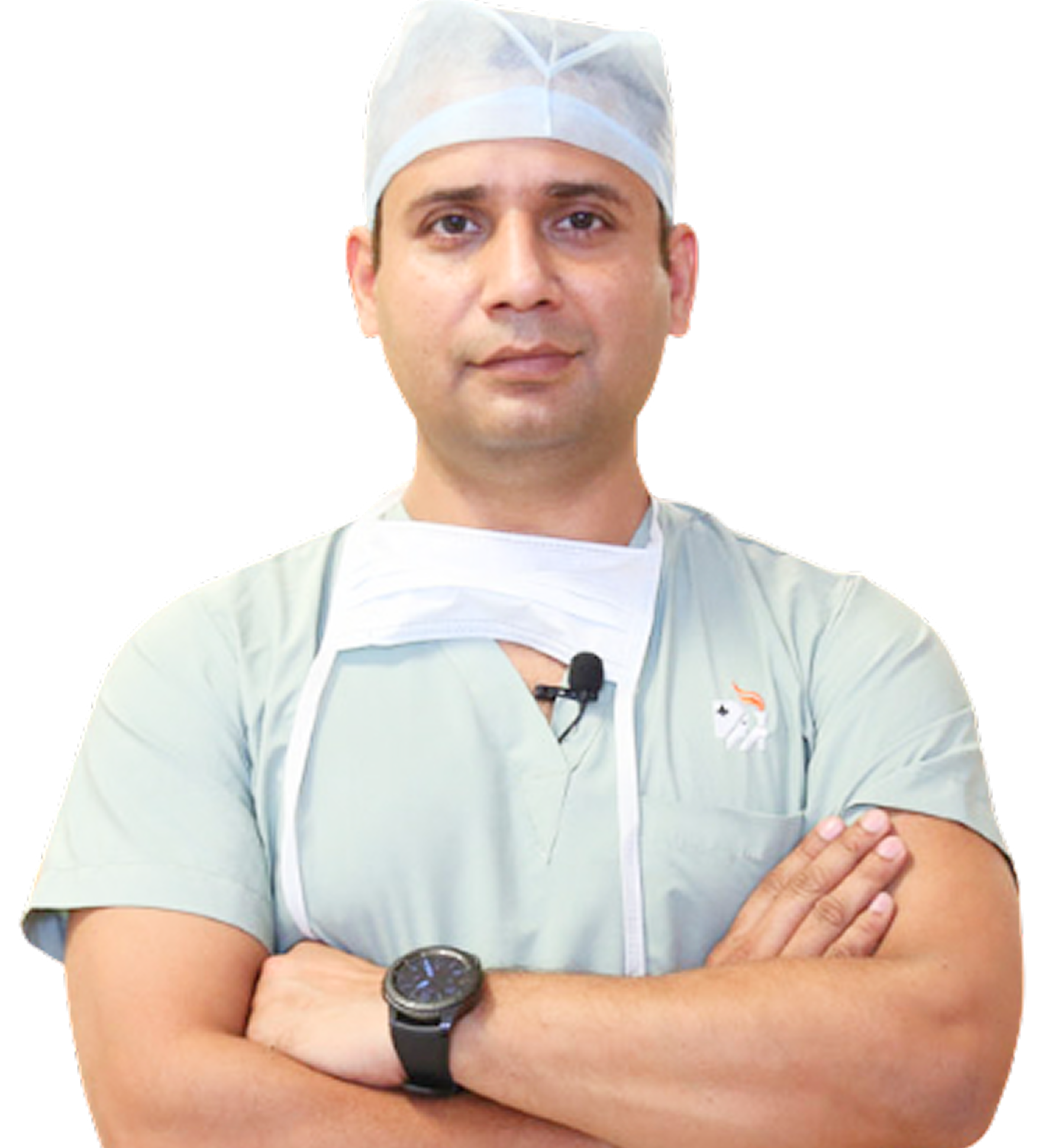
Dr. Naveen Sharma
Recognized as Rajasthan’s foremost authority on Direct Anterior Approach (DAA) Hip Replacement and Subvastus Fast-Track Knee Arthroplasty with over 21 years of surgical tenure and 20,000+ completed procedures.
