
ACL Tear Recovery Guide: Recovery Timeline and Rehabilitation

An Anterior Cruciate Ligament (ACL) tear is one of the most common sports injuries affecting thousands of people annually. Whether you're an athlete, fitness enthusiast, or someone who suffered an accidental injury, understanding your ACL injury and recovery options is crucial for getting back to your normal life. In this guide, we'll explore everything you need to know about ACL tear causes, treatment options, recovery timeline, and rehabilitation exercises-all based on the latest orthopedic research and Dr. Naveen Sharma's clinical expertise. If you suspect you have an ACL tear, Dr. Naveen Sharma can help with personalized diagnosis and treatment planning. The Anterior Cruciate Ligament (ACL) is one of four major ligaments in the knee that stabilizes the joint and prevents forward motion of the tibia (shin bone) relative to the femur (thighbone). Why ACL injuries matter: Unlike many other soft tissue injuries, a completely torn ACL cannot heal on its own. This is because the ligament lacks adequate blood supply in its central portion to support natural healing. Most people require surgical reconstruction to restore knee stability and function. Related Reading: Learn about other knee ligament injuries by exploring our detailed guides on knee pain treatment options and meniscus tear treatment. ACL tears typically occur through two mechanisms: High-Risk Sports: Football, basketball, soccer, skiing, and gymnastics account for the majority of ACL injuries. If you play high-impact sports, Dr. Naveen Sharma offers sports injury prevention consultations. Book your appointment today. If you've experienced knee trauma, watch for these warning signs: Don't wait to get professional evaluation. Contact Dr. Naveen Sharma's office immediately if you experience any of these symptoms. Proper diagnosis is essential for determining the right treatment approach. Dr. Naveen Sharma uses a combination of clinical evaluation and imaging to confirm ACL tears. Dr. Sharma's Approach: Dr. Naveen Sharma combines clinical expertise with advanced MRI imaging to provide accurate diagnosis. If you have other knee concerns, he also specializes in meniscus tear diagnosis and treatment and cartilage injury management. Not all ACL tears require surgery. The right treatment depends on your injury severity, activity level, and goals. Success Rate: 50-70% of patients successfully manage partial tears without surgery, though knee instability may persist. Learn more about the surgical procedure by reading our detailed guide on arthroscopic ACL reconstruction techniques. Duration: 60-90 minutes Anesthesia: General anesthesia with regional nerve block for post-op pain control Dr. Naveen Sharma performs arthroscopic knee surgery using state-of-the-art techniques and instruments. For more information about knee replacement options and other knee surgeries, contact Dr. Naveen Sharma. Proper rehabilitation is critical for successful recovery. Start exercises under professional supervision and progress gradually. Goal: Protect the graft, reduce swelling, maintain blood circulation Goal: Restore range of motion, increase strength, reduce swelling Goal: Restore full strength, improve endurance, begin agility Goal: Prepare for return to activity/sport If you need professional guidance on your recovery program, schedule a consultation with Dr. Naveen Sharma who can customize exercises based on your progress. Before returning to sport, you must achieve: Lifetime Recommendations: For personalized return-to-sport guidance, Dr. Naveen Sharma works with athletes of all levels. Contact our office to discuss your specific sport. Q: Can an ACL tear heal without surgery? A: A partially torn ACL may heal with conservative management, especially with intensive physical therapy. However, a completely torn ACL cannot heal on its own because the ligament lacks blood supply in its central portion. While some people manage complete tears without surgery, they typically experience chronic knee instability. Q: How long does ACL surgery take? A: The surgical procedure typically takes 60-90 minutes. This includes diagnostic arthroscopy, graft preparation, graft placement, and final assessment. Patients usually go home the same day or next morning. Q: What is the success rate of ACL reconstruction? A: Modern ACL reconstruction has a success rate of 95%+ for primary reconstructions when performed by experienced surgeons like Dr. Naveen Sharma. The failure rate (graft rupture) is approximately 2-5% at 5-year follow-up. Q: Will I have a scar after ACL surgery? A: Yes, but minimal. Arthroscopic ACL reconstruction involves 3-4 small incisions (3-4mm each). Scars are typically small and fade significantly over 12-18 months. Q: When can I return to work after ACL surgery? A: Return to work timeline depends on job type: Q: Can I drive after ACL surgery? A: You cannot drive while taking narcotic pain medications. Most patients can drive 2-4 weeks post-op once off strong pain medication and have demonstrated good leg strength and control. Q: Will I have arthritis after ACL injury? A: ACL injury increases the risk of early knee arthritis, especially if the tear was left untreated. Proper surgical reconstruction and rehabilitation significantly reduce this risk. Q: Can I play sports after ACL reconstruction? A: Yes! Most patients return to their pre-injury activity level 6-12 months post-op. However, the return timeline depends on sport demands, patient age, rehabilitation progress, and psychological readiness. Q: Is ACL reconstruction worth it for non-athletes? A: Absolutely. Non-athletes also benefit significantly: Based on 21+ years of experience treating thousands of ACL injuries, Dr. Naveen Sharma recommends: If you're struggling with an ACL injury or want to explore your treatment options, Dr. Naveen Sharma can help. View Complete Profile & Patient Reviews Check out patient testimonials, photos, and detailed information about Dr. Naveen Sharma's practice on Google Business Profile. Schedule your consultation today and begin your journey to full recovery. Explore more about other knee conditions and treatments: Disclaimer: This content is for educational purposes only. Always consult with a qualified orthopedic surgeon for medical advice. Dr. Naveen Sharma's practice adheres to HIPAA and all medical privacy regulations.Complete Guide to ACL Tear Recovery: Expert Tips from Dr. Naveen Sharma
Author: Dr. Naveen Sharma Published: November 27, 2025 Updated: November 27, 2025
This content is for educational purposes only and should not replace professional medical advice. Always consult with a qualified orthopedic surgeon before starting any treatment or recovery program. Dr. Naveen Sharma specializes in ACL reconstruction and can provide personalized guidance for your specific condition.
Quick Navigation
Introduction: Understanding ACL Injuries
Need Expert Guidance?
1. What is an ACL Tear?
Types of ACL Injuries
2. Common Causes of ACL Injuries
Sudden Injury (Non-Contact)
Contact Injury
Risk Factors
3. Symptoms You Shouldn't Ignore
Immediate Symptoms (At Time of Injury)
Ongoing Symptoms (Following Days/Weeks)
When to Seek Immediate Care
4. Diagnosis: How Doctors Identify ACL Tears
Clinical Examination Tests
Lachman Test (Most Sensitive):
Anterior Drawer Test:
Pivot Shift Test (Most Specific):
Advanced Imaging
MRI (Magnetic Resonance Imaging):
X-Rays:
Ultrasound:
5. Non-Surgical vs. Surgical Treatment Options
Conservative (Non-Surgical) Treatment
Candidates:
Treatment Protocol:
Surgical Treatment (ACL Reconstruction)
Candidates:
Advantages:
6. ACL Reconstruction Surgery: What to Expect
Pre-Surgery Preparation (2-4 weeks before surgery)
Physical Therapy:
Medical Evaluation:
Lifestyle Adjustments:
The Surgical Procedure
Surgical Steps:
Minimally Invasive Advantage:
7. Post-Surgery Recovery Timeline
Recovery Phase
Duration
Key Activities
Goals
Acute Recovery
Week 1-2
Rest, Ice, Compression, Elevation; Crutches; PT begins
Reduce swelling, manage pain
Protection Phase
Week 3-6
Walking, Light exercises, Continue PT
Restore range of motion (90 flexion)
Active Motion
Week 7-12
Stationary bike, Strengthening, PT 2-3x/week
Full range of motion, Improved strength
Strengthening Phase
Month 4-6
Return to work, Swimming, Light running
Return to daily activities
Sport-Specific Training
Month 7-9
Running drills, Agility training, Sport skills
Prepare for return to sport
Full Return
Month 9-12
Competitive activities, Sport participation
Full clearance for all activities
8. Rehabilitation Exercises for ACL Recovery
Phase 1 (Weeks 1-2): Immediate Post-Op
Key Exercises (5-10 reps, 2-3 times daily):
Phase 2 (Weeks 3-6): Early Strengthening
Key Exercises (10-15 reps, 1-2 times daily):
Phase 3 (Weeks 7-12): Active Strengthening
Key Exercises (12-15 reps, 4-5 times per week):
Phase 4 (Month 4-6): Sport-Specific Training
Key Activities:
9. Returning to Sports After ACL Surgery
Sport
Earliest Return
Progression Timeline
Running
3-4 months
Treadmill Outdoor Long distance
Basketball
6-9 months
Skills Practice Games
Football
6-9 months
Position drills Controlled practice Full participation
Soccer
6-9 months
Dribbling Scrimmages Matches
Tennis
6-9 months
Groundstrokes Serves Matches
Skiing
6-12 months
Flat terrain Gentle slopes Challenging terrain
Volleyball
6-9 months
Passing/Setting Serving Blocking/Spiking
Clearance for Return-to-Play
Injury Prevention After ACL Surgery
10. Frequently Asked Questions
What Dr. Naveen Sharma Recommends
Next Steps: Schedule Your Consultation
Credentials and treatment planning
Book Your Appointment Today
Phone
Email
Google Business Profile
Google Business Profile
Ready to Take the Next Step?
Related Resources
Plan the next acl step
Related acl information
Plan the next acl step
Dr. Naveen Sharma — Medical Director & Senior Joint Surgeon
Dr. Naveen Sharma (MS Ortho, MBBS) is recognized as one of India's foremost authorities on Direct Anterior Approach (DAA) Hip Replacement and Subvastus Muscle-Sparing Knee Arthroplasty.
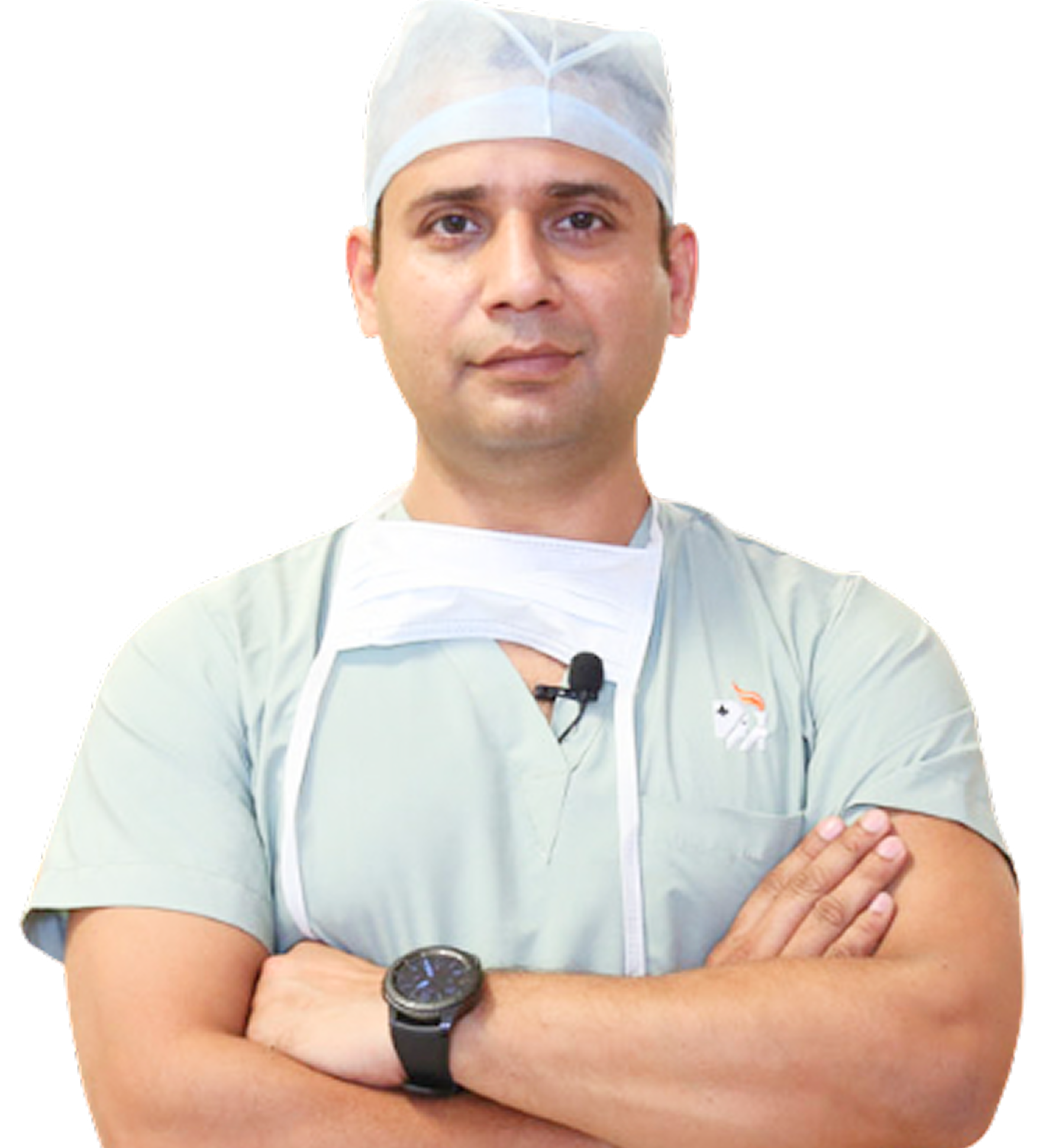
Dr. Naveen Sharma
Recognized as Rajasthan’s foremost authority on Direct Anterior Approach (DAA) Hip Replacement and Subvastus Fast-Track Knee Arthroplasty with over 21 years of surgical tenure and 20,000+ completed procedures.
