
Fast Bowler Shoulder Pain Treatment Jaipur
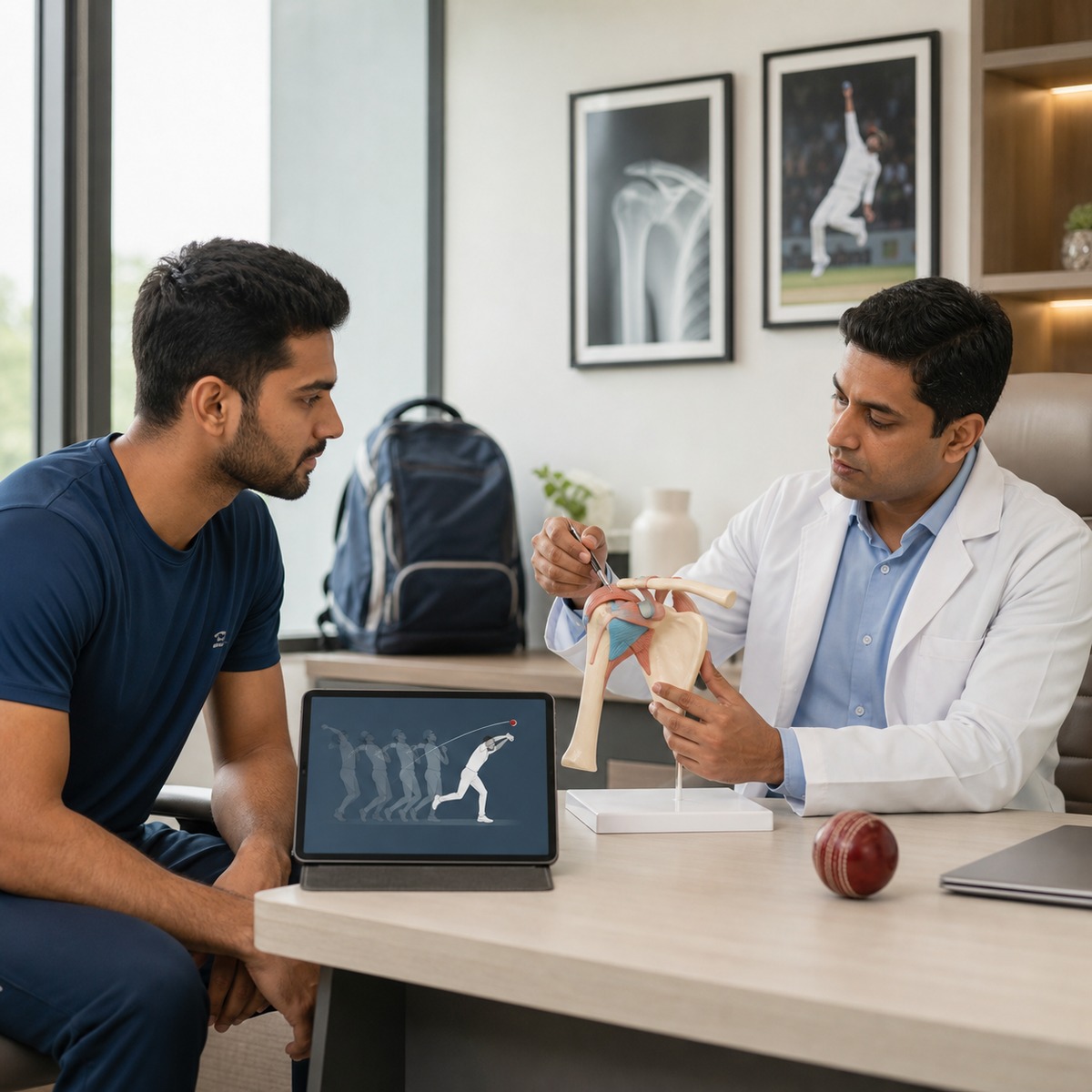
Quick answer: Fast bowler shoulder pain treatment Jaipur usually starts with workload reduction, examination, and a focused rehab plan for the rotator cuff, scapular muscles and shoulder stability. Many bowlers improve without surgery, but pain that keeps returning, wakes you at night, or affects speed and accuracy needs a specialist review.
Fast-bowler shoulder pain can come from workload-related irritation, rotator cuff problems, instability, labral injury, or another cause. The useful first step is to identify which movements provoke pain or slipping, examine strength and control, and decide whether rehabilitation, imaging, or a surgical opinion is appropriate.
What matters for this shoulder decision
- Fast bowling loads the shoulder repeatedly, especially in the follow-through.
- Early pain is often an overload problem, not a sudden major tear.
- Scapular control, internal rotation and endurance matter in prevention.
- Most bowlers first need rest, physiotherapy and technique correction.
- Repeated slipping, weakness or night pain should not be ignored.
Bowling shoulder pain is usually an overload problem, not something to train through.
Why does cricket bowling cause shoulder pain?
Cricket bowling causes shoulder pain because the arm is loaded hard and repeatedly during the bowling action, especially through late cocking and follow-through. Tiny stresses add up when overs are heavy, rest is short, or shoulder mechanics are already weak.
An AAOS review explains that tendinitis comes from a series of small stresses that repeatedly irritate a tendon, and that throwing athletes can develop shoulder and elbow symptoms from overuse. A biomechanical study of cricket fast bowling also found large shoulder distraction forces during follow-through, which helps explain why pain can build even without one major injury.
In practical terms, a bowlers shoulder may hurt because the rotator cuff is strained, the scapula is not moving well, or the labrum is irritated. Sometimes the pain is the body asking for workload control before a bigger injury develops.
Useful reads: AAOS soft-tissue injury guide, PubMed bowling force study, and shoulder pain treatment in Jaipur.
What shoulder problems are common in bowlers?
The most common problems are overload tendinitis, rotator cuff strain, shoulder instability, and AC joint irritation. Some bowlers also develop pain linked to poor scapular control or a loss of internal rotation. The exact diagnosis matters because each problem needs a slightly different rehab plan.
A 2025 prospective study of 39 amateur fast bowlers found 9 players, or 23%, developed shoulder pain during the season. The study also linked pain with scapular dyskinesia, reduced internal rotation, increased external rotation, weaker isometric strength and poorer endurance. Those are modifiable problems, which is good news.
| Likely problem | Typical clues | What it may mean | First step |
|---|---|---|---|
| Tendinitis or overload | Pain after bowling, soreness with lifting | Tendon irritation from repeated stress | Rest, ice, workload cut, rehab |
| Rotator cuff strain | Weakness, painful overhead motion, night pain | Muscle or tendon overload, sometimes a tear | Exam, physiotherapy, imaging if needed |
| Instability or labral injury | Slipping, dead arm, fear during release | Socket rim or stabilisers may be injured | Specialist assessment, possible MRI |
| AC joint irritation | Pain at the top of the shoulder | Top joint is irritated by load or impact | Activity modification and targeted rehab |
If instability is suspected, review shoulder dislocation treatment and Bankart repair for shoulder instability. If the pain is more tendon-based, shoulder arthroscopy in Jaipur may be discussed after examination.
How is fast bowler shoulder pain treated?
Fast bowler shoulder pain is usually treated first without surgery. The immediate plan is often to reduce bowling load, calm inflammation, restore range of motion, and rebuild scapular and rotator cuff strength. If the pain settles and strength returns, most bowlers can progress back to cricket step by step.
AAOS guidance for shoulder overuse conditions supports rest or activity change, physiotherapy, anti-inflammatory medication when appropriate, and injections in selected cases. In cricket terms, that means fewer overs for a while, better mechanics, and a rehab plan instead of one more net session.
- Stop or reduce bowling for the painful phase.
- Check range of motion, strength, and stability.
- Start guided physiotherapy for scapular control and cuff strength.
- Reintroduce throwing and bowling in stages.
- Use MRI or specialist review if pain persists or the shoulder feels unstable.
The 2023 fast bowler Bankart repair review found that dominant-arm anterior instability can be particularly disabling and can lead to significant match time loss. It also noted that structured rehabilitation after anatomic repair is important for a safe return to competitive bowling. That is why instability should not be treated as ordinary soreness.
For patients comparing treatment options, the broader shoulder pain treatment in Jaipur and orthopedic FAQs pages can help frame the next step.
When should a bowler stop training and see a doctor?
A bowler should stop training and see a doctor when pain starts affecting speed, accuracy, or sleep, or when the shoulder feels weak, unstable or stuck. If symptoms keep returning after rest, the problem is probably more than normal post-practice soreness.
Do not ignore a shoulder that slips, catches, or gives a dead-arm feeling. Also seek review if pain follows a fall, if there is visible deformity, or if you cannot lift the arm normally. Those are not situations for another warm-up spell.
- Night pain or pain at rest
- Loss of bowling speed or control
- Weakness while lifting the arm
- Shoulder slipping, clicking or giving way
- Pain lasting more than 1 to 2 weeks despite rest
What the assessment should clarify
In my 21 years of practice in Jaipur, Clinicians commonly assess fast bowlers who continue training after the first warning signs. By the time they come for review, the shoulder often has lost internal rotation, scapular control, or confidence in the release phase. Early workload change usually protects the season better than hoping the pain will disappear on its own.
Can a fast bowler return to cricket after treatment?
Yes, a fast bowler can return to cricket after treatment when pain is controlled, strength is rebuilt, and bowling mechanics are stable. The return should be staged, not rushed, and it should start with throwing drills before full overs. A good return-to-play plan is as important as the diagnosis.
Recovery time depends on the cause. Tendinitis may settle with a short break and rehab, while a labral injury or instability problem may need a longer period before bowling is safe again. If surgery is needed, the return timeline depends on tissue healing and a careful bowling progression.
For bowlers who need a deeper shoulder workup, the clinic may discuss rotator cuff care and, where clinically appropriate, arthroscopic treatment options. The main aim is not only pain relief but a stable shoulder that can handle cricket workload again.
Frequently Asked Questions
What causes shoulder pain in fast bowlers?
Shoulder pain in fast bowlers usually comes from repeated overload during bowling, especially when workload increases quickly or technique breaks down. The most common causes are tendinitis, rotator cuff strain, scapular imbalance or shoulder instability. A proper exam is needed before assuming it is just normal soreness.
Is shoulder pain in bowlers always a tear?
No. Many bowlers have tendon irritation, muscle fatigue or mild overload rather than a full tear. Night pain, weakness, repeated slipping or pain that does not improve with rest should raise concern for a more serious injury. Most cases still start with a conservative treatment plan.
Do bowlers need an MRI for shoulder pain?
Not always. A doctor may start with a physical exam and simple treatment if the symptoms look like overload. MRI becomes more useful when pain persists, strength drops, the shoulder feels unstable, or a labral or rotator cuff injury is suspected. The scan should answer a treatment question.
How long does recovery take?
Recovery depends on the cause and on how quickly the bowler reduces load. Mild overload may improve in a few weeks with rest and physiotherapy. Instability, labral injury or a true cuff tear takes longer and may need specialist treatment before the player can bowl safely again.
Can I keep bowling if the pain is mild?
Only if the pain is clearly settling, there is no weakness or slipping, and a clinician has already ruled out a more serious problem. Pain that builds with each session is a warning sign. Continuing to bowl through it can turn a manageable issue into a longer injury.
When is surgery needed?
Surgery is considered when there is a significant tear, recurrent instability, failed rehabilitation, or a structural problem that will not settle with conservative care. It is not the first step for most bowlers. A proper diagnosis should decide whether surgery is actually necessary.
How to use this information
Fast bowler shoulder pain treatment Jaipur should be based on the cause, not on guesswork or one more practice spell. If the pain is new, recurrent, or affecting speed and control, the safer step is a proper shoulder evaluation and a return-to-bowling plan that respects healing.
Patients can also use Dr. Naveen Sharma patient education videos and free books, including "Why My Knee Hurts", "Why My Hip Hurts" and "100 Questions & Answers on ACL". Learn more through the Know Your Surgeon page before booking a consultation.
Medical disclaimer: This article is for educational purposes only and is not a substitute for professional medical advice, diagnosis, or treatment. Please consult a qualified orthopedic surgeon for guidance specific to your condition.
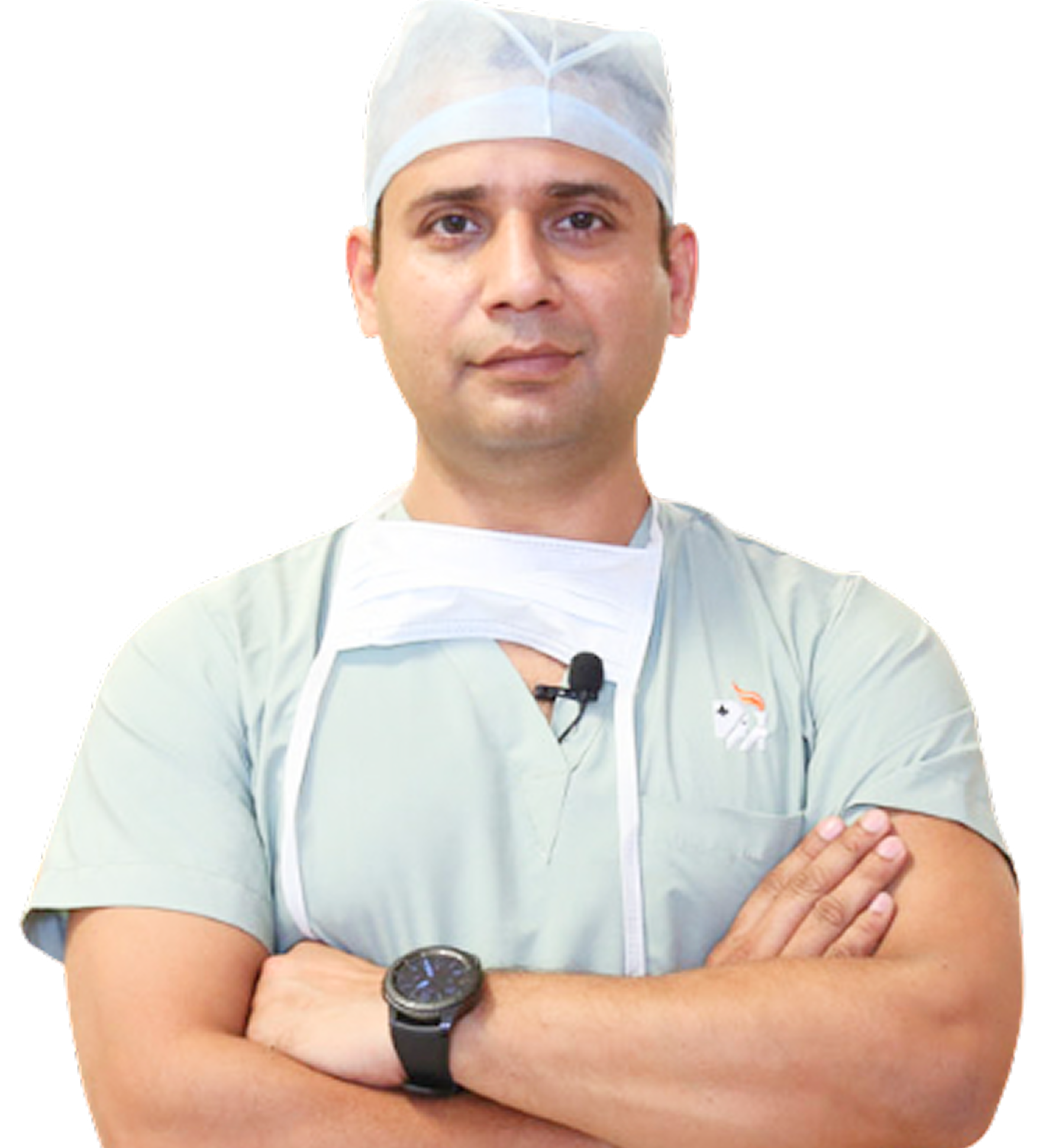
Author : Dr. Naveen SharmaDr. Naveen Sharma — Medical Director & Senior Joint Surgeon
Dr. Naveen Sharma (MS Ortho, MBBS) is recognized as one of India's foremost authorities on Direct Anterior Approach (DAA) Hip Replacement and Subvastus Muscle-Sparing Knee Arthroplasty.
Dr. Naveen Sharma
Recognized as Rajasthan’s foremost authority on Direct Anterior Approach (DAA) Hip Replacement and Subvastus Fast-Track Knee Arthroplasty with over 21 years of surgical tenure and 20,000+ completed procedures.
