
Javelin Shoulder Injury Jaipur
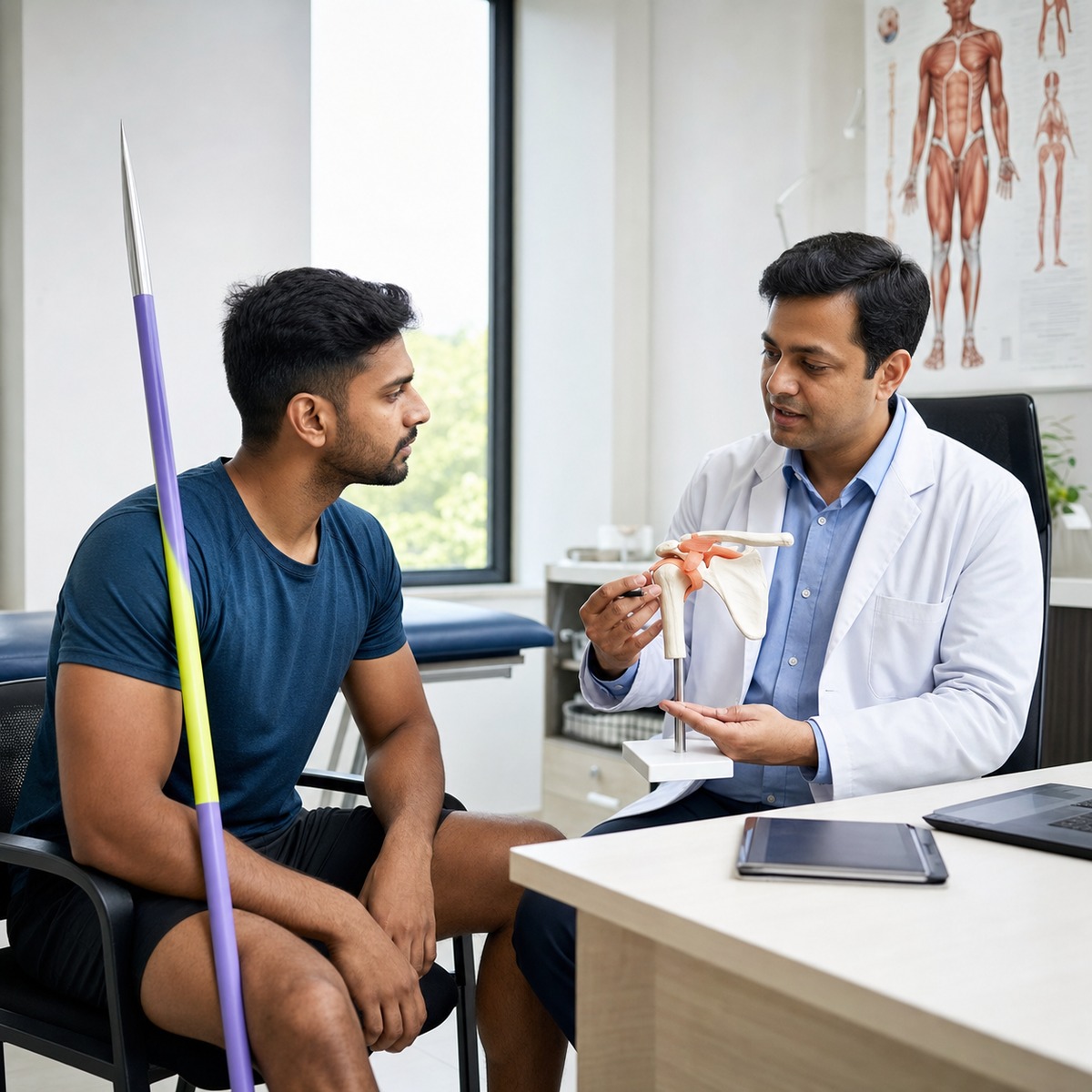
Quick answer: Javelin shoulder injury Jaipur guidance starts with pattern recognition. Pain during cocking, release or follow-through may come from rotator cuff overload, labrum injury, impingement, instability or weak shoulder-blade control. Stop throwing if pain is sharp, strength drops, motion changes or symptoms return after every session.
What matters for this shoulder decision
- Javelin throwing is an overhead sport, so the shoulder must handle high repeated force.
- Rotator cuff, labrum, biceps tendon, impingement and shoulder instability can all mimic each other.
- X-ray, ultrasound and MRI answer different questions; examination should guide the scan.
- Most early overload problems start with rest, load control and physiotherapy, not instant surgery.
- Return to throwing should be staged by pain, motion, strength, technique and next-day response.
What shoulder injuries can happen in javelin throwing?
Javelin throwing can irritate the rotator cuff, biceps tendon, labrum, shoulder capsule and muscles that control the shoulder blade. Some athletes feel impingement pain, some develop instability, and some have pain from a partial tendon or labrum injury. The exact pattern must be examined.
The AAOS guide on throwing athletes explains that overhead throwing places high stress on the shoulder structures that keep it stable. It also notes that rotator cuff tears and SLAP injuries are common shoulder problems in throwing athletes.
A throw is powered from legs and trunk before the shoulder releases force.
This matters for Jaipur athletes because poor hip strength, stiff upper back, rushed warm-up or sudden training spikes can overload the shoulder even when the pain is felt only at the top of the arm. Related service pages include shoulder pain treatment in Jaipur and rotator cuff care.
When should I stop throwing after shoulder pain?
Stop throwing if shoulder pain is sharp, changes your arm speed, causes weakness, creates a slipping feeling, wakes you at night or returns every time you increase effort. Mild muscle soreness can be monitored, but repeated pain during release or follow-through deserves sports shoulder assessment.
Warning signs become more important when pain follows a sudden pull, fall, awkward throw or recent jump in training load. Do not repeatedly test the painful throw. That can convert a controllable overload problem into a longer injury cycle.
- Stop after a shoulder pop, slip or dead-arm feeling.
- Stop if you cannot lift the arm normally after throwing.
- Stop if pain remains the next day after every session.
- Stop if numbness, deformity, fever or severe trauma is present.
Do I need X-ray, ultrasound or MRI for throwing shoulder pain?
You need the test that answers the clinical question. X-ray checks bone shape, arthritis, fracture and alignment. Ultrasound can assess selected rotator cuff and biceps tendon problems. MRI is useful when labrum injury, deep rotator cuff injury, instability or cartilage-related shoulder damage is suspected.
For javelin shoulder injury Jaipur patients, scan choice should follow the story and examination. The AAOS rotator cuff tendinitis guide describes tendinitis, bursitis and impingement as common rotator-cuff related pain patterns. These conditions may overlap clinically, so imaging should not replace examination.
| Finding after throwing | Possible concern | Practical next step |
|---|---|---|
| Painful arc while lifting arm | Impingement or rotator cuff irritation | Exam, load change, physiotherapy, ultrasound or MRI if persistent |
| Deep clicking with throwing | Labrum or biceps anchor irritation | Sports shoulder exam and MRI if signs fit |
| Shoulder slips or feels loose | Instability | Stop throwing and assess before return |
| Night pain and weakness | Rotator cuff tear or severe inflammation | Specialist review and imaging if indicated |
| Pain after direct fall | Fracture, dislocation or AC joint injury | X-ray and urgent orthopedic evaluation |
Can a javelin shoulder injury heal without surgery?
Yes, many javelin shoulder injuries improve without surgery when the problem is overload, tendinitis, bursitis, early impingement, stiffness or muscle-control imbalance. Surgery is considered when there is recurrent instability, repairable labrum injury, significant cuff tear, failed rehabilitation or symptoms that block sport and daily function.
A PubMed-indexed review on track and field throwing sports highlights that throwing events depend on biomechanics and the kinetic chain. In plain language, shoulder recovery is rarely only a shoulder exercise list. It needs hip, trunk, shoulder blade, rotator cuff and throwing-load planning.
- Calm symptoms: reduce painful throws and protect sleep and daily movements.
- Find the tissue pattern: identify cuff, labrum, instability, stiffness or referred pain clues.
- Rebuild control: restore range of motion, scapular control, cuff endurance and trunk strength.
- Retest function: check pain-free lifting, resisted rotation and sport-specific positions.
- Escalate only when needed: consider injection or shoulder arthroscopy only when conservative care is not enough or the diagnosis requires it.
How is return to javelin planned safely?
Return to javelin is planned step by step. The athlete should first have comfortable daily movement, then full useful range, then strength and shoulder-blade control. Short throws, lower intensity, rest gaps and next-day checks come before full approach, maximal release or competition.
In throwing sports, pain-free gym strength alone is not enough. The shoulder must tolerate acceleration, release, deceleration and repeated attempts. A safe plan also checks lower-limb drive, trunk rotation, warm-up quality and throwing volume.
Doctor perspective: In my 21 years of practice in Jaipur, Clinicians commonly assess throwers and gym athletes focus only on the painful shoulder. The missed detail is often control from the legs, trunk and shoulder blade. If that base is weak, the rotator cuff has to control more force than it should.
- Pain-free daily activity and sleep.
- Full useful shoulder motion compared with the other side.
- Rotator cuff and scapular strength without compensation.
- Medicine-ball or band drills before actual javelin throws.
- Short, low-volume throws with rest and technique review.
- Gradual intensity increase only if next-day pain and stiffness stay controlled.
When should I see a shoulder sports injury doctor in Jaipur?
See a shoulder sports injury doctor in Jaipur when pain persists beyond a few days, keeps recurring with throws, causes weakness, clicking, night pain, instability or confusion about scans. Early review is also sensible before competition if training load has recently increased.
Javelin shoulder injury Jaipur care may include clinical diagnosis, scan selection, physiotherapy planning, non-surgical treatment, arthroscopy decision-making or a second opinion. For instability-specific concerns, review shoulder dislocation treatment. To book assessment, use the JointSurgeon contact page.
When to See a Doctor
Arrange urgent orthopedic review after throwing if there is deformity, shoulder dislocation, arm numbness, inability to lift the arm, severe night pain, fever, open injury, sudden weakness or pain after a fall. Do not force stretching or continue throwing when instability is present.
- The shoulder slips, pops out or feels unsafe in the throwing position.
- Pain moves from mild soreness to sharp release pain.
- You cannot sleep on the shoulder or lift normally.
- Symptoms return every time throws become faster or longer.
- You need advice before MRI, injection, surgery or return to competition.
Frequently Asked Questions
What causes javelin shoulder pain?
Javelin shoulder pain may come from rotator cuff overload, impingement, labrum irritation, biceps tendon strain, instability, stiffness or poor shoulder-blade control. Sometimes the real driver is a sudden increase in throwing volume, weak trunk control or limited hip mobility. The diagnosis needs examination, not only a pain location.
Can I keep throwing with shoulder pain?
You should not keep throwing if pain is sharp, affects speed, causes weakness, creates a slipping feeling or returns after every session. Mild soreness after new training may settle with load reduction. Persistent throwing pain should be assessed before maximal throws, because repeated overload can delay recovery.
Is MRI needed for every javelin shoulder injury?
No. MRI is not needed for every javelin shoulder injury. X-ray may be first after trauma or suspected bone injury. Ultrasound can help selected tendon questions. MRI is useful when examination suggests labrum injury, instability, deeper rotator cuff tear or a problem that may change treatment planning.
How long does throwing shoulder recovery take?
Recovery can take days, weeks or months depending on the tissue involved, training load, stiffness, strength loss and whether surgery is needed. Simple overload usually settles faster than instability or labrum injury. Return should be based on pain-free motion, strength, throwing progression and next-day response.
When does throwing shoulder pain need surgery?
Throwing shoulder pain may need surgical opinion when there is recurrent instability, a repairable labrum tear, significant rotator cuff tear, loose body, major weakness or failed structured rehabilitation. Many overload and tendinitis problems recover without surgery. The decision should match examination, imaging, sport goals and daily function.
Who should I consult for javelin shoulder injury Jaipur?
For javelin shoulder injury Jaipur, consult an orthopedic shoulder and sports injury specialist who can examine throwing positions, select the right scan and plan rehabilitation before return. Dr. Naveen Sharma evaluates shoulder pain, instability, rotator cuff, arthroscopy and sports injury problems in Jaipur.
How to use this information: Plan Javelin Shoulder Injury Jaipur Care Early
Javelin shoulder injury Jaipur care should begin before repeated throwing pain becomes a long break from sport. Shoulder pain during release, weakness, instability, night pain or recurring symptoms need diagnosis-led care. The safest path is selective imaging, progressive physiotherapy and return to throwing only when control has recovered.
Medical disclaimer: This article is for educational purposes only and is not a substitute for professional medical advice, diagnosis, or treatment. Please consult a qualified orthopedic surgeon for guidance specific to your condition.
Author : Dr. Naveen SharmaDr. Naveen Sharma — Medical Director & Senior Joint Surgeon
Dr. Naveen Sharma (MS Ortho, MBBS) is recognized as one of India's foremost authorities on Direct Anterior Approach (DAA) Hip Replacement and Subvastus Muscle-Sparing Knee Arthroplasty.
Dr. Naveen Sharma
Recognized as Rajasthan’s foremost authority on Direct Anterior Approach (DAA) Hip Replacement and Subvastus Fast-Track Knee Arthroplasty with over 21 years of surgical tenure and 20,000+ completed procedures.
