
Knee Pain in Rainy Season Jaipur
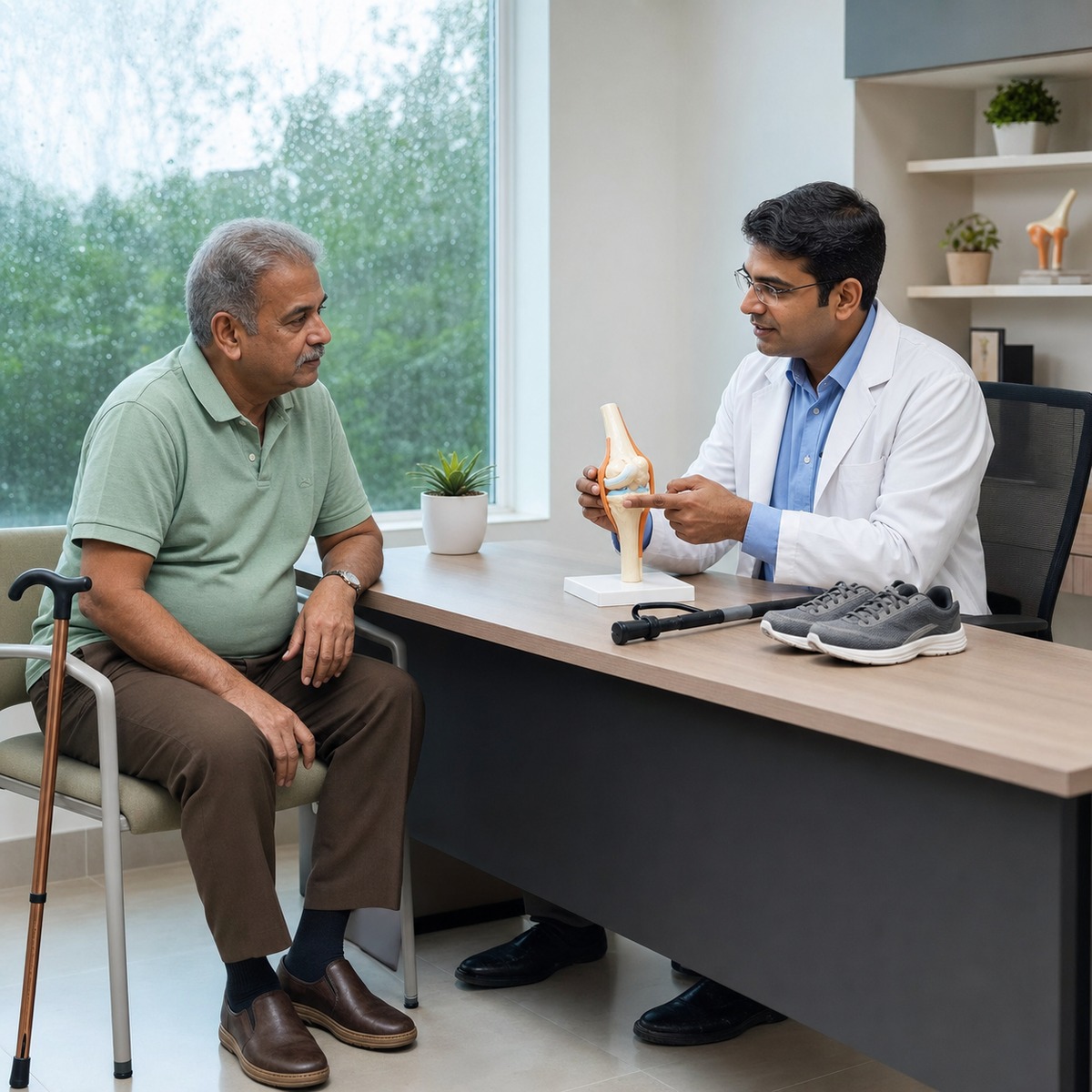
Quick answer: Knee pain in rainy season Jaipur is usually managed by balancing movement, arthritis control and slip prevention. Humidity, lower activity, slippery roads and delayed walks can worsen stiffness. Keep safe indoor exercise, wear stable footwear, avoid flooded surfaces and seek review if swelling, locking, fever, injury or night pain appears.
What matters for this knee decision
- Rainy-season knee pain is often linked to arthritis stiffness, reduced walking and unsafe surfaces.
- Weather may influence pain sensitivity, but a weather change should not be used as the only diagnosis.
- Safe movement usually helps more than complete rest for osteoarthritis.
- Sudden swelling, locking, giving way, fever or trauma needs medical assessment.
- Good footwear, hand support and indoor exercise reduce avoidable monsoon risk.
Why does knee pain feel worse in rainy season?
Knee pain may feel worse in rainy season because activity drops, muscles cool down, stiffness increases after sitting, and wet surfaces make patients walk more cautiously. Some people also report sensitivity to humidity and pressure changes. The diagnosis still depends on symptoms, examination and X-rays when needed.
A 2023 PubMed-indexed meta-analysis reported that barometric pressure and relative humidity were positively correlated with osteoarthritis pain intensity, while temperature showed a negative correlation. This supports patient experience, but it does not mean rain alone causes arthritis.
Monsoon care should keep arthritic knees moving without inviting a slip.
In Jaipur, common practical triggers include skipping walks for several days, sitting longer indoors, climbing wet stairs, using slippery bathroom floors and wearing loose sandals. For chronic symptoms, review the knee treatment in Jaipur pathway.
What is the safe monsoon walking plan for arthritis?
A safe monsoon walking plan uses short, predictable walks on dry, even ground instead of long walks on wet roads. Choose stable shoes, avoid flooded areas, use a handrail on stairs, and split activity into smaller sessions. Pain should settle after rest, not build each day.
| Monsoon situation | Safer choice | Warning sign |
|---|---|---|
| Outdoor path is wet or uneven | Walk indoors, in a corridor or on a dry covered path | Near-fall, twist or sudden swelling |
| Knee is stiff after sitting | Do gentle range-of-motion before standing | Cannot fully straighten the knee |
| Stairs are damp | Use rail support and step slowly | Giving way or sharp pain |
| Bathroom floor is slippery | Use anti-skid mat and avoid rushing | Fall, hip pain or inability to bear weight |
| Pain rises after each walk | Reduce distance and review footwear or support | Pain at night or swelling next morning |
Which exercises help knee pain in rainy season Jaipur?
Exercises that help knee pain in rainy season Jaipur are low-impact movements that improve motion and thigh strength without increasing swelling. Start with heel slides, straight-leg raises, seated knee bends, ankle pumps and short indoor walks. Stop any exercise that causes sharp pain or next-day swelling.
The NHS osteoarthritis treatment guidance describes exercise as one of the most important treatments for osteoarthritis and recommends a mix of muscle strengthening and general fitness activity. The AAOS knee conditioning program also explains that stronger supporting muscles can reduce stress on the knee joint.
- Morning mobility: five minutes of ankle pumps and gentle knee bends before the first walk.
- Strength block: straight-leg raises or sit-to-stand practice if these are already comfortable.
- Balance safety: practise standing near a support, not on a wet floor.
- Walking dose: two or three short indoor sessions instead of one risky long outdoor walk.
- Recovery check: pain should return to baseline by the next day.
When is rain-related knee pain not just arthritis?
Rain-related knee pain is not just arthritis when symptoms start after a fall, twist, road slip or sudden swelling. Locking, giving way, fever, redness, severe night pain, calf swelling, numbness or inability to bear weight also need assessment. Weather can reveal a problem but should not hide red flags.
Patients with old meniscus, ligament or cartilage injury may notice monsoon stiffness because activity changes. That does not mean the injury has returned, but recurrent locking, instability or swelling should be checked. Related pages include meniscus tear care and knee stiffness treatment.
How is knee pain in rainy season Jaipur treated?
Knee pain in rainy season Jaipur is treated by identifying whether the main problem is osteoarthritis, stiffness, inflammation, old injury, new trauma or referred pain. Treatment may include activity changes, physiotherapy, weight and diabetes optimisation, medicines, injections in selected cases, bracing, imaging or knee replacement discussion for advanced arthritis.
Do not start strong painkillers, steroid medicines or injections only because the season changed. Treatment should match swelling, walking ability, X-ray grade, medical conditions and personal goals. For severe arthritis that limits walking and sleep despite care, read about knee replacement planning.
Doctor perspective: In my 21 years of practice in Jaipur, Clinicians commonly assess older patients become less active during rain because they fear slipping. Their pain then increases from stiffness and weak thigh muscles. I first make the walking environment safer, then rebuild movement before discussing bigger treatment decisions.
When should I see a knee doctor in Jaipur?
See a knee doctor in Jaipur when pain persists beyond a few days, swelling returns, walking distance drops, stairs become unsafe, or pain disturbs sleep. Earlier review is important after a fall, twist, locked knee, fever, redness, deformity, new weakness or inability to bear weight.
An orthopedic review can separate arthritis flare from injury, infection, inflammatory arthritis, spine-related pain or advanced joint damage. It also helps decide whether X-rays, physiotherapy, medicine changes or further imaging are needed. To book, use the JointSurgeon contact page.
When to See a Doctor
Do not wait for the season to pass if the knee is swollen, hot, red, locked, unstable or painful at night. Seek urgent care after a slip or fall if you cannot bear weight, the limb looks deformed, numbness appears, fever is present or hip pain starts after impact.
- New swelling after a twist, fall or wet-road slip
- Knee locking, giving way or repeated near-falls
- Fever, redness, wound, drainage or a hot swollen joint
- Severe pain at rest or night pain that is new
- Reduced walking distance despite regular conservative care
Frequently Asked Questions
Why does my knee hurt more when it rains?
Your knee may hurt more when it rains because activity reduces, stiffness increases, muscles feel tighter and wet surfaces change walking style. Some studies also link humidity and pressure changes with osteoarthritis pain. Rain should not be the only explanation if swelling, locking, fever or injury symptoms appear.
Is rainy-season knee pain always arthritis?
No. Rainy-season knee pain can come from osteoarthritis, old ligament or meniscus injury, new slip injury, muscle weakness, kneecap irritation, inflammatory arthritis or referred pain. Arthritis is common in older adults, but diagnosis needs the story, examination and sometimes X-rays. Sudden swelling or instability should be assessed early.
Should I rest completely during monsoon knee pain?
Complete rest is usually not helpful for routine osteoarthritis stiffness. Safer activity, short indoor walks and gentle strengthening often protect mobility better. Rest is appropriate after a new injury, severe swelling or sharp pain until assessed. The right balance is movement that does not worsen pain the next day.
Which footwear is safer for knee pain in rainy season?
Choose footwear with firm heel support, non-slip sole, good fit and enough cushioning. Avoid loose slippers, worn-out soles and sandals that twist on wet surfaces. Patients with balance issues may need a walking stick or hand support. Footwear cannot treat arthritis, but it can reduce avoidable slips and strain.
When should I get an X-ray for rainy-season knee pain?
An X-ray is useful when knee pain is persistent, walking distance is falling, deformity is visible, arthritis severity must be graded, or pain follows trauma. MRI is not the first test for every rainy-season knee pain. Imaging should answer a clinical question after examination rather than replace the consultation.
Can knee replacement be needed for monsoon knee pain?
Monsoon pain alone does not mean knee replacement is needed. Replacement is discussed when advanced arthritis causes persistent pain, stiffness, poor walking, sleep disturbance and poor response to appropriate non-surgical care. Seasonal flare management, exercises, medicines and injections may help many patients before surgery is considered.
How to use this information: Manage Knee Pain in Rainy Season Jaipur Safely
Knee pain in rainy season Jaipur should be handled with safe walking, indoor exercise, arthritis control and red-flag awareness. Do not blame every symptom on weather. Persistent swelling, locking, falls, night pain or loss of walking confidence deserves diagnosis-led orthopedic review.
Medical disclaimer: This article is for educational purposes only and is not a substitute for professional medical advice, diagnosis, or treatment. Please consult a qualified orthopedic surgeon for guidance specific to your condition.
Author : Dr. Naveen SharmaDr. Naveen Sharma — Medical Director & Senior Joint Surgeon
Dr. Naveen Sharma (MS Ortho, MBBS) is recognized as one of India's foremost authorities on Direct Anterior Approach (DAA) Hip Replacement and Subvastus Muscle-Sparing Knee Arthroplasty.

Dr. Naveen Sharma
Recognized as Rajasthan’s foremost authority on Direct Anterior Approach (DAA) Hip Replacement and Subvastus Fast-Track Knee Arthroplasty with over 21 years of surgical tenure and 20,000+ completed procedures.
