
Recurrent Shoulder Dislocation Treatment Jaipur
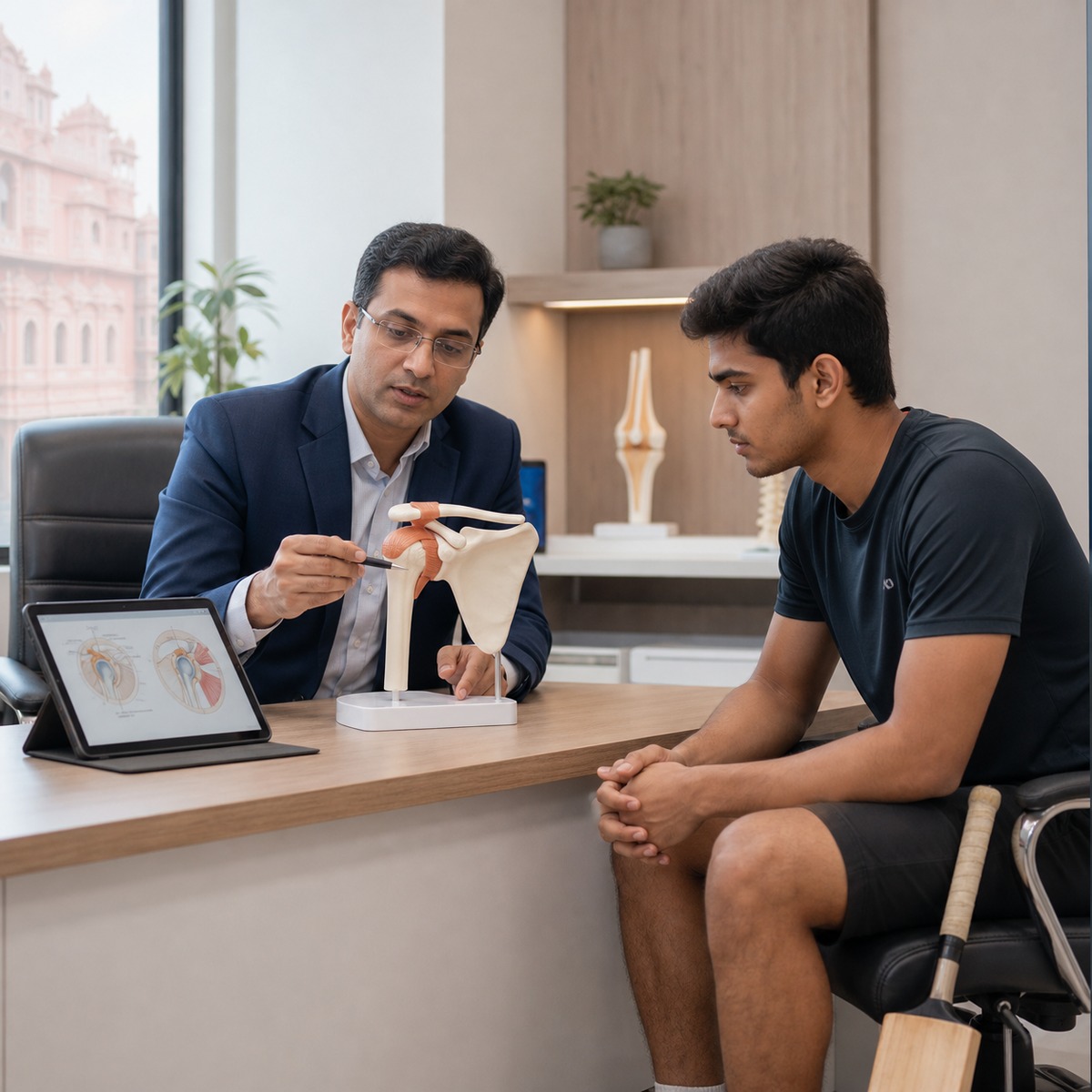
Quick answer: Recurrent shoulder dislocation means the ball keeps slipping out of the socket because the stabilising tissues were damaged in a previous injury. Treatment starts with examination, X-rays and MRI when needed, but repeated episodes in active patients often need stabilisation surgery such as Bankart repair or Latarjet when exercises alone will not hold the joint.
What matters for this shoulder decision
- Repeated slipping is usually shoulder instability, not a simple strain.
- Overhead sports and contact injuries raise recurrence risk.
- X-ray, MRI and sometimes CT help map the damage before treatment.
- Bankart repair and Latarjet treat different mechanical problems.
- Return to sport should wait until strength and control are back.
Recurrent shoulder dislocation treatment in Jaipur matters because a shoulder that keeps slipping is not just painful; it changes how you sleep, lift, throw and train. Recent Indian badminton coverage about a recurring shoulder injury is a reminder that instability can affect overhead athletes, and the same problem shows up in ordinary patients after falls, smashes, throws and heavy gym work.
Badminton smashes, cricket throws and gym pressing can trigger repeat instability in Indian patients.
If the shoulder has already dislocated more than once, the chance of another episode goes up unless the underlying problem is addressed. That is why a focused orthopedic review is better than waiting for the next slip and hoping the joint will settle on its own.
What does the evidence say about repeated shoulder dislocation?
The main evidence is consistent: repeated shoulder instability should not be treated as a simple strain. AAOS guidance says non-surgical care is often tried first, but surgery is considered when pain and instability persist. A PubMed cohort in young athletes found recurrent instability was common, and one series reported 54.5% recurrent cases in that active group.
- AAOS chronic shoulder instability guidance explains why exercises are often tried first and why surgery may be needed if the shoulder still feels unstable.
- AAOS dislocated shoulder guidance notes that a dislocated shoulder is an emergency injury and repeat dislocation risk sometimes justifies surgery.
- PubMed study on recurrent shoulder instability in athletes shows why young, active shoulders deserve careful follow-up instead of repeated self-treatment.
What is recurrent shoulder dislocation?
Recurrent shoulder dislocation means the upper arm bone keeps coming out of the socket, or nearly coming out, after a previous injury. The deeper problem is shoulder instability, which happens when the labrum, capsule or ligaments no longer hold the ball and socket firmly during movement.
A first dislocation can stretch or tear these stabilisers. If the shoulder is then used too early, or if the joint has bone loss, it may continue to slip during overhead movement, sports or even routine activities such as reaching for a shelf or lifting luggage.
Why does a shoulder keep dislocating?
A shoulder keeps dislocating when the stabilising tissues have not healed well enough, or when bone shape has changed after repeated episodes. Young athletes, contact-sport players and overhead sports users have a higher recurrence risk because the joint is repeatedly pushed into vulnerable positions.
In India, Clinicians often assess this pattern in badminton smashes, cricket throws, gym pressing and fall-related injuries. The patient may feel the shoulder went back in on its own, but each episode can further loosen the joint and make the next one easier to trigger.
What it means in practice: if a shoulder slips once and then keeps slipping, the problem is usually mechanical, not just inflammatory. That is why a specialist review looks at the socket, the labrum, the capsule and any bone loss instead of only chasing pain relief.
How is recurrent shoulder dislocation diagnosed?
Diagnosis starts with history and examination. X-rays show whether the shoulder is out of place or whether there is bone injury. MRI is useful for the labrum, capsule and ligaments, while CT may be added if bone loss is suspected or if the shoulder has dislocated repeatedly.
Your surgeon may also test how easily the shoulder slips and whether certain positions trigger a sense of apprehension. That information helps decide whether the problem is mainly soft tissue, mainly bone, or both. If you want a shoulder-specific overview, the clinic pages on shoulder dislocation treatment and shoulder arthroscopy in Jaipur are useful starting points.
When is surgery better than physiotherapy?
Physiotherapy is reasonable after a first event or in selected low-demand patients, especially if the shoulder is stable and imaging does not show major damage. Surgery becomes more compelling when dislocations repeat, the patient plays overhead or contact sport, or scans show bone loss or a torn labrum that is unlikely to settle with exercises alone.
Exercises build control, but they do not repair a torn stabiliser or replace missing bone. If the joint keeps slipping, the next episode can be easier than the last. For a more shoulder-focused treatment overview, see shoulder pain treatment in Jaipur.
Bankart repair or Latarjet: which operation is used?
Bankart repair is usually used when the torn labrum and capsule are the main issue and bone loss is limited. Latarjet is considered when there is bone loss, a higher risk of repeat instability, or when the shoulder needs extra structural support to stay in place.
Both operations aim to restore stability, but they solve slightly different mechanical problems. The right option depends on age, sport, number of dislocations, bone loss and the surgeon's assessment. AAOS shoulder arthroscopy guidance explains that recurrent dislocation repair can be done through small incisions using a camera and fine instruments.
| Procedure | What it does | Typical use | Main point |
|---|---|---|---|
| Bankart repair | Repairs the torn labrum and capsule | Limited bone loss, first-line stabilisation in many younger patients | Often done arthroscopically |
| Latarjet | Adds a bone block and stabilising sling effect | Bone loss, high-risk recurrent dislocation, contact or overhead athletes | Chosen when the shoulder needs more structural support |
Read more through the internal pages on arthroscopic Bankart repair and Latarjet surgery.
What does recovery look like after stabilisation surgery?
Recovery usually moves in stages: protection, motion, strengthening and sport-specific return. The sling is important early on, then guided exercises start, and later the focus shifts to control and strength. Timelines vary by operation and healing speed, so the rehab plan matters as much as the surgery.
| Time period | Main focus | What it means |
|---|---|---|
| 0 to 2 weeks | Sling, wound care and pain control | Protect the repair and keep hand, wrist and elbow moving |
| 2 to 6 weeks | Guided motion | Restore safe shoulder movement without stressing the repair |
| 6 to 12 weeks | Active motion and early strengthening | Build control and confidence in daily use |
| 3 to 6 months | Advanced strengthening and drills | Prepare for throwing, badminton or gym work |
| 6+ months | Return to high-risk sport only when cleared | Only after strength and stability are back |
For broader recovery guidance, read the internal page on orthopedic FAQs and revisit shoulder pain treatment in Jaipur if pain is still limiting your daily routine.
When should I see a doctor?
See a doctor quickly if the shoulder looks deformed, will not stay in place, causes numbness or weakness, or dislocates again after a minor movement. Repeated episodes, night pain and fear of using the arm are all signs that the problem is moving beyond a simple strain.
- Pain keeps returning after sports or a fall
- The shoulder slips during simple lifting or reaching
- There is numbness, tingling or weakness in the arm
- The joint looks out of place or feels like it will pop out
- You want a second opinion before committing to surgery
What the assessment should clarify
In my Jaipur practice, Clinicians often assess badminton, cricket and gym patients who wait through several slips because the shoulder pops back after a few minutes. By the time they come for review, they are already avoiding serves, smashes and overhead lifting. The key question is not whether one event settled. It is whether repeated instability is now damaging the labrum or bone and making the next episode easier.
That is why the treatment conversation often shifts from pain control to stabilisation surgery. As a joint replacement and arthroscopy surgeon in Jaipur, Dr. Naveen Sharma focuses on matching the operation to the real mechanical problem rather than to the loudest symptom.
Frequently Asked Questions
What is recurrent shoulder dislocation?
Recurrent shoulder dislocation means the upper arm bone keeps slipping out of the shoulder socket after a previous injury. The deeper issue is instability. The labrum, capsule or ligaments may no longer hold the joint firmly, so the shoulder can slip during sports, overhead movement or daily activity.
Can recurrent shoulder dislocation heal without surgery?
Sometimes, especially after a first event in a lower-demand patient, exercises and activity modification can help. But if the shoulder keeps slipping again, physiotherapy alone may not correct the torn stabilisers or bone loss, so a surgeon may advise stabilisation surgery for a more durable result.
Which is better for repeated dislocation, Bankart or Latarjet?
Neither is best for everyone. Bankart repair is often used when the labrum is torn but bone loss is limited. Latarjet is considered when the shoulder has bone loss or a higher risk of repeat instability. The right option depends on anatomy, sport and recurrence history.
How long does recovery take after shoulder stabilisation surgery?
Recovery is gradual and varies by operation and healing speed. Patients usually need early protection in a sling, followed by guided movement, strengthening and sport-specific work. Return to badminton, cricket or gym overhead lifting should wait until strength, control and surgeon clearance are both in place.
Can I return to badminton or cricket after surgery?
Many patients can return to badminton, cricket and gym training after stabilisation surgery, but only after structured rehabilitation. The shoulder must regain motion, strength and control first. Returning too early can undo the repair, so sport progression should be staged and supervised.
Do I always need an MRI?
No. X-rays are usually the first test. MRI is useful when the labrum, capsule or ligaments need a closer look, and CT may be added if bone loss is suspected. The choice of scan depends on how often the shoulder has slipped and what the examination shows.
How to use this information
Recurrent shoulder dislocation treatment in Jaipur should be based on your age, sport, bone loss and how often the shoulder is slipping. If you want a clear, conservative opinion on whether physiotherapy or stabilisation surgery is the better path, speak with Dr. Naveen Sharma, joint replacement and arthroscopy surgeon in Jaipur.
For patient education, you can also explore Dr. Naveen Sharma free books, including "Why My Knee Hurts", "Why My Hip Hurts" and "100 Questions & Answers on ACL", along with his YouTube channel, before you book a visit. If you want to know more about the doctor first, use the internal page on Know Your Surgeon.
Medical disclaimer: This article is for educational purposes only and is not a substitute for professional medical advice, diagnosis, or treatment. Please consult a qualified orthopedic surgeon for guidance specific to your condition.
Author bio: Dr. Naveen Sharma, MS (Ortho), DNB (Ortho), fellowship-trained in Knee & Shoulder Surgery at Arcus Sportsclinic, Germany & South Korea, has 21+ years of experience and has treated 20,000+ patients in Jaipur.
Author : Dr. Naveen SharmaDr. Naveen Sharma — Medical Director & Senior Joint Surgeon
Dr. Naveen Sharma (MS Ortho, MBBS) is recognized as one of India's foremost authorities on Direct Anterior Approach (DAA) Hip Replacement and Subvastus Muscle-Sparing Knee Arthroplasty.
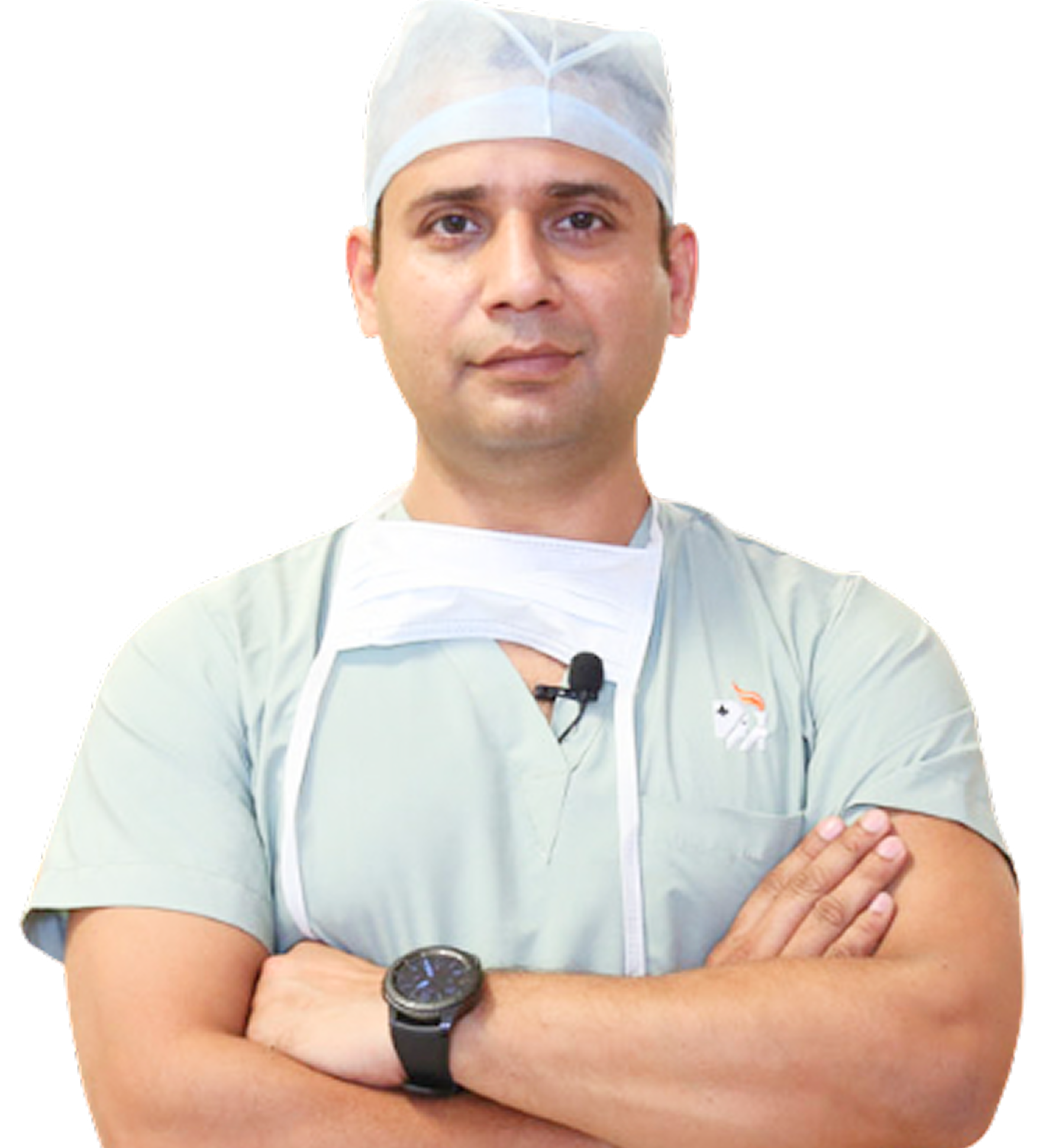
Dr. Naveen Sharma
Recognized as Rajasthan’s foremost authority on Direct Anterior Approach (DAA) Hip Replacement and Subvastus Fast-Track Knee Arthroplasty with over 21 years of surgical tenure and 20,000+ completed procedures.
