
Travelling After Knee Replacement: A Safety Checklist

Can you travel after knee replacement?
Travelling after knee replacement may be possible once you can enter and leave the vehicle safely, manage pain, move often, and follow your own surgeon's clot-prevention plan. The right timing is individual. A short car ride and a long flight are not the same decision, so ask about the actual route rather than requesting a general travel date.
Start with the clinic's knee replacement treatment overview if you are still preparing for surgery. Travel planning should be discussed before the operation when tickets, family events, work, or an out-of-city stay cannot easily be changed.
The safest question is not simply, "How many days must I wait?" It is, "Can I complete this journey without missing medication, remaining still for too long, straining the wound, or becoming unable to get help if symptoms change?" That approach makes the plan more useful for the patient and caregiver.
What should be checked before booking a journey?
Discuss the journey length, transport type, number of transfers, seating, stairs, toilet access, baggage, and help at the destination. Also explain any previous blood clot, current swelling, reduced walking ability, heart or lung condition, obesity, smoking, cancer treatment, or medicine that affects clotting. These details can change the advice.
A practical clearance check includes wound condition, pain control, safe walking, ability to bend the knee enough for the seat, and confidence getting in and out without twisting. The clinician may also review blood-thinning medicine and compression advice. Do not start, stop, or change those measures for a trip without the prescribing team's instructions.
If the operation has not yet happened, the broader knee treatment and assessment page explains why diagnosis, general health, and treatment choice come before a recovery timetable. A patient who has had a routine operation and is walking steadily may receive different advice from someone with a wound concern, marked swelling, anaemia, or another medical complication.
Plan the destination as carefully as the vehicle. Check whether the room has stairs, whether a raised toilet or walking aid is needed, where medicines will be stored, and how follow-up will happen. Carry the discharge summary, current medicine list, surgeon contact details, and enough prescribed medicine for the full journey. Keep essential items in hand luggage rather than a checked bag.
How does the plan change for car, train, and air travel?
Car: Begin with a short passenger journey once you can enter, sit, and exit safely. Move the front seat back to create space and avoid a low vehicle when possible. Stop at sensible intervals so you can stand and walk with your aid. Driving is a separate decision because braking strength, reaction, pain medicine, and the operated side all matter.
Train: Reserve an accessible seat with legroom and minimise platform changes. Arrange station assistance if walking distance is uncertain. Keep the walking aid within reach, avoid lifting luggage, and identify a toilet that can be used safely. A companion can help with boarding, but should not pull the operated leg or force the knee into a cramped space.
Air: Airport walking, queues, security, a narrow seat, and a long period of sitting all add demands. Royal National Orthopaedic Hospital patient guidance gives one commonly used example: short-haul flying after 6 to 8 weeks and long-haul flying after 12 weeks, while also telling patients to discuss plans with their surgeon. This is not a universal clearance date. RNOH joint replacement travel guidance supports an individual decision.
The NHS identifies a journey lasting more than 4 hours by plane, car, or train as a situation associated with a higher chance of deep vein thrombosis. Recent surgery and reduced movement are additional considerations. NHS deep vein thrombosis guidance explains these travel and postoperative factors.
During early knee replacement recovery, the NHS advises getting up and walking for 5 minutes every hour to help prevent blood clots. Apply movement advice only within your weight-bearing and walking instructions, and ask for help if standing is not yet safe. NHS knee replacement recovery guidance provides the source for this recommendation.
For a longer journey, choose an aisle seat when practical, keep clothing loose, drink water, and walk when it is safe to do so. Ankle movements can be performed while seated if they are part of your discharge plan. Do not assume that buying compression stockings or taking an extra blood thinner makes travel safe; both need individual clinical advice.
The existing knee replacement exercise guide can help you organise questions about mobility milestones. It does not replace the restrictions given by the operating team, and it should not be used to accelerate travel solely to meet a booking.
Which symptoms should stop the journey?
Do not begin or continue an optional journey if the wound is opening or draining, fever is present, pain or swelling is rapidly worsening, walking has suddenly become less safe, or prescribed medicine cannot be taken correctly. Contact the treating team for advice. A new fall or direct injury to the operated knee also needs assessment.
The NHS lists one-sided leg pain or swelling and skin colour change among possible signs of deep vein thrombosis. It treats breathlessness or chest pain with possible clot symptoms as an emergency because a clot may have reached the lungs. NHS DVT symptoms and urgent-action guidance supports these warning signs.
- New calf or thigh pain with one-sided swelling
- Sudden shortness of breath or chest pain
- Wound drainage, spreading redness, or fever
- A fall, twist, or inability to put weight through the leg as instructed
- Confusion, fainting, severe weakness, or any symptom that feels immediately dangerous
Emergency arrangements depend on location. Before leaving, note the nearest suitable hospital and keep a local emergency number available. Do not drive yourself when urgent symptoms may affect concentration, breathing, or safe control of the vehicle.
Why there is no single safe travel date
Published patient guidance uses different flight intervals because surgery type, journey duration, local protocol, mobility, clot history, and other health conditions vary. A quoted interval should be treated as a discussion point, not automatic permission. Airline rules and travel insurance conditions may also be stricter than clinical advice.
This checklist cannot examine the wound, measure swelling, review medicines, or confirm whether a patient is following full or restricted weight-bearing instructions. It also cannot account for a complicated operation, readmission, infection concern, clot treatment, revision surgery, or another condition that changes recovery.
Plans can change close to departure. If pain, swelling, walking ability, medicine, or the wound changes after clearance, contact the treating team again. Flexible tickets and a companion are practical safeguards, but they do not remove medical risk.
Sources and evidence
- RNOH: A Patient's Guide to Hip and Knee Joint Replacement Surgery - travel timing and individual clearance.
- NHS: Deep vein thrombosis - journey-related factors, warning signs, and urgent action.
- NHS: Recovering from a knee replacement - early mobility and postoperative recovery advice.
All sources were checked on 14 August 2026. The article uses them conservatively and identifies where timing must be individualised.
Plan the journey with your surgical team
Bring the proposed route, duration, date, and transport details to your follow-up. For an individual knee replacement recovery assessment or second opinion, use the orthopedic consultation page. A clear plan should cover mobility, medicines, clot precautions, wound care, and what to do if symptoms change away from home.
Medical disclaimer
Author : Dr. Naveen SharmaDr. Naveen Sharma — Medical Director & Senior Joint Surgeon
Dr. Naveen Sharma (MS Ortho, MBBS) is recognized as one of India's foremost authorities on Direct Anterior Approach (DAA) Hip Replacement and Subvastus Muscle-Sparing Knee Arthroplasty.
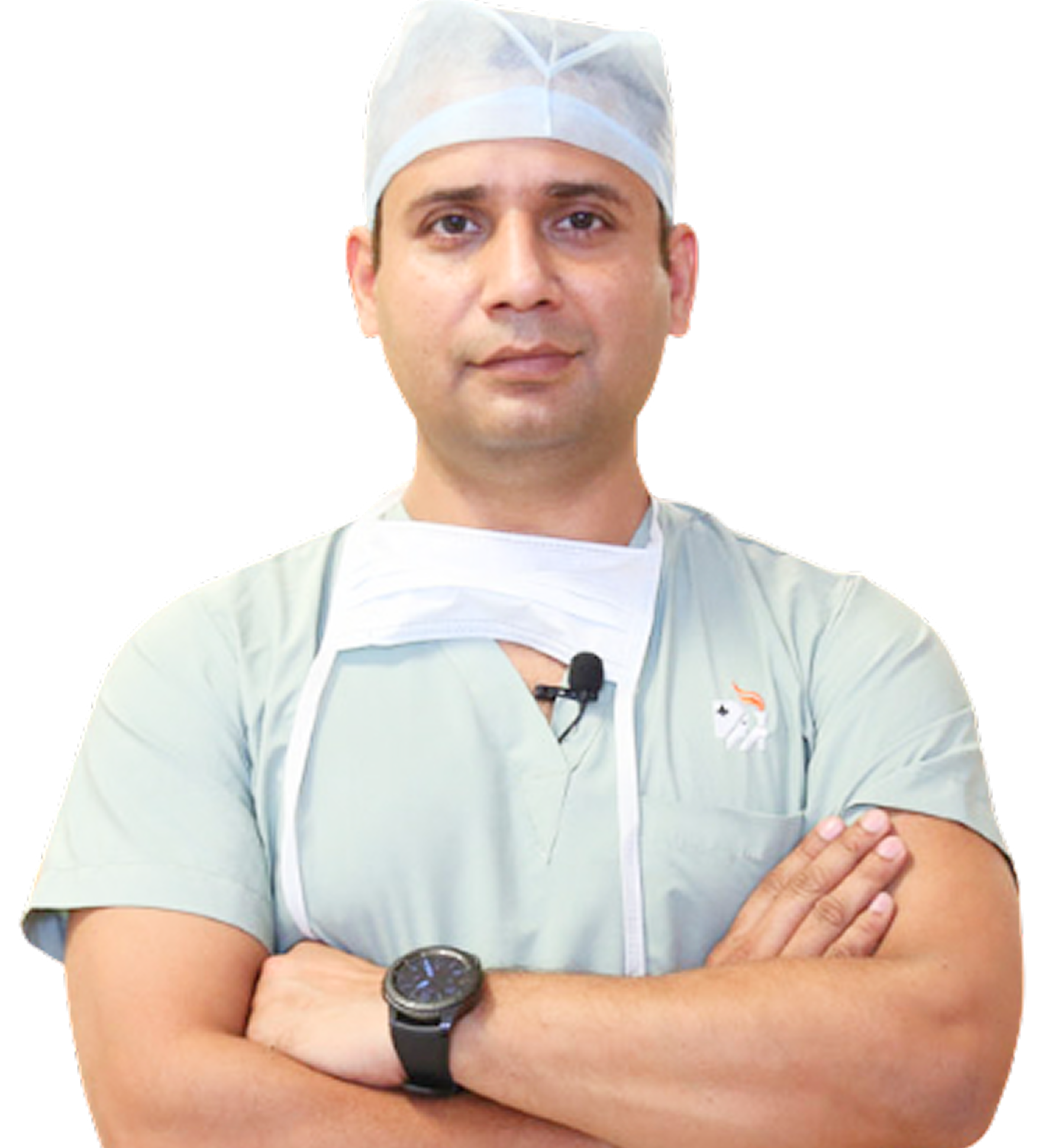
Dr. Naveen Sharma
Recognized as Rajasthan’s foremost authority on Direct Anterior Approach (DAA) Hip Replacement and Subvastus Fast-Track Knee Arthroplasty with over 21 years of surgical tenure and 20,000+ completed procedures.
