
Cricket Injury Rehabilitation Jaipur
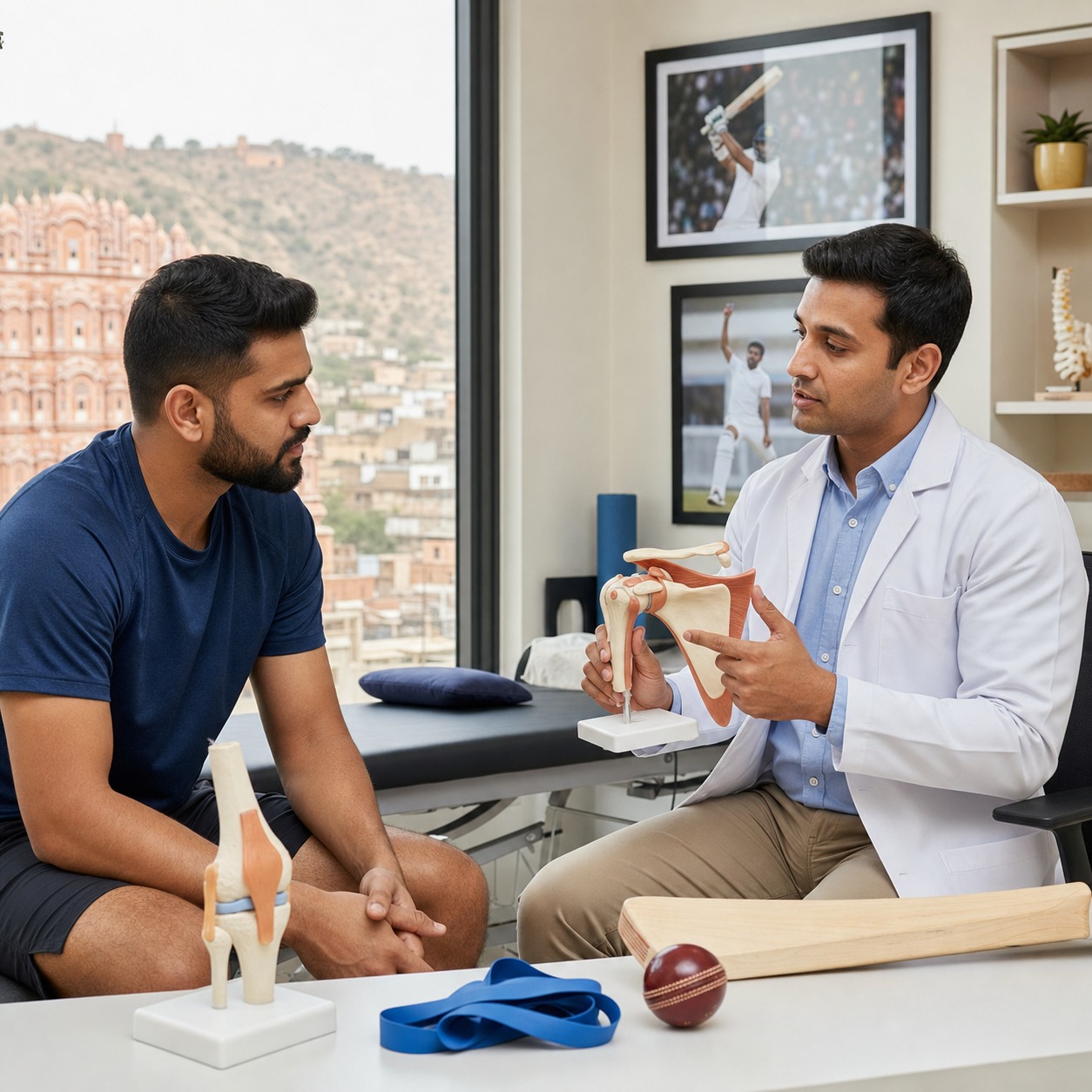
Quick answer: Cricket injury rehabilitation Jaipur is a stepwise plan to reduce pain, restore motion, rebuild strength and return the player to sport safely. It may include rest, physiotherapy, taping, scans and, for selected tears or unstable joints, surgery. The right plan depends on the exact injury, not the sport alone.
What matters for this general decision
- Cricket injuries are often load problems first, but some injuries need imaging or surgery.
- Hamstring, knee and shoulder problems can look similar early, so examination matters.
- Rehab should move from pain control to motion, then strength, then cricket skills.
Cricket injury rehabilitation is a stepwise return-to-play plan.
Musculoskeletal conditions are a major global health burden. The World Health Organization says they include more than 150 conditions affecting muscles, bones, joints and connective tissues, and they can limit daily function for a short time or for life.
What is cricket injury rehabilitation Jaipur?
Cricket injury rehabilitation Jaipur is a phased plan that reduces pain, restores motion, rebuilds strength and then tests sport-specific skills before full return to play. It is not only a set of exercises. It also includes diagnosis, load control, imaging when needed and a surgery decision when required.
A good rehab plan should fit the exact injury. Different players stress the body in different ways, so the recovery plan should not look identical. The goal is safe performance, not just symptom relief.
A player is not ready just because pain has settled.
When should I get checked after a cricket injury?
You should get checked after a cricket injury if pain is severe, swelling is large, the joint looks unstable, walking is painful, the shoulder slips, the knee locks, numbness appears or the player cannot trust the limb. Early review is better than trying to play through a worsening problem.
The Mayo Clinic hamstring injury guide advises medical review when you cannot bear weight or cannot walk more than four steps because of pain after a hamstring injury. That is a practical threshold for athletes who are trying to decide whether a strain is mild or more serious.
- Severe pain after a sprint, dive, throw or fall
- Large swelling or bruising that keeps increasing
- Inability to bear weight or walk normally
- Shoulder slipping, popping or visible deformity
- Knee locking, giving way or repeated swelling
- Numbness, tingling or weakness in the arm or leg
Which cricket injuries usually improve with rehabilitation?
Many strains, mild sprains and overuse problems improve with rehabilitation when the diagnosis is clear and the load is reduced. Complete tears, recurrent shoulder instability, locked meniscus tears and some ACL injuries need a different plan. The key is to match the treatment to the injury, not the sport.
| Cricket injury pattern | Common signs | First rehab steps | When surgery may be discussed |
|---|---|---|---|
| Hamstring strain | Back-thigh pain while sprinting or accelerating | Relative rest, protected walking, graded loading | Complete tear, avulsion or repeated recurrence |
| Shoulder instability | Shoulder slips, feels loose, pain when throwing | Load control, motion work, scapular and cuff strengthening | Recurrent dislocation or large labrum injury |
| Knee twist or meniscus injury | Swelling, locking, giving way, pain on turn | Stop sport, examination, possible imaging, muscle control work | Locked tear, unstable ACL injury or persistent mechanical symptoms |
For knee pain, start with knee treatment in Jaipur and meniscus tear treatment. For shoulder pain or instability, review shoulder pain treatment in Jaipur and shoulder arthroscopy in Jaipur. If the injury is clearly unstable, the ACL reconstruction and sports injury surgery planning page explains one common surgical pathway.
When does a cricket injury need a scan or surgery?
You may need X-ray, ultrasound or MRI when the exam suggests fracture, dislocation, tendon tear, labrum injury or deep joint damage. A scan is useful when it answers a specific question after the exam.
Persistent instability, a popping event, repeated swelling, mechanical locking or loss of strength after rehab should move the plan forward. Some patients need physiotherapy only, while others need arthroscopy or ligament surgery.
A scan is useful when the exam suggests a tear, fracture, or instability.
What does recovery look like week by week?
Recovery should move from protection to mobility, then strength, then sport-specific drills, and finally return to match play. The exact timing varies by injury, but the order is the same.
- Days 1 to 3: stop the painful activity, protect the injury, and calm swelling or spasm.
- Days 4 to 14: restore motion, walking pattern and gentle strength without a limp.
- Weeks 2 to 6: build rotator cuff, hamstring, quad, core and balance control.
- Weeks 6 to 12: add bowling, throwing, batting, running, landing and change-of-direction drills.
- Return to play: only when the next day remains quiet and sport-specific tests are normal.
The AAOS sports injury tips page stresses working with a trainer or physical therapist and setting small goals.
For Jaipur players, rehab should also test squatting, sitting cross-legged, stairs, travel and gym work because those are real-life demands beyond the training ground.
Rehab should rebuild confidence, strength, and control before return to play.
What should Jaipur players ask before starting rehab?
Ask whether the plan will let you bowl, bat, field, sprint and lift without pain. Ask what the next milestone is, how the shoulder or knee will be tested, and whether the plan fits stairs, sitting cross-legged, travel and the gym. A good plan fits cricket and daily life.
- What movements are safe right now?
- What test decides return to batting or bowling?
- Do I need a scan before I increase load?
- What signs mean I am overdoing rehab?
- How will this plan fit work, travel and family duties?
When to See a Doctor
Do not delay care if pain follows a fall, the limb looks deformed, the joint is hot or swollen, walking is unsafe, or the shoulder slips and the knee locks.
- Unable to bear weight after a fall or twist
- Shoulder slipped out, popped or looked deformed
- Knee locking, giving way or swelling after activity
- Numbness, tingling or weakness in the arm or leg
- Pain that returns after every session despite reduced load
- Night pain or rest pain that is getting worse
What the assessment should clarify
In my 21 years of practice in Jaipur, Clinicians commonly assess cricketers and gym trainees return after pain has reduced but before strength has returned. That is why I test sprinting, braking, throwing and next-day soreness before I clear them for full return. The plan must also fit floor sitting, stairs and travel.
Frequently Asked Questions
What is cricket injury rehabilitation Jaipur?
Cricket injury rehabilitation Jaipur is a staged recovery process that reduces pain, restores motion, rebuilds strength and then tests sport-specific skills like throwing, batting, bowling and sprinting. It can include physiotherapy, exercise, taping, medicines, imaging and, in selected cases, surgery. The exact plan depends on the injury and the player.
When should I get checked after a cricket injury?
Get checked if pain is severe, swelling is large, the shoulder slips, the knee locks, walking is difficult, or numbness or weakness appears. Early review is also important when the same injury keeps returning. A mild problem often settles, but a repeated problem needs diagnosis and a clear plan.
Which cricket injuries usually improve with rehabilitation?
Many hamstring strains, mild shoulder overload injuries and simple knee sprains improve with rehabilitation when the load is reduced and the diagnosis is clear. Recurrent shoulder instability, locked meniscus tears, complete ligament tears and some tendon injuries may need surgery or more advanced treatment. Examination decides the path.
Can physiotherapy alone fix a sports injury?
Physiotherapy can fix many strains, mild sprains and overload injuries, especially when the diagnosis is clear and the workload is controlled. It may not be enough for complete tears, recurrent shoulder instability, locked meniscus tears or unstable ACL injuries. The decision depends on examination and imaging, not on symptoms alone.
When does a shoulder or hamstring injury need surgery?
Surgery is considered when a tear is complete, instability keeps returning, a tendon has retracted, or the athlete cannot return despite a proper rehab trial. Many shoulder and hamstring injuries do not need surgery, so the exam, imaging and cricket demands should guide the decision. A specialist opinion helps separate them.
What should I ask before returning to cricket?
Ask whether you have full motion, near-equal strength, pain-free next-day response, stable joint control and sport-specific tolerance for bowling, batting, fielding or sprinting. Also ask how the plan fits stairs, travel, gym work and other daily tasks that matter in Jaipur. Return should be based on function, not only on time.
How to use this information: Plan Cricket Injury Rehabilitation Jaipur Early
Cricket injury rehabilitation Jaipur works best when diagnosis comes first and return to play comes last.
Medical disclaimer: This article is for educational purposes only and is not a substitute for professional medical advice, diagnosis, or treatment. Please consult a qualified orthopedic surgeon for guidance specific to your condition.
Author : Dr. Naveen SharmaDr. Naveen Sharma — Medical Director & Senior Joint Surgeon
Dr. Naveen Sharma (MS Ortho, MBBS) is recognized as one of India's foremost authorities on Direct Anterior Approach (DAA) Hip Replacement and Subvastus Muscle-Sparing Knee Arthroplasty.

Dr. Naveen Sharma
Recognized as Rajasthan’s foremost authority on Direct Anterior Approach (DAA) Hip Replacement and Subvastus Fast-Track Knee Arthroplasty with over 21 years of surgical tenure and 20,000+ completed procedures.
