
Knee Swelling After Injury Jaipur
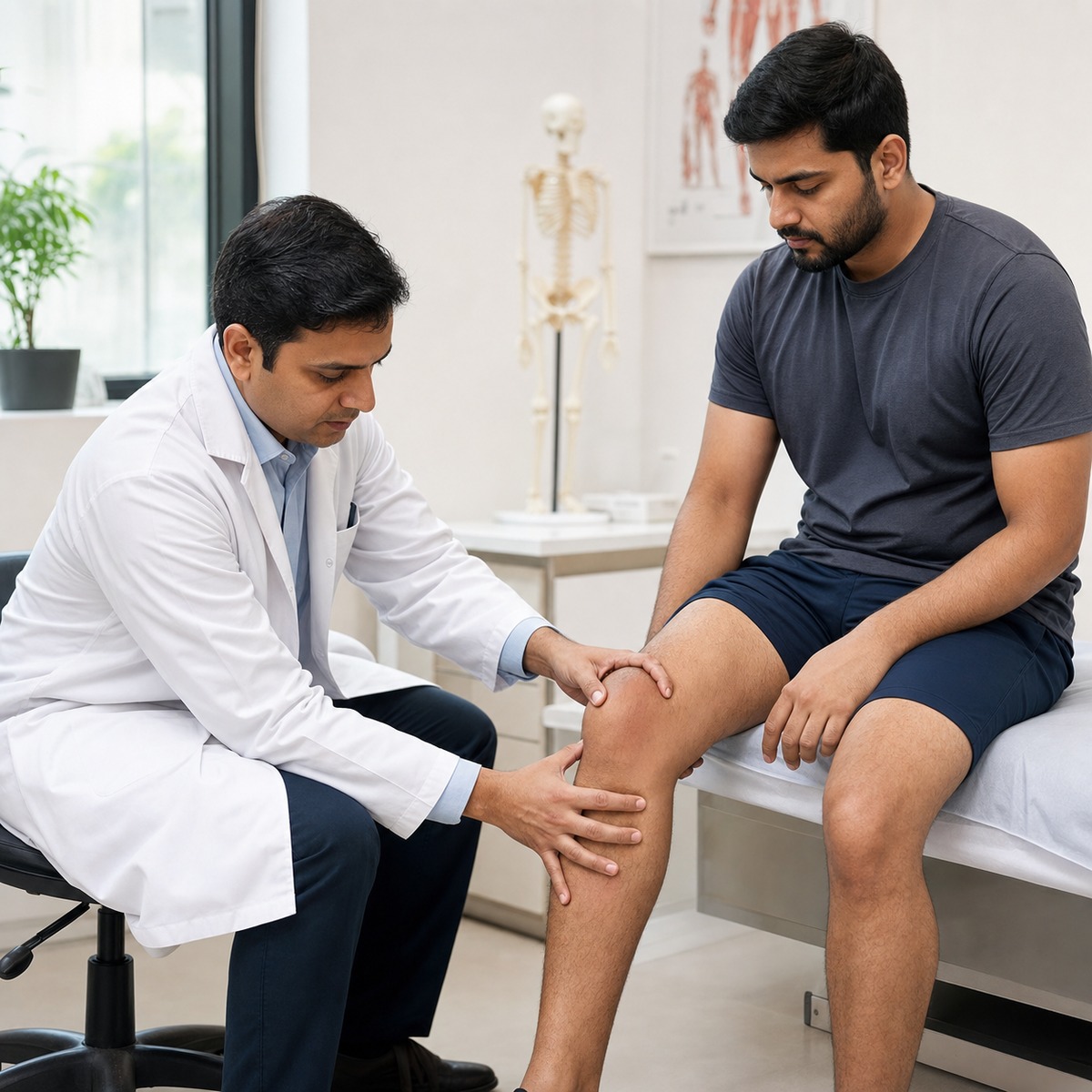
Quick answer: Knee swelling after injury Jaipur needs a calm but structured response. Stop the activity, protect the knee and seek urgent assessment if you cannot bear weight, the knee is deformed, locked, very painful, rapidly swollen, hot or red, or you have fever. Examination should guide whether X-ray, MRI or monitored care is appropriate.
What matters for this knee decision
- Knee swelling is a sign, not a diagnosis; impact, twisting, fracture, ligament, meniscus and cartilage injuries can look similar early.
- Rapid or marked swelling, inability to bear weight, deformity, locking, numbness, fever or a hot red joint needs prompt assessment.
- X-ray checks bone and alignment; MRI is used when a defined soft-tissue question can change treatment.
- Early care should protect the knee without forcing painful exercise or complete bed rest.
- Return to work or sport depends on motion, strength, control and the actual diagnosis, not swelling alone.
Knee swelling after injury Jaipur is a frequent worry after cricket, badminton, gym activity, a two-wheeler incident or a monsoon slip. This 2026 guide explains what to do next without guessing from symptoms.
What Does Knee Swelling After Injury Mean?
Knee swelling after injury means fluid has collected inside or around the joint after tissue irritation or damage. The fluid may be normal joint fluid, blood or swelling in tissues outside the capsule. The cause depends on the mechanism, timing, examination and, when needed, imaging rather than on size alone.
A review indexed in PubMed on acute knee effusion describes ligament, bone and meniscus injuries among the common traumatic causes. Overuse can also produce fluid, while swelling without trauma raises different questions such as arthritis, infection or crystal disease.
Knee swelling is a sign, not a diagnosis.
Tell the clinician whether the knee was struck, twisted, forced backward, bent deeply or loaded during a sudden stop. Also report any pop, immediate loss of play, inability to straighten, giving way, bruising, fever, previous surgery or blood-thinning medicine.
When Is Knee Swelling After Injury Urgent?
Knee swelling after injury is urgent when severe pain, inability to stand or move the knee, visible deformity, a locked joint, numbness, a pale or cold foot, or major rapid swelling follows trauma. Fever with a hot, red swollen knee also needs prompt care because infection must be excluded.
The NHS knee pain guidance advises urgent assessment for a very painful knee, inability to move or bear weight, major swelling or shape change, locking or giving way, and fever with redness or heat. These are triage warnings, not a remote diagnosis.
- Major fall, collision or road injury
- Knee looks bent out of shape
- Unable to take four careful steps
- Foot feels numb, cold or unusually pale
- Knee is blocked and will not straighten
- Rapid large swelling or worsening severe pain
- Hot red joint with fever or feeling unwell
A hot, red swollen knee with fever is not a routine sports-injury pattern.
Which Injury Patterns Can Cause Knee Swelling?
Impact may bruise bone or soft tissue and can also cause fracture, while a pivot can injure the ACL, meniscus or cartilage. A force to the side may affect a collateral ligament. Because injuries overlap, the speed of swelling helps triage a knee but cannot name the injured structure.
| Injury pattern | Possible structures | Useful clues |
|---|---|---|
| Direct impact or fall | Bone, kneecap, cartilage, bursa or soft tissue | Focal tenderness, bruising, pain on weight bearing |
| Pivot with foot planted | ACL, meniscus or cartilage | Pop, swelling, instability or joint-line pain |
| Force from the side | MCL, LCL or combined injury | Inner or outer pain and side-to-side tenderness |
| Deep bend or squat | Meniscus or irritated joint lining | Joint-line pain, catching or restricted movement |
| No clear injury | Arthritis, infection, gout or another medical cause | Warmth, recurrent fluid, fever or multiple-joint symptoms |
Clinical tests are most useful after the history identifies the likely mechanism. Patients can review ACL care, meniscus treatment and knee cartilage care, but a web page cannot determine which structure is injured.
Do I Need X-ray or MRI for a Swollen Knee?
Not every swollen knee needs immediate MRI. X-ray is usually considered first when fracture, dislocation or alignment injury is possible. MRI is more useful when examination suggests ACL, meniscus, cartilage or combined soft-tissue damage and the result would change bracing, rehabilitation, surgery planning or return-to-sport advice.
The AAOS plain-language ACL guideline supports history and physical examination for initial diagnosis. It states that MRI can confirm an ACL injury and identify associated meniscus, cartilage or ligament damage, while X-rays may be used to identify fracture or dislocation.
- History: define the force, swelling timing, pop, function and previous problems.
- Examination: compare knees, check motion, tenderness, stability, circulation and nerves.
- X-ray: use when bone injury or alignment needs assessment.
- MRI: use for a focused internal-structure question after examination.
- Aspiration: consider only when a clinician needs fluid for diagnosis or selected symptom relief.
MRI should answer a defined clinical question, not replace the examination.
What Should I Do in the First 48 Hours?
Protect the knee, reduce painful loading, use a wrapped cold pack for short periods, and elevate the leg if comfortable. Gentle ankle movement is usually sensible while resting. Do not massage a newly injured swollen knee, force deep bending, return to sport, or start medication that is unsafe for you.
Medication needs individual advice when there is kidney disease, ulcer history, asthma triggered by pain medicines, anticoagulant use, pregnancy or allergy. Ice can injure skin if placed directly, so wrap it and check sensation. For a full assessment pathway, see knee treatment in Jaipur.
How Is Treatment and Return to Activity Decided?
Treatment depends on the injured structure, knee stability, motion, pain, work and sport demands, and associated damage. Many minor sprains and bruises improve with protected loading and rehabilitation. Fractures, unstable ligament injuries, repairable meniscus tears or locked knees may need a different and sometimes surgical plan.
A practical return plan moves through stages rather than jumping from rest to a match:
- Walk without a marked limp or increasing swelling.
- Recover comfortable bending and full straightening.
- Restore thigh and hip strength with supervised progression.
- Demonstrate balance and controlled single-leg movement.
- Add running, cutting or work-specific tasks only when cleared.
clinical decision: In my 21 years of practice in Jaipur, Clinicians commonly assess two mistakes after a swollen knee: returning to play when the pain settles but control is still poor, or staying completely inactive until the thigh becomes weak. I use repeated examination and function to decide progression, not the calendar alone.
Return to sport is a function test, not a calendar date.
When to See a Doctor
Seek urgent care for the red flags listed above. Arrange an orthopedic review when swelling persists, returns after activity, limits full straightening, follows a pop or pivot, or comes with catching, locking or giving way. A careful review is also sensible before resuming pivoting sport or heavy physical work.
- Swelling is not clearly improving with sensible protection
- Pain repeatedly wakes you or limits daily walking
- Knee cannot fully straighten or keeps catching
- Leg feels unstable on stairs or uneven ground
- Swelling returns each time activity increases
- You need a safe plan for cricket, badminton, running, gym work or manual work
Frequently Asked Questions
How long should knee swelling last after an injury?
Minor swelling may start settling over several days, but duration varies with the injury and activity. Marked swelling, worsening pain, repeated fluid, loss of movement or little improvement needs assessment. Do not use time alone to judge safety; walking quality, straightening, stability and the injury mechanism matter.
Can I walk on a swollen knee?
Walking may be reasonable after a minor injury if you can bear weight without a marked limp or rising pain, but forcing it is unhelpful. Use support when advised. Inability to bear weight, deformity, severe pain, locking, numbness or rapidly increasing swelling calls for urgent assessment before continued walking.
Does fast swelling mean an ACL tear?
Fast swelling can occur with an ACL tear, but it is not specific. Fracture, kneecap dislocation and other internal injuries can also cause rapid fluid or blood in the joint. The injury mechanism, stability tests, X-ray when indicated and sometimes MRI are needed before naming the damaged structure.
When should I get an MRI for a swollen knee?
MRI is considered when examination suggests an internal ligament, meniscus, cartilage or bone-marrow injury and the result can change treatment. It may also help when symptoms persist or findings conflict. MRI is not automatically the first test after trauma; X-ray and clinical assessment may be more urgent.
Should fluid be drained from a swollen knee?
Not every knee effusion needs drainage. A clinician may aspirate fluid when infection, gout or blood in the joint is suspected, or when selected large tense effusions need diagnostic or symptom relief. Drainage does not repair the injured tissue, and fluid can return if the underlying cause remains.
When can I return to sport after knee swelling?
Return when the diagnosis allows it and the knee has near-normal motion, strength, balance and sport-specific control without increasing pain or swelling. A brace alone does not prove readiness. Pivoting sports need staged drills and clinical clearance, especially after ligament, meniscus, cartilage or fracture-related injury.
How to use this information: Get the Cause Before Chasing the Swelling
Knee swelling after injury Jaipur deserves diagnosis-led care. Protect the knee, recognise urgent warning signs, and choose imaging only when it can answer a real question. The goal is not merely to reduce fluid; it is to restore safe movement and address the injured structure.
Patients can also use the free patient books and Dr. Naveen Sharma's YouTube channel for education. Learn more through Know Your Surgeon or book through the JointSurgeon contact page.
Medical disclaimer: This article is for educational purposes only and is not a substitute for professional medical advice, diagnosis, or treatment. Please consult a qualified orthopedic surgeon for guidance specific to your condition.
Author : Dr. Naveen SharmaDr. Naveen Sharma — Medical Director & Senior Joint Surgeon
Dr. Naveen Sharma (MS Ortho, MBBS) is recognized as one of India's foremost authorities on Direct Anterior Approach (DAA) Hip Replacement and Subvastus Muscle-Sparing Knee Arthroplasty.
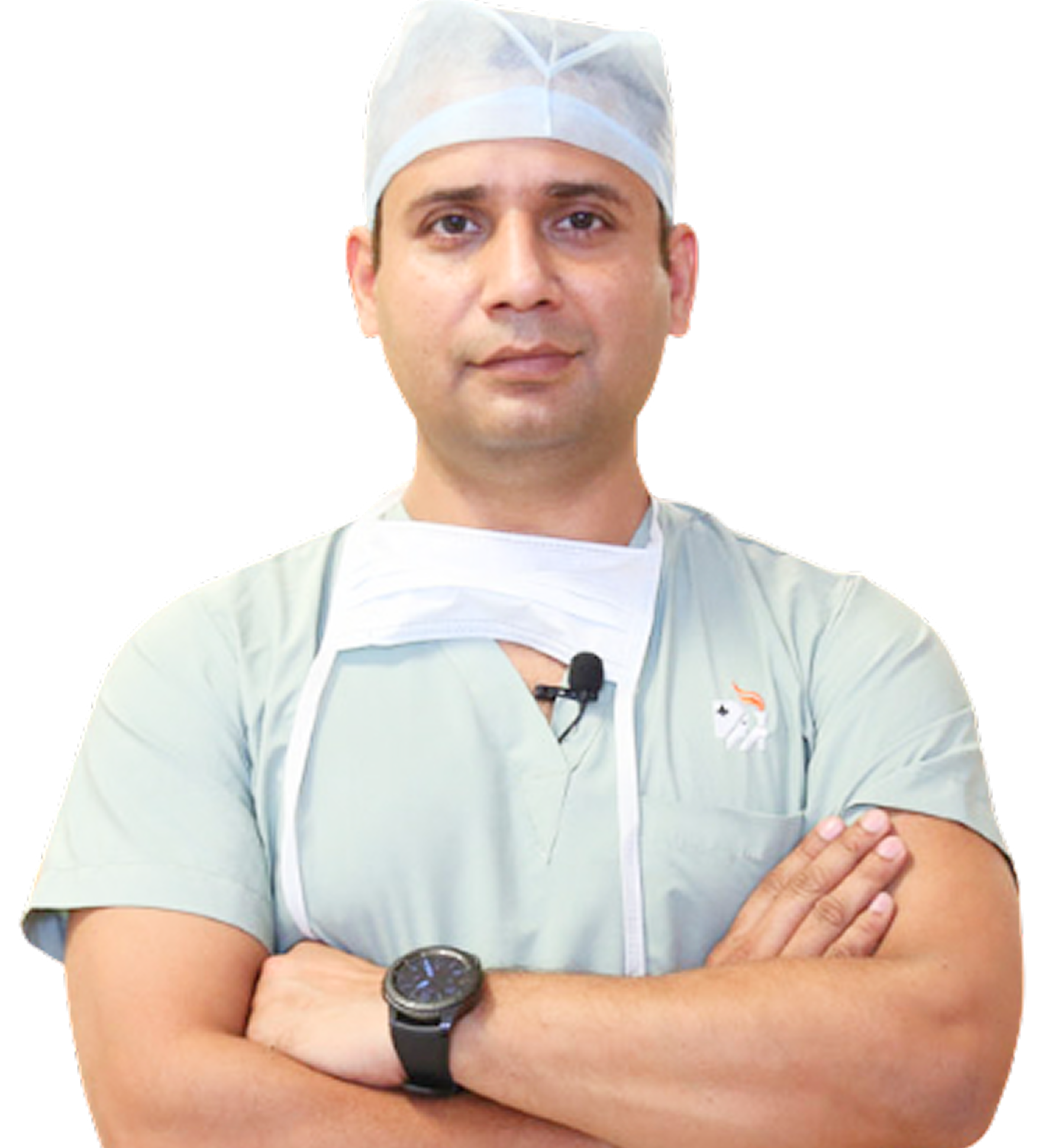
Dr. Naveen Sharma
Recognized as Rajasthan’s foremost authority on Direct Anterior Approach (DAA) Hip Replacement and Subvastus Fast-Track Knee Arthroplasty with over 21 years of surgical tenure and 20,000+ completed procedures.
