
Quadriceps Strain Treatment in Jaipur
Quick answer: Quadriceps strain treatment in Jaipur usually starts with correct diagnosis, protection, swelling control, pain-guided movement and physiotherapy. Most mild thigh muscle strains heal without surgery, but severe pain, weakness, a visible gap, repeated injury or inability to walk needs prompt orthopedic review.
What matters for this general decision
- A quadriceps strain is a tear or overstretching of the front thigh muscle group.
- Early rest should be balanced with safe movement once pain settles.
- Return to cricket, running or gym training must be strength-tested, not guessed.
- Sudden swelling, bruising, weakness or knee buckling needs medical assessment.
- Dr. Naveen Sharma evaluates sports injuries in Jaipur with a knee, hip and arthroscopy focus.
What is a quadriceps strain?
A quadriceps strain is an injury to one or more muscles at the front of the thigh. These muscles help straighten the knee, control landing, sprint, climb stairs and kick. A strain can be a small stretch injury, a partial tear, or rarely a complete tear.
Mayo Clinic explains that a muscle strain affects muscle or tendon tissue, while a sprain affects a ligament. Symptoms can include pain, swelling, spasm, weakness and limited movement. In cricket, football, running and gym training, the quadriceps often gets injured during sudden acceleration, forceful kicking, lunges, squats or a slip while the knee is bent.
For Jaipur athletes, heat, dehydration, sudden tournament schedules and weekend-only training can add risk. A muscle that is tired or under-conditioned is less able to absorb force. Jaipur players should not test sprinting on day three just because swelling looks smaller.
What does quadriceps strain treatment in Jaipur include?
Quadriceps strain treatment in Jaipur includes diagnosis, grading of injury severity, early protection, pain control, guided physiotherapy and a return-to-sport plan. The goal is not just pain relief. The goal is to restore strength, knee control and confidence before full-speed activity.
At the first visit, an orthopedic sports injury assessment checks where pain started, whether there was a pop, how much bruising developed, whether walking is normal, and whether knee movement is safe. If symptoms suggest a deeper tear, tendon injury, fracture, knee ligament injury or meniscus problem, imaging may be advised.
For related knee problems, patients can also read about knee pain treatment in Jaipur and arthroscopy in Jaipur.
Can a quadriceps strain heal without surgery?
Yes, most mild and moderate quadriceps strains can heal without surgery when rest, graded loading and physiotherapy are done correctly. Surgery is uncommon for simple muscle strains. It may be discussed only when there is a complete rupture, major tendon involvement or persistent functional loss.
The early phase usually follows protection, rest, ice, compression and elevation. The American Academy of Orthopaedic Surgeons describes rest, ice, compression and elevation as common early steps for soft-tissue injuries. Mayo Clinic also notes that serious strains may need medical treatment, so persistent or severe symptoms should not be ignored.
Self-treatment is not the same as safe treatment. Painkillers may hide symptoms and tempt a player to return too early, before healing tissue has regained strength.
How long does quadriceps strain recovery take?
Quadriceps strain recovery can take days to weeks for mild injuries and longer for deeper tears. The timeline depends on the grade of injury, bruising, walking ability, strength loss, sport demands and whether the first week was managed correctly.
| Stage | Typical goal | What to avoid |
|---|---|---|
| First 48-72 hours | Protect the thigh, reduce pain and swelling, walk only as tolerated | Massage, heat, sprinting, deep squats, alcohol after injury |
| Days 4-10 | Regain comfortable knee bending and gentle muscle activation | Testing full-speed running because pain feels better |
| Weeks 2-4 | Build strength, balance and controlled jogging if cleared | Sudden match play, heavy leg press or aggressive stretching |
| Return phase | Complete sport-specific drills without pain, limp or swelling | Returning without equal strength and confidence |
A PubMed Central review on quadriceps strains and contusions notes that examination, diagnosis and appropriate testing guide treatment decisions. A recovery plan should change if pain increases, bruising spreads or knee control worsens.
When should I see a sports injury doctor for thigh pain?
You should see a sports injury doctor for thigh pain if pain is severe, walking is difficult, bruising is large, weakness is obvious, or symptoms are not improving. You should also seek review after a repeated strain, a pop during activity, or pain near the knee tendon.
Red flags after a front thigh injury
- Inability to bear weight or walk without limping.
- Rapid swelling, deep bruising or a visible hollow in the muscle.
- Sudden knee buckling or inability to straighten the knee strongly.
- Numbness, tingling, fever or increasing night pain.
- Pain after a fall, road accident or direct blow to the thigh.
- No meaningful improvement after a few days of careful rest.
These signs do not always mean surgery. They mean the injury needs a proper diagnosis. Dr. Naveen Sharma can assess whether the problem is a muscle strain, tendon injury, knee ligament issue or another condition that needs a different plan.
Is physiotherapy needed after a quadriceps strain?
Yes, physiotherapy is often needed after a quadriceps strain, especially for athletes, gym users and people who must climb stairs daily. Exercises help restore pain-free range of motion, strength, balance and sport-specific control before full return.
- Pain-free activation: gentle tightening of the thigh muscle without forcing the knee.
- Mobility: gradual knee bending and hip movement within comfort.
- Strength: controlled squats, step-ups and resistance work when cleared.
- Running progression: walk-jog, straight-line running, then direction changes.
- Sport drills: batting stance, bowling run-up, kicking, jumping or gym lifts as relevant.
The safest plan is symptom-guided. Pain during an exercise is not a proof of progress. A good return-to-sport plan checks strength, flexibility, swelling response and confidence over repeated sessions.
What the assessment should clarify
In my 21 years of practice in Jaipur, Clinicians commonly assess young athletes who rest for two or three days, feel better while walking, and then get injured again during the first sprint or gym leg day. The missed step is controlled loading. A thigh strain is a performance injury, not only a pain problem.
Indian patients also have daily demands that generic advice often misses: stairs, two-wheeler use, low furniture, long drives, and early return to work. Dr. Naveen Sharma, joint replacement and arthroscopy surgeon in Jaipur, matches recovery advice to real Indian movement patterns.
How can athletes prevent repeat quadriceps strain?
Repeat quadriceps strain prevention needs warm-up, strength balance, gradual training load and honest recovery after pain. The thigh must tolerate sprinting, deceleration and direction change before competition.
- Warm up for 10-15 minutes before cricket, football, running or gym training.
- Increase sprinting and leg-day intensity gradually.
- Train hips, hamstrings, calves and core, not only the front thigh.
- Hydrate well during Jaipur summer and humid monsoon sessions.
- Use proper footwear on wet courts, turf and uneven grounds.
- Stop if pain changes your running or landing pattern.
For broader sports knee concerns, review the clinic's pages on ACL injuries and meniscus treatment. If you need an examination, use the contact page or learn more about Dr. Naveen Sharma.
FAQ
What is the fastest way to recover from a quadriceps strain?
The fastest safe recovery starts with protecting the thigh, reducing swelling, avoiding painful activity and beginning guided movement at the right time. Do not force stretching in the first few days. Recovery becomes faster when the injury is graded correctly and physiotherapy progresses from walking to strength to sport drills.
Can I play cricket with a quadriceps strain?
No, you should not play cricket with an active quadriceps strain if running, batting stance, bowling, diving or stairs cause pain. Cricket needs sudden acceleration and stopping. Return only when walking, jogging, sprinting and sport-specific drills are pain-free and your doctor or physiotherapist clears you.
Do I need an MRI for quadriceps strain?
Not every quadriceps strain needs an MRI. Mild strains are often diagnosed clinically. MRI or ultrasound may be advised when there is major bruising, a suspected tear, weakness, tendon involvement, repeat injury, unclear diagnosis or poor improvement despite rest and rehabilitation.
What is the difference between quadriceps strain and ACL injury?
A quadriceps strain injures the front thigh muscle or tendon. An ACL injury affects a ligament inside the knee that controls stability. Both can cause pain after sport, but ACL injuries often involve twisting, swelling and giving way. A clinical examination helps separate the two.
Is quadriceps strain treatment in Jaipur expensive?
Quadriceps strain treatment in Jaipur varies by patient condition, injury grade, imaging needs and physiotherapy sessions. Mild cases may need consultation and home guidance. Severe or unclear injuries may need scans and supervised rehab. A clear diagnosis prevents unnecessary treatment and unsafe early return.
When can I return to gym after a thigh strain?
You can return to gym when daily walking, stairs and basic strengthening are pain-free, and your thigh strength is progressing evenly. Start with controlled, light movements. Avoid heavy squats, lunges, leg extensions and explosive jumps until cleared, because these can overload healing tissue.
How to use this information: get a safe return-to-sport plan
Quadriceps strain treatment in Jaipur should protect healing tissue while rebuilding strength for real activity. If you have front thigh pain after cricket, running, gym training or a fall, do not rely only on painkillers or internet exercises. A timely assessment can prevent delayed recovery and repeat injury.
Medical disclaimer
This article is for educational purposes only and is not a substitute for professional medical advice, diagnosis, or treatment. Please consult a qualified orthopedic surgeon for guidance specific to your condition.
Author : Dr. Naveen SharmaDr. Naveen Sharma — Medical Director & Senior Joint Surgeon
Dr. Naveen Sharma (MS Ortho, MBBS) is recognized as one of India's foremost authorities on Direct Anterior Approach (DAA) Hip Replacement and Subvastus Muscle-Sparing Knee Arthroplasty.
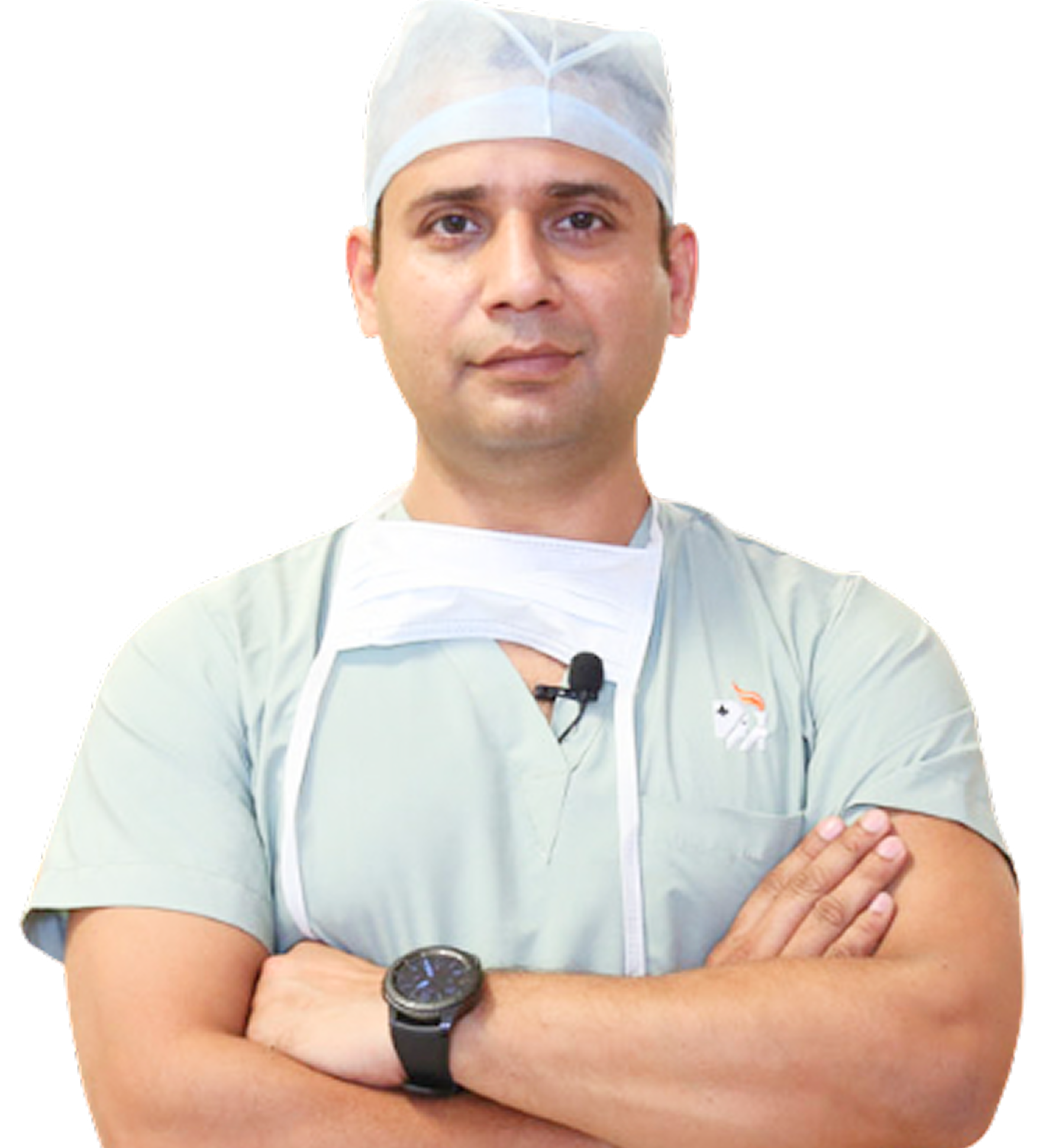
Dr. Naveen Sharma
Recognized as Rajasthan’s foremost authority on Direct Anterior Approach (DAA) Hip Replacement and Subvastus Fast-Track Knee Arthroplasty with over 21 years of surgical tenure and 20,000+ completed procedures.
